NeuroCardioMetabolgruppen – Thomas Nyström och Cesare Patrone

Vår forskning fokuserar på de patofysiologiska mekanismer som ligger till grund för diabetes- och fetmakomplikationer, med huvudsaklig tyngdpunkt på stroke. Vi arbetar också med att identifiera både livsstils- och farmakologiska strategier för att förbättra neurologisk återhämtning efter stroke.

NeuroCardioMetabolgruppen

Vår forskargruppforskning

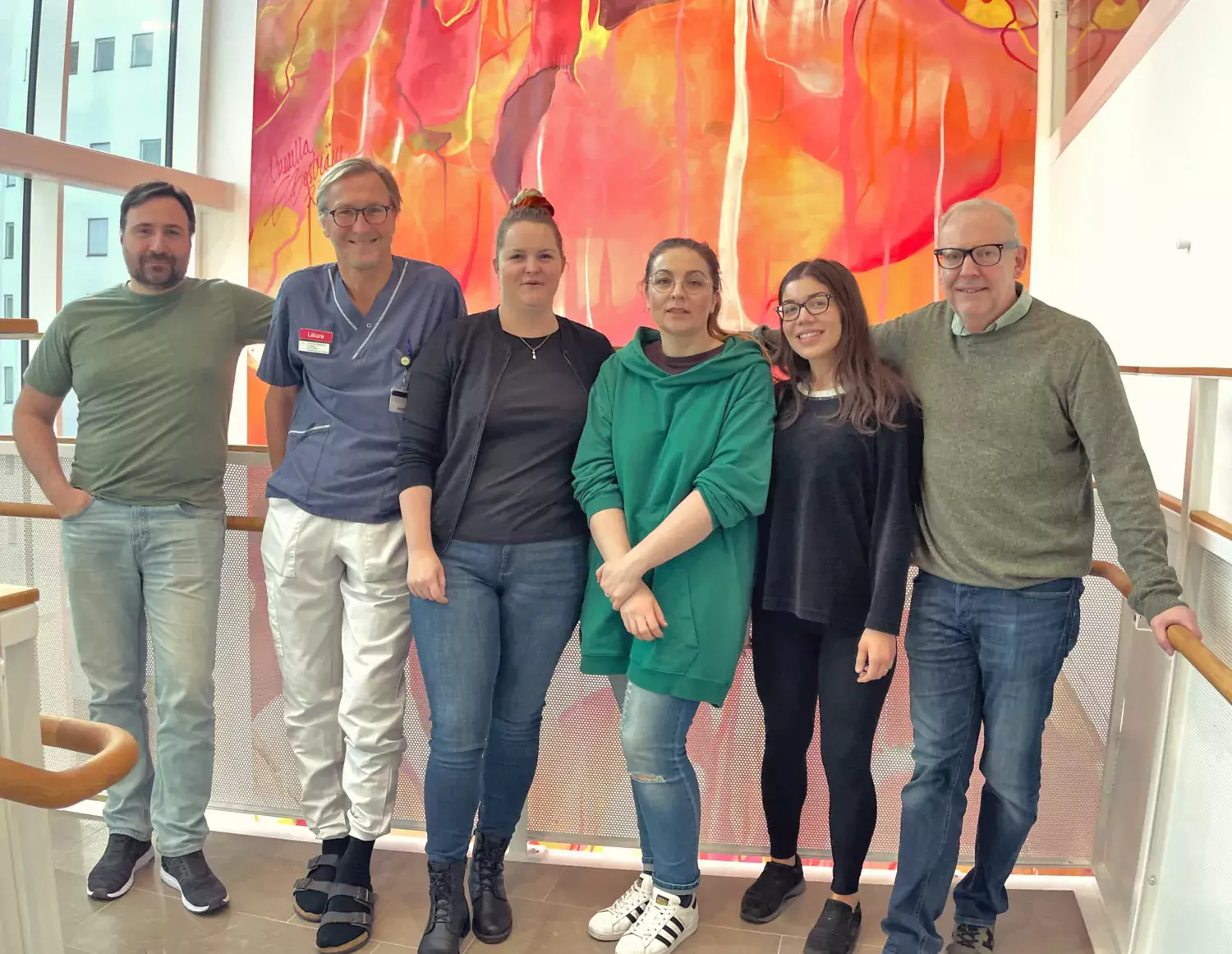
Vår forskning inriktar sig på de patofysiologiska mekanismer som ligger till grund för komplikationer vid diabetes och fetma, med särskild inriktning på stroke. Vi arbetar även med att identifiera både livsstilsrelaterade och farmakologiska metoder för att förbättra den neurologiska återhämtningen efter stroke hos personer med diabetes. Vår grupp består för närvarande av en lektor, en biträdande professor, en postdoktor och två doktorander. Dessutom är flera forskare från avdelningen för internmedicin vid Södersjukhuset anknutna till gruppen med sina forskningsinriktningar, vilket bidrar till ett starkt translationellt och samarbetsinriktat arbete.

anknutna

Nyheter

Collaboration in Science 6-7 Oktober 2022

Diet-induced weight loss in obese/diabetic mice normalizes glucose metabolism and promotes functional recovery after stroke. 

Samverkan

Vi har inlett flera tidigare och pågående samarbeten med:

Karolinska Institutet
DISRA-studien, ett nationellt konsortium av kliniska experter inom diabetes och stroke.
Professor Jon Lundberg, docent Michael Mazya, docent Eric Thelin, docent André Fisahn, docent Silvia Meioli, Dr Jan Kehr, professor Claes-Göran Östenson, Dr Anders Borgkvist, docent Mathias Lundberg, Dr Linn Hallqvist, professor Anna Norhammar, professor Ulrik Sartipy, professor Tomas Hökfelt, professor Weili XU, professor Laura Fratiglioni, professor Nils Wahlgren (konsortiet ”Mission: Fighting Stroke”), professor Henrik Druid, professor Martin Holzman.

Uppsala universitet: professor Jan Eriksson

Göteborgs universitet: professor Carina Mallard, professor Maria Johansson, professor Marcus Lind och professor Milos Pekny

Lunds universitet: Dr Joao Duarte, professor Gesine Paul

Sophiahemmet Högskola: professor Mia von Euler

Coimbra universitetet, Portugal:Dr. Ana Duarte 

Milano universitet, Italien: Dr Stefania Ceruti 

Turin universitetet, Italien: professor Massimo Collino

Vi har även ett pågående samarbete med Boehringer Ingelheim Pharma GmbH & Co. KG, Tyskland.

Forskningsprojekt

Vi var de första som visade (Nyström et al. AJP 2004) att inkretinhormonet glukagonliknande peptid 1 (GLP-1) förbättrar endotelfunktionen hos patienter med typ 2-diabetes (T2D).

Vi var även den första gruppen som visade den akuta neuroprotektiva effekten som förmedlas av GLP-1-receptoragonister (Darsalia et al., Clinical Science 2012), av dipeptidylpeptidas-4-hämmare (Darsalia et al. 2013 Diabetes) och av SGLT2-hämmare (Vercalsteren et al. 2024 Cardiovascular Diabetology) i djurmodeller av diabetes, samt effekterna av dessa läkemedel för att även förbättra neurologisk återhämtning efter stroke (Augestad et al., 2021, Diabetes; Augestad et al., 2022, British Journal of Pharmacology)

I nyligen publicerade artiklar har vi presenterat de första experimentella bevisen för att viktminskning, inducerad farmakologiskt eller genom kostförändring, förbättrar den neurologiska återhämtningen efter stroke (Vercalsteren et al. Diabetologia 2026; Karampatsi et al., 2022, Cardiovascular Diabetology). Dessa effekter förmedlas genom normalisering av insulinresistensen (Vercalsteren et al., Diabetes 2026).

Vi har även visat att patienter med typ 1-diabetes har en sämre prognos efter kranskärlsbypassoperation (CABG) än icke-diabetiker (Holzmann et al. JACC 2015) och att blodsockerkontrollen är en viktig prediktor för dödlighet hos patienter med typ 1-diabetes efter CABG (Nyström et al. JACC 2015), liksom för typ 2-diabetes (Kuhl et al. Int J Cardiol 2015). Dessutom deltar vi i befolkningsbaserade studier som utvärderar prevalens, incidens och livslängd hos farmakologiskt behandlade T2D-patienter (Norhammar et al., Diabetologia 2016) samt effekterna av nya orala blodsockersänkande läkemedel (Nyström et al., Diabetes obesity and metabolism, 2017).

Prekliniskt har vi visat att DPP-4-hämmarnas effekt mot stroke inte förmedlas via GLP-1 (Darsalia et al. Diabetes Obes Metab 2016) utan via SDF1a (Chiazza et al. Cardiovasc Diabetol 2017). Vi har också bidragit med nya insikter om hur typ 2-diabetes försämrar neuroplasticiteten och neurogenes under åldrandet (Lietzau et al. Psychoneuroendocrinol. 2017 och Acta Neuropathol Commun 2018, Mansouri et al. PLOS One 2016, Hussain S et al. J Alzheimer's Dis. 2014); observationer som kan ligga till grund för nedsatt luktsinne och kognitiv försämring vid typ 2-diabetes.

Publikationer

Utvalda publikationer

Alla gruppmedlemmars publikationer

Finansiering

Forskningsbidrag

  • Weight Loss by Glucagon-like peptide 1 receptor activation to improve Stroke Outcome in Diabetes: a Translational Project
    Strokeförbundet
    1 March 2026 - 31 December 2026
  • Weight Loss by Glucagon-like peptide 1 and Glucagon receptors activation to improve Stroke Outcome in Diabetes: a Translational Project
    Diabetesfonden
    1 January 2026 - 31 December 2027
  • Mot nya behandlingar för stroke: att rikta in sig på fetma efter stroke vid diabetes för att förbättra återhämtningen
    Ulla Hamberg Angeby och Lennart Angeby Stiftelse
    1 October 2025 - 30 September 2026
  • Medel för kompetenshöjande insatser
    Region Stockholm
    1 September 2025 - 31 December 2025
  • Förebyggande av fetma och diabetes genom dietnitrat: en ny strategi för förbattrad återhamtning efter stroke
    Ulla Hamberg Angeby och Lennart Angebys stiftelse 2023
    1 January 2024 - 31 December 2025
  • The pre-stroke targeting of obesity in diabetes: a novel approach to improve stroke recovery
    Strokeförbundets Stiftelser och Fonder
    1 January 2024 - 31 December 2025
  • Swedish Cancer Society
    1 January 2024
    The applicant has been a treating physician for the last 23 years for patients with myeloma, the median survival has increased from 3 to >10 years. The project is a direct consequence of the questions from everyday life with the patients. The key question in our research over the years has been and still is to identify why some patients have a quiescent disease with good long-term survival after standard treatment, while others have a more aggressive disease that does not respond to treatment and has a very dismal survival. Better understanding can be achieved through a better mapping of the biology of the disease and resistance mechanisms of the cancer cell in the individual patient. Multiple myeloma is the second most common blood cancer, despite advances in treatment, most patients suffer from relapse. We investigate new treatment methods that may be effective where conventional therapy fails, try to understand the mechanisms of action and identify the group of patients who would benefit most from the drug or treatment method with no or minimal side effects. We are establishing new prognostic markers predicting which patients will relapse and introducing new treatments. Our research has direct clinical implications both for prognosis and choice of treatment. Our optimal goal is a cure, which is achievable in the near future, through the introduction of new treatments/combinations. We also aim to better understand action/resistance mechanisms and correlate them with cancer cells' DNA changes, which can differ from patient to patient, even within the same disease. New markers of relapse aimed at
    on the one hand shortening the treatment time thus fewer side effects if negative and on the other hand changing/extending the treatment in those with positive markers for a better survival.
  • Typ 2 diabetes och stroke: Antidiabetisk behandling och återhämtning
    ALF
    1 January 2024
  • Hjärt-Lungfonden
    1 January 2024 - 31 December 2026
  • Sodium Glucose Cotranspoter 2-Hämmare för Förbattrad Återhamtning efter Stroke vid Diabetes
    Ulla Hamberg Angeby och Lennart Angebys stiftelse 2022
    1 January 2023 - 31 December 2024
  • Sodium Glucose Cotransporter 2-Inhibitors to Improve Post-Stroke Recovery in Diabetes
    Strokeförbundet (Stiftelser och fonder)
    1 January 2023 - 31 December 2024
  • “Behandling av insulinresistens för förbattrad återhamtning efter stroke vid pre-diabetes och diabetes
    Stiftelsen för ålderssjukdomar vid Karolinska Institutet 2022
    1 January 2023 - 31 December 2023
  • Sodium Glucose Cotransporter 2-Inhibitors to Improve Recovery after Stroke in Diabetes
    Ulla Hamberg Angeby and Lennart Angeby Foundation
    1 January 2023 - 31 December 2023
  • Behandling av insulinresistens för förbättrad återhämtning efter stroke
    Hjärnfonden
    1 October 2022
  • Stroke och typ 2 diabetes: Riskmarkörer - återhämtning - reparation
    ALF
    1 January 2022
  • Inkretinbaserad läkemedelsbehandling mot hjärtsjukdom och stroke
    ALF
    1 January 2021
  • Impaired Stroke Recovery in Type 2 Diabetes: Identification of Causes and new Therapies
    Ulla Hamberg Angeby and Lennart Angeby Foundation
    1 January 2021 - 31 December 2021
  • The interplay between obesity, type 2 diabetes (T2D) and weight loss on stroke outcome
    Diabetesfonden
    1 March 2020 - 31 December 2022
  • Swedish Cancer Society
    1 January 2020
    Multiple myeloma (MM) is an incurable malignant disease. This disease accounts for about 2% of all cancer deaths and almost 20% of deaths caused by hematological malignancies. New drugs have improved the prospects for long-term survival, despite this improvement in survival in recent years, relapses affect almost all patients. Thus, new treatment modalities are needed for patients with MM. In recent years, immune and cellular therapies have rapidly evolved as exciting new cell-based therapies for many cancers, including MM. One mystery that remains to be solved is the serious side effects associated with such therapy. The purpose is to identify prognostic parameters, in particular genes on specific chromosomes, as well as perform a thorough analysis when the disease recurs and reduce side effects of immunotherapy. Specifically, we will A- Analyze prognostic parameters related to specific therapies and differences in outcomes B- Improving current immune / cell therapies in terms of effectiveness and reducing side effects C- Analyze the genetic characterization of MM at diagnosis and progressive disease, partly to better predict the prognosis, partly to provide any possible future therapies that target specific genes in recurrence The key issue in our research over the years has been and still is to identify why some patients with multiple myeloma have good long-term survival after standard treatment, while others have a more aggressive disease. Our hypothesis is that the right combination of available treatment methods and the addition of new therapies improves the results. We investigate new treatment methods that can have an effect where ordinary treatment fails, try to understand the mechanisms of action. Our goal is to achieve a cure in patients with myeloma and in cases where a cure cannot be achieved. We hope to achieve a significant extension of survival.
  • Swedish Heart-Lung Foundation
    1 January 2020 - 31 December 2022
  • Improving prognosis marker, treatment strategies and minimizing the side effects in the treatment of Multiple Myeloma.
    Swedish Cancer Society
    1 January 2019
    Multiple myeloma (MM) is an incurable malignant disease. This disease accounts for about 2% of all cancer deaths and almost 20% of deaths caused by hematological malignancies. New drugs have improved the prospects for long-term survival, despite this improvement in survival in recent years, relapses affect almost all patients. Thus, new treatment modalities are needed for patients with MM. In recent years, immune and cellular therapies have rapidly evolved as exciting new cell-based therapies for many cancers, including MM. One mystery that remains to be solved is the serious side effects associated with such therapy. The purpose is to identify prognostic parameters, in particular genes on specific chromosomes, as well as perform a thorough analysis when the disease recurs and reduce side effects of immunotherapy. Specifically, we will A- Analyze prognostic parameters related to specific therapies and differences in outcomes B- Improving current immune / cell therapies in terms of effectiveness and reducing side effects C- Analyze the genetic characterization of MM at diagnosis and progressive disease, partly to better predict the prognosis, partly to provide any possible future therapies that target specific genes in recurrence The key issue in our research over the years has been and still is to identify why some patients with multiple myeloma have good long-term survival after standard treatment, while others have a more aggressive disease. Our hypothesis is that the right combination of available treatment methods and the addition of new therapies improves the results. We investigate new treatment methods that can have an effect where ordinary treatment fails, try to understand the mechanisms of action. Our goal is to achieve a cure in patients with myeloma and in cases where a cure cannot be achieved. We hope to achieve a significant extension of survival.
  • Achieving multiple myeloma cures by understanding the biology and introducing new treatment strategies
    Swedish Cancer Society
    1 January 2018
    Multiple myeloma (MM) is an incurable malignant tumor that accounts for about 2% of all cancer deaths and almost 20% of deaths caused by hematological malignancies. The presence of different chromosomal abnormalities among the malignant cells has been shown to have an effect on prognosis. Better understanding and classification of prognostic factors is needed to understand why different patients respond differently to treatment. By methodically analyzing both biological and clinical effects of different treatment strategists, we hope for better individual choice of treatment and the like. this better response in the individual. Analyze prognostic parameters, especially chromosome aberrations and genes on specific chromosomes. Specifically, we will: A-perform a retrospective analysis of forecasting parameters. B-identify and isolate specific genes in the chromosome region part (8) (p21) and to analyze their trivial importance for the development of MM. C-Implement a systematic effort to identify loci and avenues. D-Explore resistance and mechanism of action of different treatment strategists MM is still incurable. A better understanding of the effects of cytogenetic abnormalities and specific genes located in aberrant regions can help to understand pathogenetic mechanisms which, in turn, can contribute to the design of new and more effective drugs. Systematic work to identify genes that are associated with an increased risk of developing MM. The identification of such genes can lead to the development of tools to identify individuals-at-risk, and, in the longer term, to the development of new treatments. Together these methods can improve results and be a step towards the goal of curing MM.
  • Achieving multiple myeloma cures by understanding the biology and introducing new treatment strategies
    Swedish Cancer Society
    1 January 2017
    Multiple myeloma (MM) is an incurable malignant tumor that accounts for about 2% of all cancer deaths and almost 20% of deaths caused by hematological malignancies. The presence of different chromosomal abnormalities among the malignant cells has been shown to have an effect on prognosis. Better understanding and classification of prognostic factors is needed to understand why different patients respond differently to treatment. By methodically analyzing both biological and clinical effects of different treatment strategists, we hope for better individual choice of treatment and the like. this better response in the individual. Analyze prognostic parameters, especially chromosome aberrations and genes on specific chromosomes. Specifically, we will: A-perform a retrospective analysis of forecasting parameters. B-identify and isolate specific genes in the chromosome region part (8) (p21) and to analyze their trivial importance for the development of MM. C-Implement a systematic effort to identify loci and avenues. D-Explore resistance and mechanism of action of different treatment strategists MM is still incurable. A better understanding of the effects of cytogenetic abnormalities and specific genes located in aberrant regions can help to understand pathogenetic mechanisms which, in turn, can contribute to the design of new and more effective drugs. Systematic work to identify genes that are associated with an increased risk of developing MM. The identification of such genes can lead to the development of tools to identify individuals-at-risk, and, in the longer term, to the development of new treatments. Together these methods can improve results and be a step towards the goal of curing MM.
  • Swedish Research Council for Health Working Life and Welfare
    1 January 2017 - 31 December 2019
  • Achieving multiple myeloma cures by understanding the biology and introducing new treatment strategies
    Swedish Cancer Society
    1 January 2016
    Multiple myeloma (MM) is an incurable malignant tumor that accounts for about 2% of all cancer deaths and almost 20% of deaths caused by hematological malignancies. The presence of different chromosomal abnormalities among the malignant cells has been shown to have an effect on prognosis. Better understanding and classification of prognostic factors is needed to understand why different patients respond differently to treatment. By methodically analyzing both biological and clinical effects of different treatment strategists, we hope for better individual choice of treatment and the like. this better response in the individual. Analyze prognostic parameters, especially chromosome aberrations and genes on specific chromosomes. Specifically, we will: A-perform a retrospective analysis of forecasting parameters. B-identify and isolate specific genes in the chromosome region part (8) (p21) and to analyze their trivial importance for the development of MM. C-Implement a systematic effort to identify loci and avenues. D-Explore resistance and mechanism of action of different treatment strategists MM is still incurable. A better understanding of the effects of cytogenetic abnormalities and specific genes located in aberrant regions can help to understand pathogenetic mechanisms which, in turn, can contribute to the design of new and more effective drugs. Systematic work to identify genes that are associated with an increased risk of developing MM. The identification of such genes can lead to the development of tools to identify individuals-at-risk, and, in the longer term, to the development of new treatments. Together these methods can improve results and be a step towards the goal of curing MM.
  • Understanding the biology and introducing new treatment strategies for multiple myeloma
    Swedish Cancer Society
    1 January 2015
    Multiple myeloma (MM) is an incurable malignant tumor that accounts for about 2% of all cancer deaths and almost 20% of deaths caused by hematological malignancies. The presence of different chromosomal abnormalities among the malignant cells has been shown to have an effect on prognosis. Better understanding and classification of prognostic factors is needed to understand why different patients respond differently to treatment. The prevalence varies in MM globally from 1 per 100,000 in China, to about 10 per 100,000 in Africa and African Americans. Development of MM is preceded by gamma globulinopathy of unknown importance (MGUS), M protein without other signs of MM. Analyze prognostic parameters, especially chromosome aberrations and genes on specific chromosomes. Specifically, we will: A-perform a retrospective analysis of prognostic parameters, especially chromosome abnormalities, related to specific treatments in patients with MM. B-identify and isolate specific genes in the chromosome region part (8) (p21) and to analyze their trivial importance for the development of MM. C-Implement a systematic effort to identify loci and alleles (specific sites on a chromosome) risks associated with an increased risk of developing MM, both in unselected cases and in high-risk families-siblings / children with MM Myeloma is still incurable cancer. A better understanding of the effects of cytogenetic abnormalities and specific genes located in aberrant regions can help to understand pathogenetic mechanisms which, in turn, can contribute to the design of new and more effective drugs. Systematic work to identify genes that are associated with an increased risk of developing MM. The identification of such genes can lead to the development of tools to identify individuals-at-risk, and, in the longer term, to the development of new treatments. Together these methods can improve results and be a step towards the goal of curing MM.
  • GLUCAGON-LIKE PEPTIDE 1 ACTIVATION AGAINST STROKE IN DIABETES: FROM THE PRECLINICAL TO THE CLINICAL PHASE
    Novo Nordisk Foundation
    1 January 2014 - 1 January 2015
  • Understanding the biology and introducing new treatment strategies for multiple myeloma
    Swedish Cancer Society
    1 January 2014
    Multiple myeloma (MM) is an incurable malignant tumor that accounts for about 2% of all cancer deaths and almost 20% of deaths caused by hematological malignancies. The presence of different chromosomal abnormalities among the malignant cells has been shown to have an effect on prognosis. Better understanding and classification of prognostic factors is needed to understand why different patients respond differently to treatment. The prevalence varies in MM globally from 1 per 100,000 in China, to about 10 per 100,000 in Africa and African Americans. Development of MM is preceded by gamma globulinopathy of unknown importance (MGUS), M protein without other signs of MM. Analyze prognostic parameters, especially chromosome aberrations and genes on specific chromosomes. Specifically, we will: A-perform a retrospective analysis of prognostic parameters, especially chromosome abnormalities, related to specific treatments in patients with MM. B-identify and isolate specific genes in the chromosome region part (8) (p21) and to analyze their trivial importance for the development of MM. C-Implement a systematic effort to identify loci and alleles (specific sites on a chromosome) risks associated with an increased risk of developing MM, both in unselected cases and in high-risk families-siblings / children with MM Myeloma is still incurable cancer. A better understanding of the effects of cytogenetic abnormalities and specific genes located in aberrant regions can help to understand pathogenetic mechanisms which, in turn, can contribute to the design of new and more effective drugs. Systematic work to identify genes that are associated with an increased risk of developing MM. The identification of such genes can lead to the development of tools to identify individuals-at-risk, and, in the longer term, to the development of new treatments. Together these methods can improve results and be a step towards the goal of curing MM.
  • Swedish Research Council
    1 January 2010 - 31 December 2012
  • Martin Rinds Stiftelse
  • Identifying the Targets through which Glucagon-like Peptide 1 Receptor Activation improves Stroke Outcome in Diabetes
    Strokeförbundet

Medarbetare och kontakt

Gruppledare

Alla medarbetare i gruppen

Besöksadress

Karolinska Institutet, Department of Clinical Science and Education, Södersjukhuset, Sjukhusbacken 10, Stockholm, 11883, Sweden