The NeuroCardioMetabol Group – Thomas Nyström and Cesare Patrone

Our research focus is on the pathophysiological mechanisms at the basis of the complications of diabetes and obesity, with main emphasis on stroke. We also work on the identification of both life-style and pharmacological strategies to improve neurological recovery after stroke.

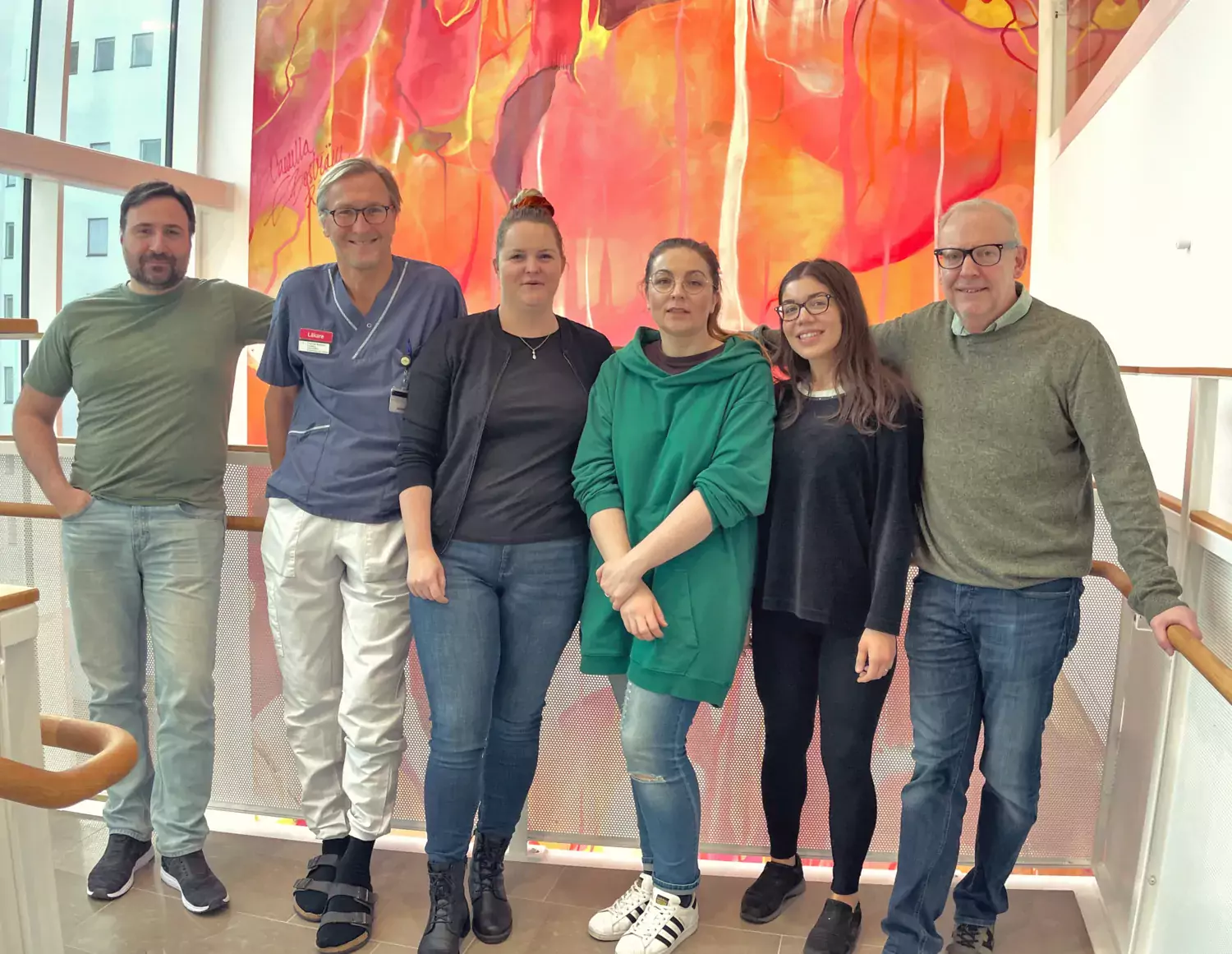
The NeuroCardioMetabol group

Our research group

Our research focus is on the pathophysiological mechanisms at the basis of the complications of diabetes and obesity, with main emphasis on stroke. We also work on the identification of both life-style and pharmacological strategies to improve neurological recovery after stroke in diabetes. Our team currently includes one senior researcher, one assistant professor, one postdoctoral fellow, and two PhD students. In addition, several researchers from the Department of Internal Medicine at Södersjukhuset are scientifically affiliated with the group with their research lines, contributing to a strong translational and collaborative framework.

News from the group

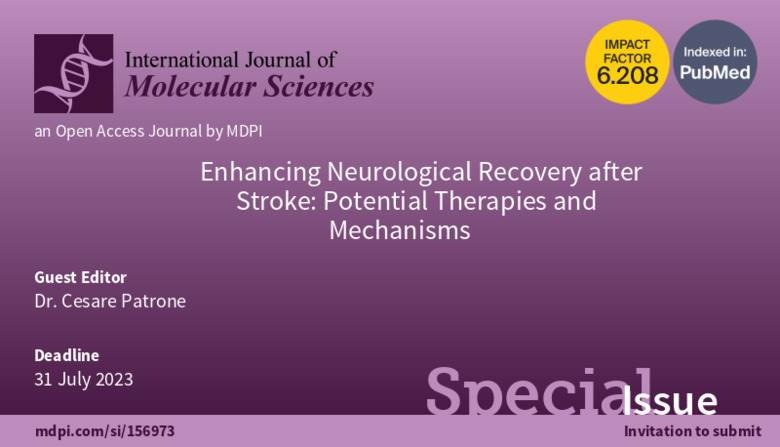
International Journal of Molecular Sciences - Special edition
Enhancing Neurological Recovery after Stroke: Potential Therapies and Mechanisms

Collaboration in Science 2022, October 6-7th

Diet-induced weight loss in obese/diabetic mice normalizes glucose metabolism and promotes functional recovery after stroke.

Collaboration

Our research group collaborates with researchers and clinical experts in Sweden and internationally. 

Karolinska Institutet

  • The DISRA study, a national consortium of clinical experts in diabetes and stroke
  • Professor Jon Lundberg
  • Associate Professor Michael Mazya
  • Associate Professor Eric Thelin
  • Associate Professor André Fisahn
  • Associate Professor Silvia Maioli
  • Dr Jan Kehr
  • Professor Claes-Göran Östenson
  • Dr Anders Borgkvist
  • Associate Professor Mathias Lundberg
  • Dr Linn Hallqvist
  • Professor Anna Norhammar
  • Professor Ulrik Sartipy
  • Professor Tomas Hökfelt
  • Professor Weili Xu
  • Professor Laura Fratiglioni
  • Professor Nils Wahlgren (the Mission: Fighting Stroke consortium)
  • Professor Henrik Druid
  • Professor Martin Holzmann

Uppsala University

  • Professor Jan Eriksson

University of Gothenburg

  • Professor Carina Mallard
  • Professor Maria Johansson
  • Professor Marcus Lind
  • Professor Milos Pekny

Lund University

  • Dr João Duarte
  • Professor Gesine Paul

Sophiahemmet University

  • Professor Mia von Euler

University of Coimbra, Portugal

University of Milan, Italy

  • Professor Stefania Ceruti

University of Turin, Italy

  • Professor Massimo Collino

Industry Collaboration

  • Boehringer Ingelheim Pharma GmbH & Co. KG, Germany

Our research project

We were the first to demonstrate (Nyström et al. AJP 2004) that the incretin hormone glucagon-like peptide 1 (GLP-1) improves endothelial function in type 2 diabetic (T2D) patients.

We were the first group to show the acute neuroprotection mediated by GLP-1 receptor agonists (Darsalia et al., Clinical Science 2012) by dipeptidyl peptidase-4 inhibitors (Darsalia et al. 2013 Diabetes) and by SGLT2 inhibitors (Vercalsteren et al. 2024 Cardiovascular Diabetology) in animal models of diabates, as well as effects of these drugs to also enhance post-stroke neurological recovery (Augestad et al., 2021, Diabetes; Augestad et al., 2022, British Journal of Pharmacology)

In recent publications we provided the first experimental evidence that weight loss induced pharmacologically or by a diet change enhances neurological recovery after stroke (Vercalsteren et al Diabetologia 2026; Karampatsi et al., 2022, Cardiovascular Diabetology). These effects are mediated by the normalization of insulin resistance (Vercalsteren et al., Diabetes 2026).

We also showed that T1D patients have a dire prognosis after coronary artery bypass grafting (CABG) than non-diabetics (Holzmann et al. JACC 2015) and that glycemic control is a key predictor for mortality in T1D after CABG (Nyström et al. JACC 2015) as for T2D (Kuhl et al. Int J Cardiol 2015). Moreover we are participating in population based studies evaluating prevalence, incidence and life expectancy of pharmacologically treated T2D patients (Norhammar et al., Diabetologia 2016) and effects of novel oral glucose lowering drugs (Nyström et al., Diabetes obesity and metabolism, 2017).

Preclinically, we showed that the anti-stroke efficacy by DPP-4 inhibitors is not mediated via GLP-1 (Darsalia et al. Diabetes Obes Metab 2016) but SDF1a (Chiazza et al. Cardiovasc Diabetol 2017). We also provided new insights on how T2D impairs neuroplasticity and neurogenesis during aging (Lietzau et al. Psychoneuroendocrinol. 2017 and Acta Neuropathol Commun 2018, Mansouri et al. PLOS One 2016, Hussain S et al. J Alzheimer's Dis. 2014); observations that could be at the basis of decreased olfaction and cognitive decline in T2D.

Publications

Selected publications

All publications from group members

Funding

Grants

  • Weight Loss by Glucagon-like peptide 1 receptor activation to improve Stroke Outcome in Diabetes: a Translational Project
    Swedish Stroke Association
    1 March 2026 - 31 December 2026
  • Weight Loss by Glucagon-like peptide 1 and Glucagon receptors activation to improve Stroke Outcome in Diabetes: a Translational Project
    Diabetesfonden
    1 January 2026 - 31 December 2027
  • Towards novel stroke therapies: targeting post-stroke obesity in diabetes to improve stroke
    Ulla Hamberg Angeby and Lennart Angeby Foundation
    1 October 2025 - 30 September 2026
  • Medel för kompetenshöjande insatser
    Region Stockholm
    1 September 2025 - 31 December 2025
  • Typ 2 diabetes och stroke: Antidiabetisk behandling och återhämtning
    ALF
    1 January 2024
  • Swedish Heart-Lung Foundation
    1 January 2024 - 31 December 2026
  • The prevention of obesity and diabetes by dietary nitrate: a novel strategy to improve stroke recovery
    Ulla Hamberg Angeby and Lennart Angeby Foundation 2023
    1 January 2024 - 31 December 2025
  • The pre-stroke targeting of obesity in diabetes: a novel approach to improve stroke recovery
    Swedish Stroke Foundation
    1 January 2024 - 31 December 2025
  • Swedish Cancer Society
    1 January 2024
    The applicant has been a treating physician for the last 23 years for patients with myeloma, the median survival has increased from 3 to >10 years. The project is a direct consequence of the questions from everyday life with the patients. The key question in our research over the years has been and still is to identify why some patients have a quiescent disease with good long-term survival after standard treatment, while others have a more aggressive disease that does not respond to treatment and has a very dismal survival. Better understanding can be achieved through a better mapping of the biology of the disease and resistance mechanisms of the cancer cell in the individual patient. Multiple myeloma is the second most common blood cancer, despite advances in treatment, most patients suffer from relapse. We investigate new treatment methods that may be effective where conventional therapy fails, try to understand the mechanisms of action and identify the group of patients who would benefit most from the drug or treatment method with no or minimal side effects. We are establishing new prognostic markers predicting which patients will relapse and introducing new treatments. Our research has direct clinical implications both for prognosis and choice of treatment. Our optimal goal is a cure, which is achievable in the near future, through the introduction of new treatments/combinations. We also aim to better understand action/resistance mechanisms and correlate them with cancer cells' DNA changes, which can differ from patient to patient, even within the same disease. New markers of relapse aimed at
    on the one hand shortening the treatment time thus fewer side effects if negative and on the other hand changing/extending the treatment in those with positive markers for a better survival.
  • Sodium Glucose Cotransporter 2-Inhibitors to Improve Recovery after Stroke in Diabetes
    Ulla Hamberg Angeby and Lennart Angeby Foundation
    1 January 2023 - 31 December 2023
  • Sodium Glucose Cotransporter 2-Inhibitors to Improve Recovery after Stroke in Diabetes
    Ulla Hamberg Angeby and Lennart Angeby Foundation 2022
    1 January 2023 - 31 December 2024
  • Sodium Glucose Cotransporter 2-Inhibitors to Improve Post-Stroke Recovery in Diabetes
    Swedish Stroke Association
    1 January 2023 - 31 December 2024
  • The treatment of insulin resistance to improve stroke recovery in pre-diabetes and type 2 diabetes
    Foundation for Geriatric diseases at Karolinska Institutet 2022
    1 January 2023 - 31 December 2023
  • Behandling av insulinresistens för förbättrad återhämtning efter stroke
    The Swedish Brain foundation
    1 October 2022
  • Stroke och typ 2 diabetes: Riskmarkörer - återhämtning - reparation
    ALF
    1 January 2022
  • Inkretinbaserad läkemedelsbehandling mot hjärtsjukdom och stroke
    ALF
    1 January 2021
  • Impaired Stroke Recovery in Type 2 Diabetes: Identification of Causes and new Therapies
    Ulla Hamberg Angeby and Lennart Angeby Foundation
    1 January 2021 - 31 December 2021
  • Show more

Staff and contact

Group leader

All members of the group

Visiting address

Karolinska Institutet, Department of Clinical Science and Education, Södersjukhuset, Sjukhusbacken 10, Stockholm, 11883, Sweden