
Genetisk toxikologi – Kristian Dreij forskargrupp

Vår forskning fokuserar på att förstå hur komplexa kemiska blandningar i miljöföroreningar bidrar till cancer och relaterade sjukdomar. Vi undersöker de underliggande mekanismerna för blandningstoxicitet för att stärka den vetenskapliga grunden för hälsoriskbedömning och förbättra skyddet av folkhälsan.

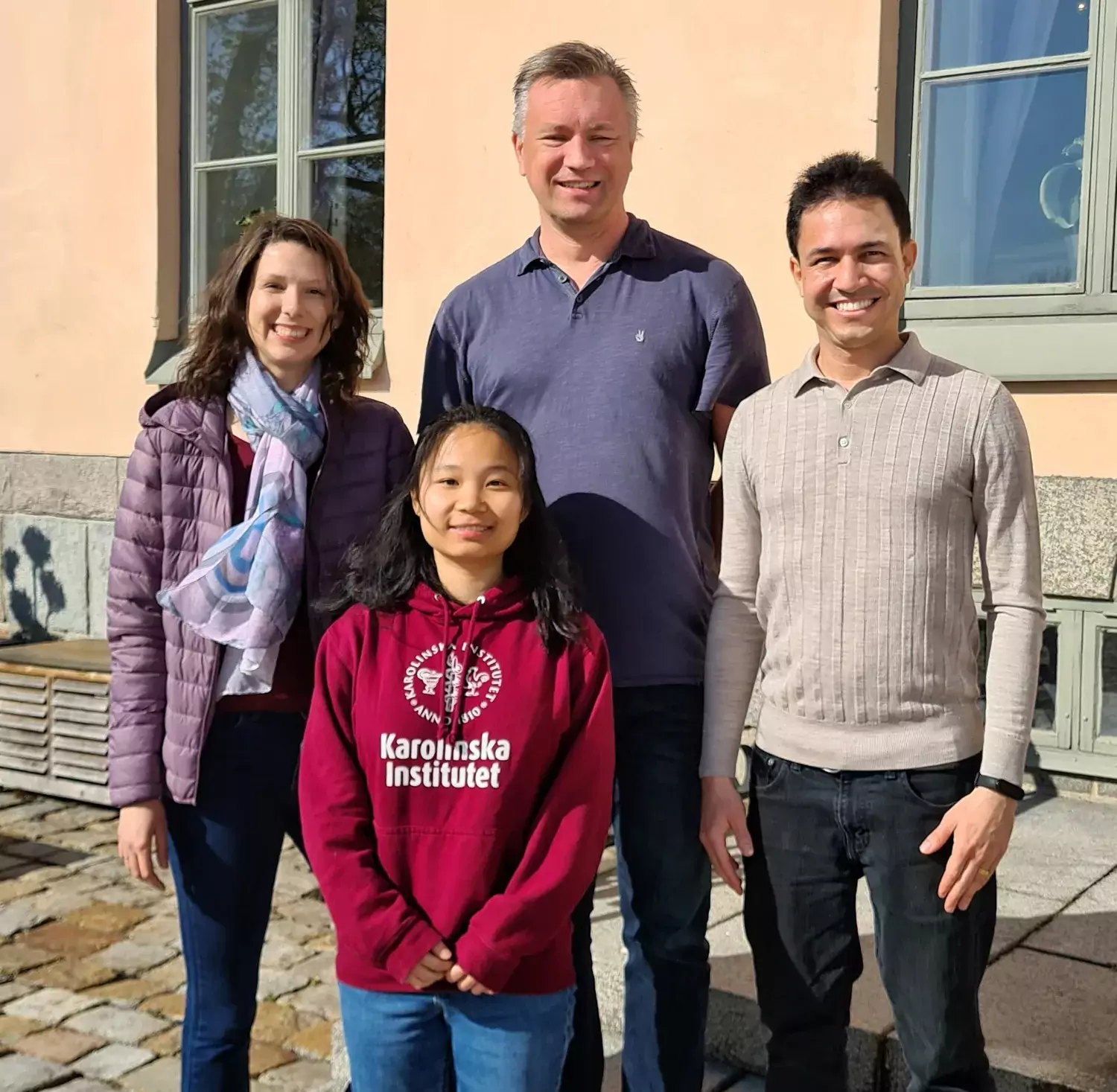
Gruppbild

Om oss

Vår forskargrupp studerar hur komplexa blandningar av miljöföroreningar påverkar människors hälsa. Vi har ett särskilt fokus på genetisk toxikologi och använder både humandata och experimentella modeller för att förstå risker kopplade till verkliga exponeringssituationer.

Forskning

Vi arbetar med att kartlägga biologiska effekter av miljöföroreningar genom att kombinera epidemiologiska data med analyser i mänskliga cellmodeller. Genom att använda miljöprover som speglar faktiska exponeringsmiljöer undersöker vi mekanismer bakom blandningstoxicitet och utvecklar kunskap som kan stärka riskbedömningen av kemiska blandningar i miljön.

Pågående projekt

Våra aktuella projekt riktas mot luftföroreningar i både urbana och rurala miljöer. Här studerar vi hur partiklar och kemiska komponenter påverkar genetisk stabilitet och cellulära processer.

Avslutade och tidigare projekt

Tidigare forskning har inkluderat studier av förorenade jordar, inomhusluft i förskolemiljöer samt yrkesmässig exponering för bekämpningsmedel. Vi har även arbetat med att identifiera toxikologiska kombinationseffekter i komplexa miljöprover.

Metoder och angreppssätt

Våra studier omfattar analyser av genotoxiska effekter, inklusive RNA‑ och DNA‑mutagenes, för att förstå hur kemikalier och blandningar påverkar transkription och replikation. Genom att integrera biologiska data från flera nivåer kan vi beskriva både mekanismer och potentiella hälsorisker.

Mer information finns här.


Publikationer

Utvalda publikationer

Finansiering

Forskningsbidrag

  • Swedish Research Council
    1 January 2023 - 31 December 2026
    Vital knowledge has been gained from studying driver mutations of cancer, but a few mutations in a limited number of genes cannot fully describe the complexity of carcinogenesis. The recent development of NGS has enabled the identification of genome wide mutational signatures and provided important insights into the underlying causes of human cancer. Although humans mainly are exposed to complex mixtures of agents contributing to cancer development, like air pollution and lung cancer, this research has entirely focused on single mutagens, which likely has impeded the application of mutational signatures in cancer research. The public health impact of understanding these associations is significant
    identifying causes of cancer is essential for effective preventative interventions. Here, the aim is to determine mutational signatures of environmental complex mixtures using urban air PM samples and normal lung and liver cells. Mutational signatures will be determined by whole genome sequencing followed by somatic variant-calling, and the air PM samples have been collected in three cities differently impacted by emission sources. The signatures will be functionally validated by transcriptome gene expression analysis and association analyses between enriched pathways and mutational signatures. The proposed project comprises a novel approach by combining advanced NGS technology and environmental samples to establish the mutagenic impact of complex mixtures in cancer development.
  • Swedish Research Council for Environment Agricultural Sciences and Spatial Planning
    1 January 2023 - 31 December 2026
    Biomass burning is a global concern in terms of climate change, biological diversity, and health hazards. Globally, ca 3 billion people are exposed to biomass particulate matter (PM). Biomarkers of exposure and effect are fundamental for understanding environmental exposures, mechanistic pathways, and monitoring early adverse outcomes. Our aim is to assess the acute cardiopulmonary (CP) health effects due to short-term exposure to biomass PM among the population in Amazon deforestation arc together with in vitro analyses of sampled PM in a lung cell model to provide a mechanistic characterization of the health hazard. The project is based on a panel study in Amazon, with measurements of CP health and effect biomarkers using an exposure lag of 1-7 days during the wet and dry season with exposure assessment based on personal PM monitoring and urinary metabolites. The mode of action is assessed by in vitro studies using sampled PM. The project addresses the so far neglected and less understood issue of acute CP effects due to short-term exposure to PM from wildfires. This project will be the first of its kind to combine personal monitoring of exposure, specific CP biomarkers, and functional tests with mechanistic in vitro studies of collected PM in Amazon. How does this translate to public awareness? To reduce the gap between high-quality research and effectively engaging affected communities we will use environmental education strategies among the exposed population.
  • Swedish Research Council for Environment Agricultural Sciences and Spatial Planning
    1 January 2020 - 31 December 2022
  • Stiftelsen för internationalisering av högre utbildning och forskning
    1 January 2020 - 1 January 2023
  • Swedish Research Council
    1 January 2018 - 31 December 2021

Medarbetare och kontakt

Gruppledare

Alla medarbetare i gruppen

Besöksadress

Karolinska Institutet, Institute of Environmental Medicine, Nobels väg 13, 3rd floor, Stockholm, 17177, Sweden

Postadress

Karolinska Institutet, Institute of Environmental Medicine, Box 210, Stockholm, 17177, Sweden

Nyckelord:
Analytisk kemi Andningsstörningar Arbetsmedicin och miljömedicin Biokemi Biomassa Cell- och molekylärbiologi DNA-skador Farmakologi och toxikologi In vitro-tekniker Kardiologi och kardiovaskulära sjukdomar Kardiovaskulära sjukdomar Komplexa blandningar Luftförorening Lungmedicin och allergi Mutagenes Polycykliska aromatiska kolväten Riskbedömning Toxikologi Visa alla
Innehållsgranskare:
Kristian Dreij
2026-02-11