
Immune Engineering – Team Leo Hanke

We are broadly interested in pathogens and the immune responses they elicit, with a particular emphasis on emerging and re-emerging viruses. We develop molecular tools that allow us to interrogate fundamental aspects of infection and immunity. Our goal is to leverage these insights to guide the rational design of vaccines and targeted therapies.

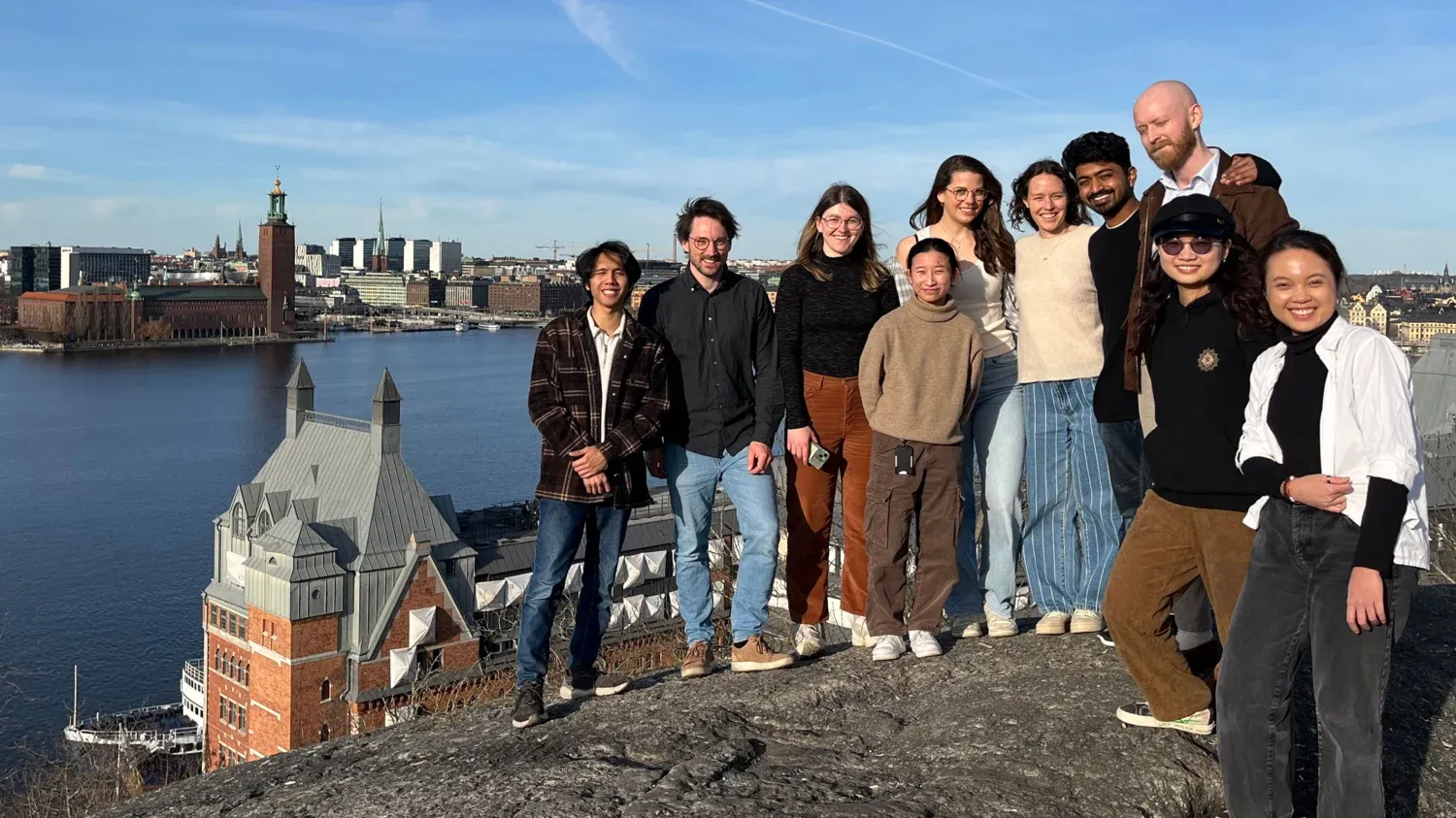
A group photo of 10 people standing on a cliff with a view of Stockholm in the background.

Our research

Our lab integrates a range of approaches across virology, computational methods, structural biology, and biochemistry to study pathogens and the immune responses they elicit. We systematically use small specific inhibitors, such as camelid nanobodies and computationally designed proteins, to target pathogens and extract new mechanistic insights that are otherwise challenging to obtain at scale. 

Through rational protein engineering along with chemical and enzymatic modification strategies, we functionalize our proteins for a growing list of biomedical applications, which can enhance detection, permit tracing, or facilitate immune recruitment. Our efforts aim to deepen the fundamental understanding of infection, ultimately guiding the rational design of effective vaccine antigens and targeted therapies.

Publications

All publications from group members

Funding

Grants

  • Swedish Research Council
    1 January 2026 - 31 December 2029
    Therapeutic antibodies have experienced remarkable growth in recent years. However, nearly all approved therapeutic antibodies belong to the IgG class, leaving the unique and powerful features of IgA, IgM, IgE, and IgD largely untapped in medicine. These alternative antibody classes possess distinct immunological functions that could revolutionize targeted therapies but remain underexplored.Antibodies that do not directly neutralize pathogens rely on interactions between their Fc regions and Fc receptors (FcRs) expressed primarily on immune cells. In humans, at least ten distinct FcRs interact promiscuously with Fc domains from various antibody classes, complicating efforts to clearly define their specific roles.To address this challenge and to enable precise targeting and exploitation of FcR interactions, we will develop bispecific FcR engagers composed of two functional domains: one domain specifically targeting a virus infected cells, while the other selectively engages an individual FcR. This strategy will enable controlled exploitation of FcRs for therapeutic applications, facilitate determination of receptor activation thresholds, allow manipulation of antibody biodistribution and half-life, and identify innovative strategies for effective pathogen clearance.Through this work, we will unlock the unique advantages of each antibody class, paving the way for next-generation biologic therapies.
  • European Commission
    1 January 2025 - 31 December 2029
    The SHIELD consortium targets two closely related steps in the viral replication cycle that are, as yet, difficult to study and to exploit for therapeutic interventions: 1) Virion glycosylation in the context of uptake, maturation and viral immunity. 2) Virion dynamics of entry into cells, where the plasticity of the involved proteins and their glycosylation status have key roles. The viruses studied in SHIELD are from the genera of flavivirus (DENV, WNV, YFV, Zika), mammarenaviruses (LASV) and henipaviruses (Hendra, Nipah). We bring a broad spectrum of methodical expertise to understand and exploit the interrelated processes of viral glycosylation and viral dynamics. Molecular simulations will enable the identification of cryptic pockets in viral proteins that form during the entry process, and the design of inhibitory ligands that bind to such pockets. Theoretical methods will be used to identify ligands for glycosylated viral proteins. This is intertwined with cryo-EM and nano-resolution optical microscopy which enable a detailed analysis of these events, their sensitivity to biological and chemical interference, and will allow a rational optimization of specificity and affinity. Novel chemical and biological entities (NCEs, NBEs) as tool compounds and potential starting points for drug development are obtained by targeted chemical synthesis, X-ray fragment screening, and nanobody library screens. Additionally, we study biological processes and the influence of interactions in systems of increasing complexity, which range from biochemical in-vitro to cellular assays and in vivo animal models. As the ‘glycan shield’ in Lassa/Hendra/Nipah plays a major role in immune evasion, we explore the immunological effects of an interference with protein glycosylation leading to novel starting point towards the development of effective and robust vaccines. In conclusion, SHIELD delivers a deeper understanding, and molecular tools to prepare the EU for future pandemic events.
  • European Research Council
    1 January 2025 - 31 December 2029
    Vaccines are critical in preventing viral diseases, and recent advances in vaccine development and delivery platforms have enhanced their reach and efficacy. Viral glycoproteins that mediate host cell entry are the primary target of the humoral immune response and thus the main antigenic component of vaccines. However, for many viruses, we lack fundamental biological insights that would easily allow transforming their glycoproteins into highly effective vaccine antigens. In this proposal, I introduce a completely novel approach to thoroughly extract structural and functional insights of viral glycoproteins for rational design of superior antigens. By conducting nanobody repertoire screens, I will bypass common constraints encountered in antibody screening, such as immunodominance bias and redundancy. Contrasting with conventional techniques that narrowly target a limited selection of epitopes, my approach promises an exhaustive mapping of glycoprotein surfaces and epitopes. This paradigm shift enables antigen rather than antibody or nanobody characterization. By determining high-resolution cryoEM structures of nanobodies bound to glycoproteins in transitional states, we will understand their structural dynamics. Equipped with these unparalleled insights, we will harness pioneering deep learning methods to computationally design glycoproteins with enhanced antigenic form and exposed neutralizing surfaces. I will showcase this method for viruses with high case fatality rates, including Hendra, Nipah, Lassa, Tick-borne encephalitis, and Borna disease viruses. VaxVision is set to offer a comprehensive framework for the antigen design of these and genetically or structurally related viruses. My work aims to capitalize on the unused potential for vaccine antigen improvement and will provide an innovative workflow for extracting mechanistic insights and leveraging them for vaccine antigen design, with the potential to drive vaccine innovations beyond just viral pathogens.
  • Swedish Research Council
    1 January 2022 - 31 December 2025

Staff and contact

Group leader

All members of the group

Keywords:
Antiviral Agents Biochemistry Immunology in the Medical Area Immunotherapy Infectious Medicine Protein Engineering Structural Biology Vaccine Development Virology Show all
Content reviewer:
04-09-2025