
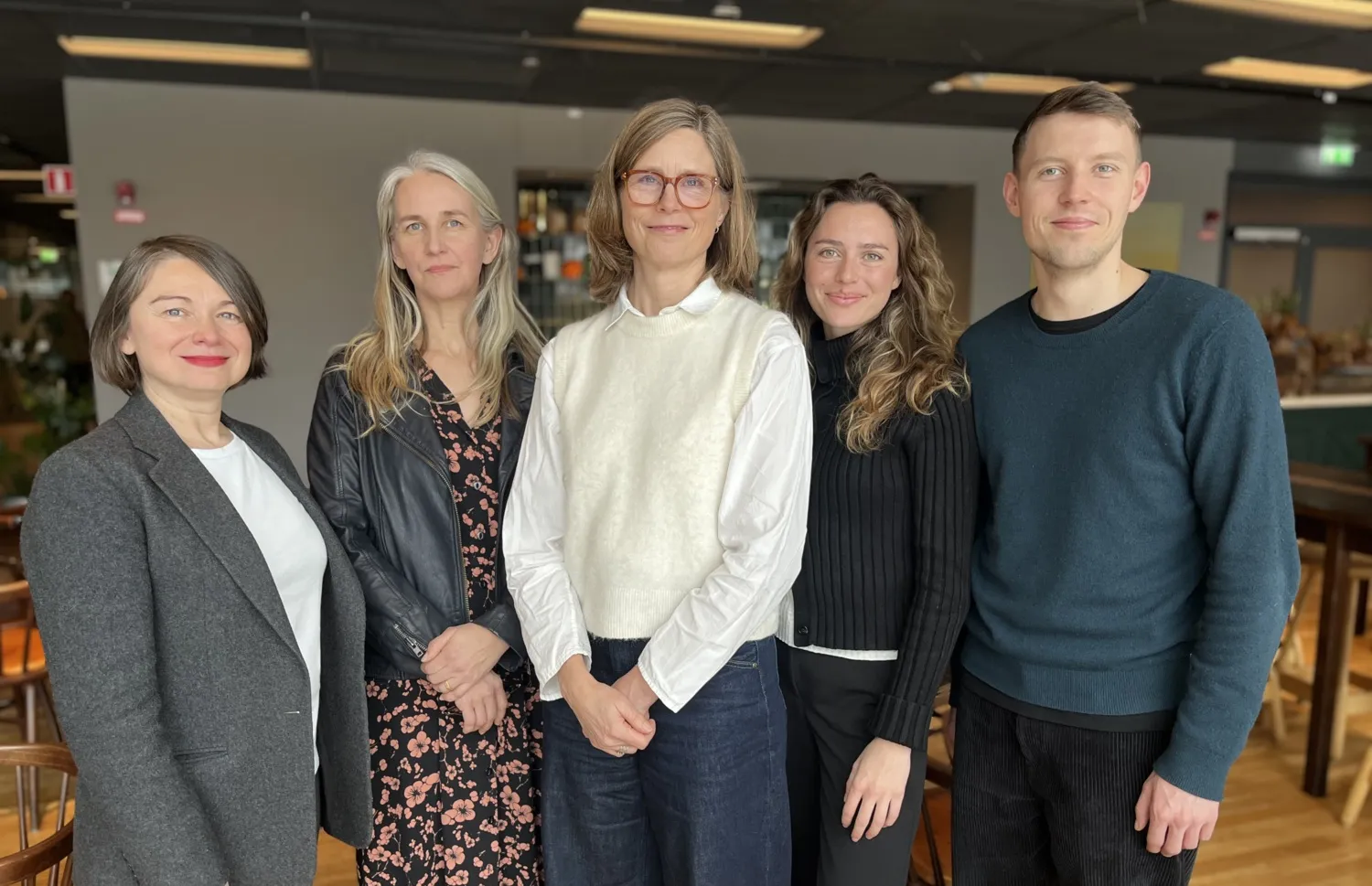
Carin Håkansta's research group – Digital work environment and health

We study how digital technologies, with a particular focus on algorithmic management, affect working conditions and health. Our overall aim is to increase knowledge about the risks and opportunities of digitalisation for a healthy work environment. Our research also covers work environment and health aspects of how digitalisation interacts with other societal changes, such as the green transition.

Our research

Our research examines how digital technologies influence the performance and organisation of work, and how this in turn affects working conditions and health. Much of our work concerns algorithmic management, that is, the use of digital technologies to augment or automate managerial decision-making in the organisation of work. We study the work environment and health effects among both workers and managers exposed to algorithmic management.

We conduct interdisciplinary studies at the intersection of epidemiology, psychology, labour market studies, industrial relations, sociology, human–computer interaction, and labour law. The research is based on survey studies, longitudinal data, interview studies and co-production with different stakeholders.

We aim to create impact and improve working conditions by maintaining an open dialogue and collaboration with, among others, the Swedish Work Environment Authority and several workers’ and employers’ organisations. We also collaborate with other research groups in our projects, both in Sweden and internationally. Please feel free to contact research group leader Carin Håkansta if you would like to discuss this further.

More information about our research is available under the Projects tab.

Publications

All publications from group members

Funding

Grants

  • Swedish Research Council for Health Working Life and Welfare
    1 March 2025 - 29 February 2028
    This project investigates the role of Artificial Intelligence in future-proofing long-term care (LTC). The sector faces multiple challenges: an ageing population, limited productivity gains in a labour-intensive sector, labour shortages, and the crisis of traditional modes of care provision amid rising female employment rates. This project explores AI’s potential to help the sector respond to long-standing and growing workforce challenges, improve its value proposition and care quality. We will inform industry standards, care models, and share best practices to inform viable and high-quality care solutions.The project focus is on algorithmic management (AM) as an element of AI and its effects on job & care quality. AM may alter the dynamics of the manager-worker-care recipient. However, existing literature rarely engages systematically with the job quality-AM/AI nexus. By offering a research study that compares five countries’ (Austria, Belgium, Sweden, Spain and the UK) this project will systematically investigate efforts to address issues affecting the sustainability of LTC. A key research focus is to explore the challenges and potential of AM/AI to (i) address recruitment & retention challenges through enhancing working conditions and (ii) improve care quality with potentially better outcomes for workers, care recipients and their families, using company case studies in three subsectors within LTC. Special attention will be paid to certain dimensions of job quality relevant to AM/AI: intrinsic elements (OH&S, work intensification, surveillance, consultative rights, and voice) and extrinsic elements (wages, working hours, benefits, employment conditions, skills).Empirically, the project will strengthen the LTC and job quality literature by exploring the less researched role of how public and private care providers across LTC regimes have embraced AM/AI. It will advance the understanding of the effects of deploying AM/AI at workplace level to shed light on the dynamics between AM and job quality within LTC. Theoretically, it will extend the job quality and LTC literature by refining and reframing present job indicators in the context of AM/AI with the aim to develop viable solutions to address labour shortage challenges. On the societal level the project contribute to national & EU policy agendas on the digital transformation of care work.
  • Swedish Research Council for Health Working Life and Welfare
    1 December 2024 - 30 November 2025
  • Swedish Research Council for Health Working Life and Welfare
    1 July 2023 - 30 June 2029
    Algorithms are changing the World of Work: from the tasks that consitute work to how it is organised and governed. Lack of data and knowledge about the impacts of algorithmic management (AM) on work and workers pose a societal challenge today. This deficit is particularly pronounced outside of platform work - in economic sectors where the use of AM is growing, such as logistics, including transport, storage and delivery services and the retail and hospitality industry. In both platform and non-platform work there is a lack of research about the effects of AM on the work environment and workers’ health and well-being. Therefore, the overall aim of this multi-disciplinary research program is to improve data and knowledge about algorithmic management in non-platform sectors and its effects on health, safety, and well-being, as well as develop risk-reducing tools and strategies by:Facilitating the development of a standard for measurement of algorithmic management at work and related risks for health, safety and well-being.Increasing knowledge about the effects of algorithmic management on workers’ health, safety, and well-being.Investigating the balance of interests related to the control of algorithms in different legal contexts regarding occupational health and safety (OSH).The proposed program will contribute with enhanced data and knowledge about challenges and opportunities of AM to safety, health and well-being as well as evidence-based tools and strategies to be used by stakeholders in discussions and action related to AM. The program applies multiple methods including quantitative, qualitative, literature reviews and participatory research.The program will be performed by an international and multidisciplinary team of researchers, involving experts in human-computer-interaction, cognitive ergonomics, labour economics, political science, occupational epidemiology, comparative labour law, industrial relations, work organization and psychology.
  • Help or yippee - robot as colleague
    AFA Försäkring
    1 June 2023 - 1 May 2026
  • Swedish Research Council for Health Working Life and Welfare
    1 October 2022 - 30 September 2025
  • Effects of algorithmic management on the work environment, wellbeing and health among transport and warehouse workers
    AFA Insurance
    1 January 2022 - 31 December 2024
  • Swedish Research Council for Health Working Life and Welfare
    1 January 2022 - 31 December 2024
  • Swedish Research Council for Health Working Life and Welfare
    1 July 2019 - 30 June 2025

Staff and contact

Group leader

All members of the group

Visiting address

Karolinska Institutet, Institute of Environmental Medicine (IMM), Torsplan 1, Stockholm, Sweden

Projects

ALGOSH: Algorithmic management at work - challenges, opportunities, and strategies for occupational safety and health and wellbeing

Algorithms are at the forefront of a transformative shift in the World of Work, profoundly influencing work dynamics, organizational structures, and the work environment. Our understanding of how these changes affect safety, health and well-being is still limited, especially beyond platform work. The ALGOSH research programme seeks to bridge this knowledge gap and to develop tools and strategies to reduce risks associated with algorithmic management in non-platform work sectors. An international, interdisciplinary consortium of experts and stakeholders works together to explore the challenges and opportunities that algorithmic management entails for creating safer and healthier workplaces.

ALGOSH: About the program | Karolinska Institutet 
 

MAIJobCare: Managing job quality and labour shortages with AI/AM in long-term care

This project examines the role of AI (artificial intelligence) in the future of long-term care (LTC). The sector faces several challenges: an ageing population, limited productivity gains in a labour-intensive sector, labour shortages and a crisis for traditional care arrangements that has unfolded alongside increasing female labour force participation. This project explores the potential of AI to help the sector address persistent and growing labour shortages and to improve the value and quality of care. The project generates knowledge of value for industry standards, the design of care models and good practice for viable and high-quality care solutions.

Managing job quality and labour shortages