


Research focus
Mitochondria are involved in a plethora of diseases. As every cell type has unique metabolic demands, the mitochondrial disease signature is disease-, tissue- and ultimately cell-type-specific. We study the normal working range of mitochondria and its tipping points into disease. This goes beyond understanding mitochondria as bioenergetic hubs and encompasses their various integrated functions throughout the cell.
Inherited mitochondrial diseases offer a unique window into this complexity. Their clinical manifestations are remarkably diverse, and decoding why the same genetic defect plays out differently across cell types gets to the heart of what we want to understand.
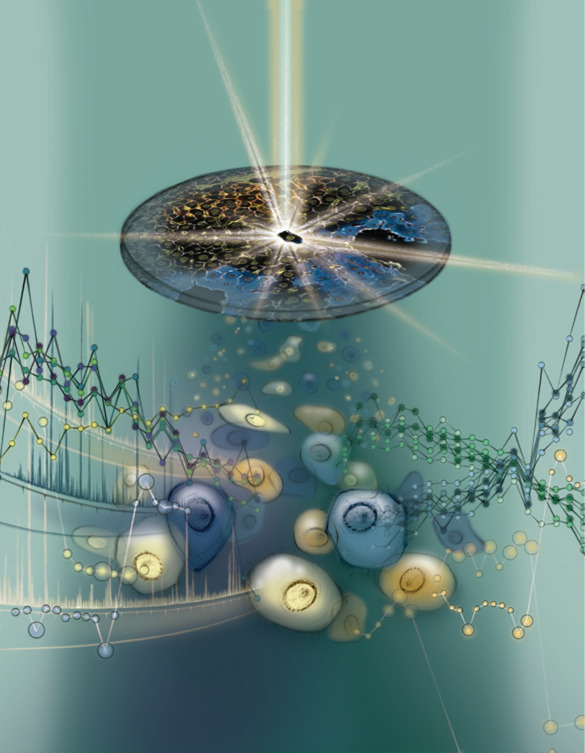
Proteomics offers a powerful route to explore mitochondrial processes, particularly because many mitochondrial proteins are inaccurately captured by other omics approaches. We isolate target cells from intact tissue specimens from both model systems and human biopsies, and combine laser microdissection with mass spectrometry through Deep Visual Proteomics (DVP) to resolve proteomes at single-cell resolution while preserving tissue context. We actively develop the technology towards autonomous cell selection and more robust LC-MS workflows to enable high-throughput single-cell analysis.
The mission: Make single-cell proteomics biologically useful.
Research themes
1. Cell-type specificity of mitochondrial disease
Mitochondria are present in virtually every cell, yet disease strikes selectively. We take a whole-body perspective, mapping how the mitochondrial proteome changes across cell types in disease.
- Why do genetic defects in ubiquitous metabolic pathways lead to symptoms only in certain organs?
- Which cell types are most vulnerable, and what proteomic features define their susceptibility?
- [FR1] How do mitochondrial proteome landscapes differ between tissues in health versus disease?
2. Spatial and single-cell proteomics technology
A central goal of the lab is to push the boundaries of what single-cell proteomics can resolve. We develop and optimise workflows so that technology serves the biological question. Our core developments go towards:
- Autonomous selection and picking of cells from tissue specimens;
- Normalising proteomics data across cell types through standards and chromatographic optimisation;
- Decoupling changes in mitochondrial mass from fine-grained metabolic pathway alterations.
3. Clinical translation and precision diagnostics
By implementing single-cell proteomics, we want to contribute to improved diagnosis of mitochondrial disorders, and help to overcome the diagnostic gap of about currently 50%.
- How can proteomic signatures improve diagnosis of rare mitochondrial diseases?
- Which disease relevant information is stored in the genome, and what can the functional protein layer add?
 Photo: SciLifeLab
Our research group is a part of SciLifeLab
SciLifeLab is a national collaborative initiative involving multiple Swedish universities, with partnerships across healthcare, industry, government agencies and international organisations. It is a state-of-the-art research infrastructure and environment for molecular biosciences, providing advanced technologies and expertise for both fundamental and applied research in the life sciences.
