
Close

- >
- >
- Nanomedicine and Spatial Biology – Teixeira Lab
- Global Disaster Medicine - Health Needs and Response – Johan von Schreeb's research group
- Translational cardiac and skeletal muscle physiology – Daniel Andersson's research group
- Neuroradiology – Staffan Holmin's research group
- Tumour genomics – Lauri Aaltonen's research group
- Neurobiology of Motor Actions – Abdel El Manira research group
- Neuroinflammation in Alzheimer disease – Marianne Schultzberg research group
- Palliative Medicin – Linda Björkhem-Bergman's research group
- Nucleotide metabolism and molecular pharmacology – Sean Rudd's Group
- Cardiovascular Inflammation – Research group Peder Olofsson
- Mesenchymal stem cells – Katarina Le Blanc group
- Advancing precision immunotherapy in lung cancer through clinical, molecular, and AI-driven insights – Luigi De Petris' Team
- Autoimmunity and cancer – Research group Marie Wahren-Herlenius
- Atherothrombosis research – Team Nailin Li
- Precision cancer medicine – Olli Kallioniemi's group
- Research group Stephan Mielke
- Structural studies of fertilisation and zona pellucida module proteins – Luca Jovine's research group
- Human adipose tissue and it’s contribution to health and disease – Kirsty Spalding's research group
- Robert Månsson group
- Developmental and Regenerative Stem Cell Medicine – Lanner Lab
- Suicide and mental health lab – Vladimir Carli and Gergö Hadlaczky's group
- Medical, genetic and molecular decoding of neurodevelopmental disorders – Kristiina Tammimies' research group
- Working hours, Recovery and Safety in working life. – Anna Dahlgren's research group
- Research groups in hematology
- SOMIND: Somatic, Mental, and Neurodevelopmental Conditions – Agnieszka Butwicka's research group
- Research groups in drug abuse and addiction
- Research groups in biomaterials science
- Mikael Adner's research group
- Chemical and functional neuroanatomy of pain and stress systems – Tomas Hökfelt research group
- Spider silk biology for biomedical applications – Anna Rising's research group
- Cancer Epidemiology and Causal Inference – Research group Maria Feychting
- Health Technology Assessment – Monica Hultcrantz’s team
- Pediatric anesthesiology Stockholm – Per-Arne Lönnqvist's research group
- Urological Research at Danderyd Hospital – Tobias Nordström's research group
- Lars Karlsson team
- Neuroimmunovascular biology research – Harald Lund's research group
- Bacteriophages – Andrea Fossati's research group
- CoNFIND Cognition and Fatigue – Marika Möller's research group
- Venous thromboembolism and emergency medicine – Eli Westerlund's research group
- Colorectal Surgical Research – at Danderyd Hospital
- Perpetration Prevention – Rahm and Joleby's research group
- SOLIID - Sustainable Organizational Learning, Innovation, Improvement and Development in Health and Social services – Monica Nyström's group
- Social Gerontology – Carin Lennartsson research group
- Genetic and molecular basis of nervous system disorders – Andrea Carmine Belin research group
- Chronobiology – Petrus lab
- Leukemic stem cells – Petter Woll group
- Understand Fundamental Immune Mechanisms to Develop New Treatments for Lung Diseases – Tim Willinger group
- Clinical Brain Imaging Methods – Anna Falk Delgado's research group
- Hyperbaric medicine – Peter Lindholm's research group
- Eye movements and vision – Tony Pansell's research group
- Lung toxicology – Lena Palmberg's research group
- Forksargruppen NeuroCardioMetabol
- Environmental and genetic factors influence on neurodevelopment – Sandra Ceccatelli research group
- Skin wound healing – Research group Ning Xu Landén
- From development to disease: decoding stem cell programs for CNS repair – Xiaofei Li group
- Neurodegenerative diseases and Aging – Daniel Ferreira Research Group
- Deep learning models of cancer mechanisms – Avlant Nilsson's research group
- Clinical Physiology – Marcus Carlsson's research group
- Biomaterials for Therapeutics and Regenerative Medicine – Molly Stevens group
- Molecular Mechanisms of Viral Oncogenesis – Maria G. Masucci's research group
- Björn Reinius group
- Quantitative principles in tumour biology – Jean Hausser's research group
- Bone biology – Sara Windahl Research group
- Research group Volkan Özenci
- Genetics and mechanisms of metals – Karin Broberg's research group
- Immunodeficiency Diseases – Lisa Westerberg Group
- Epigenetics - basic mechanisms and disease – Karl Ekwall's research group
- Forensic medicine
- Ageing and Health – Karin Modig's research group
- Perception Neuroscience – Johan Lundström's research group
- Computational medicine and bioinformatics – Trung Nghia Vu's research group
- Toxicology – Bertrand Joseph´s Research group
- Etiology, prevention and treatment of eating disorders – Ata Ghaderi's research group
- Research groups in medical ethics and history of science
- Research groups in occupational and environmental health
- Research groups in surgery
- Research groups in biophysics
- Research Group Johan Ärnlöv
- Narrative in health and social care – Research group
- Cellular and molecular mechanisms underlying intervertebral disk formation and Diversity and plasticity of adipose tissue cell niche – Meng Xie's research team
- Neuroimmunology of cancer – Sébastien Talbot
- The IMPACT research group – Marie Löf
- Stockholm Center for Health Economics (StoCHE) – Emelie Heintz's team
- Towards personalized physiology in Intensive Care – Team Johan Mårtensson
- Prehospital Emergency Care – Veronica Vicente's research group
- The brain after surgery and trauma - neuroinflammation, cognitive impairment and dementia – Lars I Eriksson research group
- Sepsis and microcirculation – Sara Tehrani's research group
- Regulation of B cell activation – Pia Dosenovic Group
- Division of Neurogeriatrics – Sophia Schedin Weiss's research group
- Karin Flood team
- Behavioral Medicine and Psychiatry Across the Lifespan – Bonnert and Särnholm Research Group
- Global infections – Research group Anna Färnert
- Environmental and biological determinants of brain health – Debora Rizzuto research group
- Circuits controlling Action and their Evolution – Sten Grillner research group
- Mikael Rydén & Niklas Mejhert lab
- Studies of tissue microbiology and immunology – Mattias Svensson group
- Cellular composition of the human brain and brain cancer – Sten Linnarsson group
- NAVIGATE research group – Neurology, ActiVity, Imaging, GAit, Technology and Exercise
- Global Health Pharmacology and Therapeutics (GH-Pharma) – Eleni Aklillu's research group
- Real-world-data in Multiple Sclerosis – Anna Glaser's research group
- Experimental and Clinical Neuroendocrinology – Maria Petersson's research group
- Cutting edge translational research of common and rare skin disease – Research group Jakob Wikström
- Alzheimer’s Disease Risk Factors & Sex-Specific Mechanisms – Silvia Maioli's research group
- Frontal lobes and cognitive failure – Wahlund's research group
- Clinical Pharmacology – Research group Rickard Malmström
- Molecular Vascular Medicine – Team Lars Maegdefessel
- Molecular endocrine pathology – Christofer Juhlin's Group
- Presynaptic mechanisms – Lennart Brodin research group
- Malignant melanoma – Hildur Helgadottir's Group
- Precision strategies to eradicate heterogeneous tumor cells in pediatric cancer – Kasper Karlsson's Group
- Respiratory and systemic immune responses in human pulmonary viral infection and inflammation – Research group Anna Smed Sörensen
- Genetic toxicology – Kristian Dreij's group
- Identifying new molecular targets for the treatment of motor neuron diseases – Eva Hedlund's research group
- Gene Regulation and Alternative Splicing in development and disease – Ziegenhain Group
- Psychiatric epidemiology – Paul Lichtenstein's research group
- Structural basis of RNA biogenesis – Martin Hällberg's research group
- Hematopoietic Stem Cell Biology Group – Sten Eirik W. Jacobsen Lab
- Psychiatric Genetic Epidemiology – Sarah Bergen's research group
- Renal Research Novum – Bengt Lindholm Group
- Research groups in biochemistry
- Psychological treatment: internet and exposure – Brjánn Ljótsson's research group
- Research groups in immunology
- Research groups in ophthalmology
- Research groups in urology and nephrology
- Research groups in sociology and migration
- Integrative physiology – Juleen Zierath and Anna Krook
- Hormonal signalling and cancer – Cecilia Williams research group
- Cell Biology of Cancer – Staffan Strömblad's research group
- Chronic inflammation with focus on rheumatology and cancer – Research group Per-Johan Jakobsson
- Protein biochemistry for development of novel medical treatments – Janne Johansson's research group
- Space & Environmental Physiology Group
- Biophysics – Erdinc Sezgin's Lab
- War, crisis, and security studies
- Personalized diet and medications for cognition – Garcia-Ptacek group
- Improved synthetic DNA structures by evolutionary selection – Erik Benson Group
- Complex interventions – Team Carina King
- Chronic pain and rehabilitation – Monika Löfgren's research group
- Epidemiology of HPV-related cancer prevention – Jiayao Lei's research group
- Atopic dermatitis – Research group Emma Johansson
- Reproductive endocrinology and metabolism – Angelica Lindén Hirschberg's research group
- Genetic basis for B and T cell recognition and function – Gunilla Karlsson Hedestam Group
- Cognitive Aging and Mental Health – Erika Jonsson Laukka research group
- Molecular and circuit neuropharmacology – Gilberto Fisone research group
- The role of immunity in shaping adipose tissue development and metabolism – Jurga Laurencikiene group
- Chronic myeloid malignancies – Johanna Ungerstedt group
- Disease mechanisms in severe acute bacterial infections – Anna Norrby-Teglund group
- Gastrointestinal pediatric surgery – Tomas Wester's research group
- Developmental biology and regenerative medicine – Igor Adameyko's research group
- Experimental audiology – Barbara Canlon's research group
- Translational Immunology in Neuroinflammation – Olivia Thomas' research group
- Sickness absence, health and living conditions – Emilie Friberg's research group
- Health Systems and Policy – Cecilia Stålsby Lundborg's research group
- Endocrinology and autoimmune diseases – Research group Sophie Bensing
- Health economics of Alzheimer disease and other dementias – Linus Jönsson Group
- Nutritional Epidemiology: Diet, Drinking Water, Contaminants and Health – Agneta Åkesson's research group
- Neuronal circuits of anxiety – Janos Fuzik research group
- Paediatric rheumatology – Research group Helena Erlandsson Harris
- Cardiovascular Epidemiology – Karin Leander research group
- Molecular cardiology – Research group Francesco Cosentino
- Björn Högberg group
- Regeneration mechanisms – Andras Simon's research group
- Assessing and managing chemical risks – Linda Schenk's research group
- Autoimmunity and adaptive immunity in rheumatic disease – Research group Vivianne Malmström
- Rheumatic systemic diseases – Team Marie Holmqvist
- Heart failure with reduced and preserved ejection fraction. Clinical and translational aspects. – Research group Lars Lund
- Yenan Bryceson group
- Epidemiology of sarcoidosis and systemic lupus erythematosus – Team Elizabeth Arkema
- Viral genomics and metagenomics – Tobias Allander Group
- Defining the metabolic signatures of tissue resident human ILCs – Chris Tibbitt team
- Human papillomavirus which causes cervical cancer – Research Group Karin Sundström
- Research groups in bioinformatics and systems biology
- Work and Organizational Psychology – Marika Melin's research group
- Gilad Silberberg research group
- Research groups in oto-rhino-laryngology and logopaedics
- Immunoregulation of environmental-induced airway inflammation in severe asthma and bronchiectasis – Apostolos Bossios's research group
- Multimorbidity and frailty in older adults – Davide Liborio Vetrano research group
- Psychiatric and pharmaco-epidemiology – Zheng Chang's research group
- Charting normal and malignant hematopoiesis – Team Joakim Dahlin
- Oxygen homeostasis in development, evolution, and disease – Kragesteen's research group
- Pediatric Systems Immunology – Petter Brodin's research group
- Microvascular oxidative stress in the triad of cardiovascular, metabolic and renal disease – Mattias Carlström group
- Cardio-renal epidemiology – Juan-Jesus Carrero's research group
- Ninib Baryawno research group
- Neurohormonal Basis of Physiological and Maladaptive Expressions of Survival Behaviors – Stefanos Stagkourakis research group
- Systems Medicine – Johan Björkegren research group
- Translational Clinical Orthopaedics – Michael Axenhus Research Group
- Lifestyle and Kidney Cancer – Stephanie Bonn Team
- Psychological Interventions in Women’s Health – Bohman and Flink's research group
- Movement, Activity and Health – Eva Broström's research group
- Multidimensional health in old age – Amaia Calderón-Larrañaga research group
- Molecular epidemiology of aging – Sara Hägg's research group
- Long noncoding RNA in the adipocyte – Alastair Kerr Research Group
- Leukemia niche – Hong Qian group
- Human innate lymphoid cell lab – Jenny Mjösberg group
- Viruses and their interactions with the immune system – Sara Gredmark Russ group
- Protein degradation pathways – Helin Norberg's research group
- Translational Auditory Neuroscience – Christopher Cederroth's research group
- Neuroradiology: Neurodegeneration and Neuroinflammation – Tobias Granberg's research group
- Tumor Immunology and Immunotherapy Group – Dhifaf Sarhan
- Causal inference in epidemiologic research – Arvid Sjölander's research group
- The role of autophagy in Aβ metabolism and neurodegeneration in Alzheimer’s disease – Per Nilsson group
- Cholinergic Pathobiology & PET-Imaging – Darreh Shori Group
- PROCOME – Hanna Öfverström's and Marta Roczniewska's group
- Molecular brain imaging of neurodegenerative disorders – Andrea Varrone's research group
- Alcohol and Drug Epidemiology – Mats Ramstedt's research group
- Applied psychiatric research and innovation – Christian Rück's research group
- Psychotherapy Research – Tobias Lundgren's research group
- Human olfaction – Mats J. Olsson's research group
- Tissue stem cells and aging – Pekka Katajisto's research group
- SOSVASC – David Lindström's research group
- Women's Mental Health Epidemiology – Donghao Lu Lab
- The SMC complexes, chromosome dynamics and stability – Camilla Björkegren's research group
- Extracellular vesicles in immunity – Research group Susanne Gabrielsson
- Precision Cancer Medicine in Lung Cancer - Preclinical, Translational & Clinical Research – Simon Ekman's research group
- RNA-guided DNA repair and cancer – Marianne Farnebo's research group
- Laboratory of translational fertility preservation – Kenny Rodriguez-Wallberg's group
- Research groups in cancer and oncology
- Common Mental Disorders and Behavioral Medicine in Primary Care – Erik Hedman's research group
- Neuronal membrane trafficking – Oleg Shupliakov research group
- Research groups in paediatrics
- Biostatistics With Focus on Statistical Methods in Cancer Epidemiology and Screening – Keith Humphreys' research group
- Research groups in nanotechnology
- Gastroenterology – clinical epidemiology and clinical trials – Research group Ola Olén
- Precision engineering of T cells in vivo for therapies of cancer – William Nyberg team
- Protein Misfolding and Prevention by Molecular Chaperones in Cancer and Neurodegenerative Disease – Gefei Chen's research group
- Social Perception – Arvid Guterstam's research group
- Health services and social work research – Lena Von Koch's research group
- Nitrate-nitrite-NO pathway in health and disease – Eddie Weitzberg's research group
- Clinical Education – Anders Sondén
- Novel treatment approaches for neuroblastoma – Malin Wickström Näsman research group
- Cancer immune and gene therapy – Rolf Kiessling's Team
- Medical Oncology in breast, prostate and bowel cancers – Pehr Lind's Research Group
- Arthroplasty – Olof Sköldenberg’s research group
- Antigen-specific T cell repertoires – Cassotta lab
- Axel Leppert Group
- Amyotrophic Lateral Sclerosis - ALS – Caroline Ingre's research group
- Saving the brain in critically ill neonates – Ulrika Ådén's research group
- Regulatory Transcriptomics – Kutter group
- NeuroimAging – Grégoria Kalpouzos research group
- Section of Pharmacogenetics – MIS-lab
- Biological and clinical aspects of the myelodysplastic syndrome – Magnus Tobiasson group
- Development, regulation and function of human innate lymphoid cells throughout life – Jakob Michaëlsson group
- Clinical Genetics – Richard Rosenquist Brandell's research group
- Oxysterols – Ingemar Björkhem and Ulf Diczfalusy research
- Molecular exercise physiology – Carl Johan Sundberg's research group
- Large-scale Network Connectivity in the Human Brain – Peter Fransson's research group
- Environmental physiology
- The Systems Virology Lab – Ujjwal Neogi
- Cancer Cell Invasion – Marco Gerling's research group
- Molecular brain imaging, neuropsychopharmacology, depression and anxiety disorders – Johan Lundberg's research group
- Organization and operation of postural neuronal networks in health and disease – Tatiana Deliagina research group
- Paediatrics – Anna Lindholm Olinder's research group
- Petzold group
- Molecular and epidemiological studies of ascending aortic aneurysms – Research group Hanna Björck
- Prevention, Intervention and Mechanisms in Public Health (PRIME Health) – Cecilia Magnusson's research group
- The interplay between circadian 3D genome organization and metabolism in complex diseases – Anita Göndör's Group
- Reconstructive Plastic Surgery and Global Surgery – Jenny Löfgren's research group
- Real-world effectiveness of psychopharmacological treatment – Jari Tiihonen's Research Group
- Heart failure and arrhythmia – Gianluigi Savarese's research group
- Sports Medicine – Anders Stålman's research group
- VIVAC research group: Vaccines and Immunotherapies against Viruses And Cancer – Matti Sällberg
- The passage of the mRNP particle through the nuclear pore – Bertil Daneholt
- Therapeutic Immunology and Transfusion Medicine – Michael Uhlin’s research group
- Research groups in cancer and oncology
- Nutritional neuroscience – Janina Seubert's Research Group
- Tobias Karlsson's research group
- Research groups in pharmacology and toxicology
- Precision Psychiatry – Lu Yi's research group
- Research groups in medicinal chemistry
- Agneta Richter-Dahlfors research group
- Cancer epidemiology with focus on breast cancer and applied biostatistics – Anna Johansson's research group
- Autism, ADHD and other neurodevelopmental conditions – Sven Bölte's research group
- Twinstudies on health conditions and sickness absence – Pia Svedberg's research group
- Precision Medicine – Infrastructure team
- Research groups in medical epigenetics and epigenomics
- Medical sensors and diagnostics – Team Onur Parlak
- Human Translational Genetics – Stefano Romeo Group
- Clinical Pancreatology – Miroslav Vujasinovic research group
- Breast cancer precision medicine – Marike Gabrielson's research group
- Trauma – Max Gordon's research group
- Anna Undeman Asarnoj team
- Neuroinflammatory disorders – Anders Svenningsson's research group
- Neurorheumatology and Pain Research – Research group Jon Lampa
- Pediatric and respiratory epidemiology – Catarina Almqvist Malmros' research group
- Sexual and Reproductive Health – Marie Klingberg-Allvin research group
- Angiogenesis, Cancer, Metabolic disease, Cardiovascular disease, Eye disease – Yihai Cao Group
- Cardiovascular and psychosocial health in resilience and healthy brain aging – Chengxuan Qiu research group
- Translational Psychiatry – Catharina Lavebratt's research group
- Rare metabolic liver diseases, coagulation and hepatocellular carcinoma – Stål and Wahlin research group
- Blood Engineering – Vanessa Lundin group
- Natural Killer Cell Biology and Cell Therapy – Kalle Malmberg group
- Mast Cell Biology – Research group Gunnar Nilsson
- Traumatic Brain Injuries and Neuromonitoring – Eric Thelin's research group
- Medical Statistics Unit - Henrike Häbel's team
- Augmented Neurosurgery – Erik Edström and Adrian Elmi Terander's research group
- Molecular neurophysiology – Karima Chergui's research group
- Injuries Social Aetiology and Consequences (ISAC) – Lucie Laflamme's research group
- Unconventional T cells in human pathology – Andrea Ponzetta team
- Inflammation and immune regulation during infection – Research group Christopher Sundling
- Orthopaedics – Anders Enocson's research group
- Endothelial dysfunction in atherosclerotic cardiovascular disease – Research Group John Pernow
- Clinical epidemiology of immune-mediated inflammatory diseases – Research group Thomas Frisell
- Cancer stem cells and clonal structure in acute lymphoblastic leukemia – Martin Enge's Group
- Mitochondrial metabolism in health and disease – Anna Wredenberg group
- Biomolecular Medicine and Advanced therapies- focus on delivery of RNA therapeutics – Research group Samir EL Andaloussi
- Antimicrobial resistance – Christian Giske research group
- Tissue immunology – Research group Helen Kaipe
- Health Economics and Policy – Niklas Zethraeus' group
- Mental Health Neural Dynamics Lab – Kristoffer Månsson's research group
- Stem Cell Biology – Jonas Muhr's research group
- Vascular morphogenesis and function in health and disease – Lars Jakobsson group
- Epidemiology and Public Health Intervention Research (EPHIR) – Jette Möller's research group
- Epithelial stem cells in development and disease – Maria Genander's research group
- Research Group Gustaf Edgren
- Drug discovery, pancreatic beta-cell regeneration – Olov Andersson's Group
- Unit of Biostatistics – Matteo Bottai
- Research groups in cardiology and cardiovascular diseases
- Sleep, cognition and health – John Axelsson's research group
- Research groups in infectious medicine
- Research groups in physiology and anatomy
- Epidemiology of cardiometabolic and cognitive aging – Ida Karlsson's research group
- How the overview of research fields is made
- Precision Cancer Control Group – Martin Eklund's research group
- Liver and monocyte remodelling in non-alcoholic fatty liver disease and cardiovascular disease – Rongrong Fan's research group
- Early childhood development and neurodevelopmental conditions – Terje Falck-Ytter's research group
- Mental health and social integration (Mente) – Ellenor Mittendorfer-Rutz's research group
- Neuroepidemiology – Kyla McKay and Katarina Fink's research group
- Experimental growth research – Lars Sävendahl's research group
- Spinal circuits for whole-body motor coordination – Laurence Picton research group
- Uncovering the molecular and physical principles governing early embryonic division and nuclear organization – Jan Ellenberg Group
- Lung-brain Axis – Lara Kular's team
- Organoids, Cell identity, Development and Regeneration – Amanda Andersson Rolf's Group
- Medical Technology and Digital Health Research Group
- Hereditary blood lipid disorders – Jonas Brinck’s team
- Heart Failure in the Real World: Epidemiology, Biomarkers and Clinical Studies in Patients with Comorbidities – Krister Lindmark's research group
- Selenoproteins and redox biology – Elias Arnér research group
- Gynecologic Cancer – Henrik Falconer's research group
- B cell biology, from immunodeficiency to cancer – Pan Hammarström Lab
- Developmental Cognitive Neuroscience – Torkel Klingberg research group
- Rare Diseases – Ann Nordgren och Anna Lindstrand's research group
- Research on steatotic liver disease – Hagström Group
- Stem Cell Size – Jette Lengefeld Team
- Immune responses to human viral infections and cancer – Hans-Gustaf Ljunggren group
- Health services research in neurological conditions – Charlotte Ytterberg's research group
- Neurosurgery – Mikael A. Svensson's research group
- Westman neuroimaging group
- Stemcells and Inflammation – Lou Brundin's research group
- Pharmacological nitric oxide research – Jon Lundberg's research group
- Epidemiology of Psychiatric Conditions, Substance use and Social Environment (EPiCSS) – Emilie Agardh's & Renee Gardner's Research Group
- Autoimmune neurology and the Cerebrospinal fluid laboratory – Jakob Theorell team
- Reducing antibiotic resistance – Research group Pontus Nauclér
- Orthopaedics – Karl Eriksson's research group
- Endocrine Surgery – Robert Bränström's research group
- Paediatrics – Inger Kull's research team
- Cancer proteogenomics - from methods to clinical applications – Janne Lehtiö's Group
- Primary Immunodeficiency, Innate Immunity and Antimicrobial peptides – Peter Bergman Research Group/The AMP-group
- Clinical Virology and Immunology – Annika Karlsson's research group
- Jussi Taipale Group
- Global Child Health and the Sustainable Development Goals – Tobias Alfvén's research group
- Topoisomerases, chromatin biology and cancer – Laura Baranello's research group
- Stem cells and neural development – Johan Ericson's research group
- Urology – Anna Lantz's research group
- The New World of Work – Theo Bodin's research group
- Midbrain dopaminergic neuron development
- Research group Michael Fored
- Neurobiology of pain & Therapeutics – Saida Hadjab research group
- Risk assessment – Mattias Öberg's research group
- Research groups in cell and molecular biology
- Developmental Psychology: Digital Media and ADHD – Lisa Thorell's research group
- Research groups in education and pedagogy
- Research groups in biostatistics and probability theory
- ESSI – Emotion regulation, Self-injury, Suicide, and Intervention – Johan Bjureberg's research group
- Medical Ethics – Gert Helgesson's group
- Treatment of substance use disorders – Johan Franck's Research Group
- Sex hormones and sex differences in diseases of the brain – Ivan Nalvarte's research group
- Cilia in the brain – and their connections to human brain disorders – Peter Swoboda's research group
- Evidence-based methods in autism and ADHD – Tatja Hirvikoski's research group
- Psychiatric comorbidity and intergenerational transmission of mental health problems – Erik Pettersson's research group
- Translational neuroblastoma and medulloblastoma research – John Inge Johnsen research group
- Neuronal circuits of the Basal Ganglia – Maya Ketzef research group
- Clinical HIV epidemiology and comorbidity – Christina Carlander Research group
- Sex and Gender in Pathogenesis of Neurodegeneration with focus on Parkinson’s disease – Ioanna Markaki's team
- Hemostasis and Thrombosis – Mika Skeppholm research group
- D-WHIN: Danderyd Wrist and Hand INitiative – Research group
- Gynecological research – Danderyd Hospital
- Centre for Drowning Research
- Computational and Affective Psychiatry Lab (CAP Lab) – Marc Guitart Masip's Research Group
- Single-cell and spatial omics to investigate mechanisms underlying multiple sclerosis and disease-associated oligodendroglia – Gonçalo Castelo-Branco Group
- Pediatric Neuroimmunology and Epilepsy – Ronny Wickström's research group
- Explores various cell signaling phenomena and their impact on critical biological and medical processes using advanced light microscopy – Per Uhlén Group
- Neural stem cells – Anna Falk research group
- Diabetes and Associated Complications – Sergiu-Bogdan Catrina's research group
- Myelodysplastic syndromes – Eva Hellström Lindberg group
- Human tissue-resident NK cells – Niklas Björkström group
- Neuropsychoimmunology – Sophie Erhardt's research group
- Diabetes epidemiology – Sofia Carlsson's research group
- Stroke - Acute Intervention and Secondary Prevention – Niaz Ahmed's research group
- Molecular muscle physiology and pathophysiology – Lanner Lab
- Community nutrition and physical activity (CoNPA) – Liselotte Schäfer Elinder's research group
- Inflammatory bowel disease (IBD) – Research group Eduardo Villablanca
- CRISPR-based drug target discovery in cancer and autoimmunity – Research group Fredrik Wermeling
- Emergency care – Kristian Ängeby's research group
- Clinical Cancer Epidemiology – Research group Karin Ekström Smedby
- Cancer prevention and screening – Johannes Blom's research group
- Somatosensation – Patrik Ernfors group
- DNA replication & Cancer Genetics – Lemmens Group
- Laboratory testing for alcohol and drugs of abuse – Anders Helander research
- Perioperative care and intensive care
- Jonas Fuxe Group
- Ubiquitin Ligases in Cancer — Mechanisms, Resistance and Targeted Degradation – Olle Sangfelt's research group
- Toxicological Mechanisms – Emma Wincent's research group
- Stem Cells in Tissue Homeostasis and Regenerative Medicine – Jonas Frisén's research group
- Urological cancer – Lars Egevad's Group
- The ubiquitin/proteasome system in neurodegenerative diseases and cancer – Nico Dantuma's research group
- Experimental alcohol- and drug dependence research – Vladana Vukojević research group
- Chronic inflammatory disease epidemiology – Research group Johan Askling
- Statistical and bioinformatics analyses of high-throughput molecular data – Yudi Pawitan's research group
- Urban environment and children´s and youth health – Olena Gruzieva's research group
- Research groups in laboratory medicine
- Research groups in medical biotechnology
- Research groups in physiotherapy
- Breast cancer epidemiology – Kamila Czene's research group
- Research groups in human computer interaction
- Research group Liv Eidsmo
- Preventive Medicine – Susanna Larsson's research group
- Transition to adulthood for individuals with neurodevelopmental conditions – Ulf Jonsson's team
- Health outcomes in autistic people – Mark Taylor's research group
- Mechanisms of protein aggregation and inhibition – Axel Abelein group
- Genetic and pharmacological epidemiology – Zeberg laboratory
- Psychological Interventions - innovation, improvement and implementation – Viktor Kaldo's research group
- Susanna Ranta team
- Nanoscale lipid flux architecture – Veijo Salo’s Research Group
- CAIR-LAB: Clinical AI Research Laboratory – group
- COVID-19 pandemic
- The Laboratory of Synaptic Networks in Neurodegeneration – Luis García's Group
- Clinical Pharmacology, Pharmacometrics and Precision Medicine – Joel Tärning's research group
- Environment, nutrition and health – Anna Bergström's research group
- Genetic and epigenetic factors in asthma and allergy – Cilla Söderhäll's research group
- Cardiovascular epidemiology – Team Bruna Gigante
- Neurobiology of Stress and Treatment Response – Juan Pablo Lopez research group
- Vascular Surgery – Ulf Hedin's research group
- Annika Bergquist group
- Acute myeloid leukemia – Sören Lehmann group
- Etiology and pathogenesis of type 1 diabetes – Malin Flodström-Tullberg group
- Cell State Plasticity and Therapy Resistance in Neuroblastoma and Paraganglioma – Schlisio Lab
- Genetic Epidemiology of Neuroinflammatory Disorders – Ingrid Kockum's research group
- Retina – Anders Kvanta's research group
- Glaucoma – Pete Williams' team
- Leadership in healthcare and academia – Mia von Knorring's group
- Luminal gastroenterology – Research group Charlotte Hedin
- Identifying molecular signals in the genital mucosa that determine susceptibility to sexually transmitted infections – Research group Kristina Broliden
- Coronary heart disease – Per Svensson's research group
- Educational development – Matti Nikkola
- Post-transcriptional regulation in mitochondria – Joanna Rorbach group
- Studies on the maintenance of neuronal identity and the regulation of splicing and differentiation in neuroblastoma – Johan Holmberg's research group
- Lipid handling in health and cardiometabolic disease – Research group Carolina Hagberg
- Renal glomerulus biology and diseases – Jaakko Patrakka group
- Research group Caroline Palm Apergi
- Precision pathology and tumor heterogeneity – Johan Hartman's Group
- Lifelong Learning in Health Care Contexts – Terese Stenfors' group
- Translational Arthritis Research – Team Bence Réthi
- Stem cells, Developmental Biology, Heart Disease, Heart Development, Genetics, Biotechnology – Kenneth R. Chien
- Homeostasis and tissue repair mechanisms in the mammalian system, fibroblasts, stem cells – Christian Göritz's research group
- The Perinatal Epidemiology Lifecourse Lab – Team Neda Razaz
- Experimental Cancer Medicine (ECM)
- Research group Therese Djärv
- Molecular and cellular neuroendocrinology – Tibor Harkany research group
- Neuropsychiatric disorders – Håkan Karlsson research group
- Research groups in dermatology and venereal diseases
- Evidence-based practice: prevention, intervention and implementation – Pia Enebrink's research group
- Research groups in radiology and medical imaging
- Research groups in psychiatry
- Maria Eriksdotter research group
- Research groups in precision medicine
- Breast cancer surgery – Jana de Boniface's research group
- ICare – Ann Langius-Eklöf's research group
- Immunology and Chronic Disease – Johan Frostegård's research group
- Health in Everyday Life (HELD) – Susanne Guidetti's research group
- Long-Term Outcomes after Perioperative and Intensive Care – Max Bell research group
- Accelerating drug discovery using molecular modeling and machine learning – Andreas Luttens' group
- REACH – digital treatment and prevention – David Moulaee Conradsson's research group
- Mucosal immunology lab – Charlotte Thålin research group
- Head and neck pathology – Anders Näsman's Team
- Molecular mechanisms of drug action – Shane Wright's team
- Fluid balance during surgery and intensive care – Robert Hahn's research group
- HPV, Cancer Biology and Prevention – Research Group Arroyo Mühr
- Translational Pharmacology – Kent Jardemark's team
- Global and Sexual Health (GloSH) – Anna Mia Ekström's research group
- Neuro-infections & Neuroinflammation – Federico Iovino research group
- Clinical Chemistry and Blood Coagulation – Jovan Antovic's research group
- Translational research on human microbial infections and its consequences – Anders Sönnerborg's group
- Human tissue-resident NK cells in homeostasis and disease – Nicole Marquardt team
- Human T cell immunity to evolving viruses and cancers – Marcus Buggert group
- Neuroradiology - MRI physics – Stefan Skare's research group
- Wilhelm lab
- Inflammatory responses in cancer and autoimmunity – Mikael Karlsson's Group
- Working life, ergonomics, psychosocial factors, and health – Research group Daniel Falkstedt
- Aging and health – Welmer's research group
- NK Cell Recognition – Klas Kärre Group
- Computational Breast Imaging – Fredrik Strand's Group
- Drug treatment – Erik Eliasson research group
- Neural differentiation as a strategy for neuroblastoma treatment – Marie Arsenian Henriksson Group
- Cancer immunotherapy – Mattias Carlsten group
- Cell-based immune therapy for cancer – Andreas Lundqvist's Group
- Basic molecular structure of human skin – Lars Norlén's research
- Reproductive, Perinatal and Pediatric Epidemiology – Research group Olof Stephansson
- Research group Erik Melén
- Research group Joel Nordin
- MINT – Klas Karlgren's team
- Translational breast cancer research – Theodoros Foukakis' Group
- Genes function and molecular bases of diseases – Research group Magdalena Paolino
- The Helleday Laboratory focuses on harnessing defects in the DNA damage response and metabolism to develop novel therapies
- Small RNAs in cancer development – Weng-Onn Lui's Team
- Geriatric pharmacoepidemiology – Kristina Johnell's research group
- Molecular neurodevelopment and neuro-oncology – Ola Hermanson group
- Research groups in anesthesiology and intensive care
- Gastrointestinal epidemiology – Jonas Ludvigsson's research group
- Health inequalities and minority stress – Richard Bränström's research group
- Research groups in microbiology
- Research groups in orthopaedics
- Hereditary hematological malignancies – Bianca Tesi team
- Mechanical forces in vascular disease and cancer – Lars Holmgren's Group
- Substance use prevention – Johanna Gripenberg's research group
- Perioperative care – Ulrica Nilsson's research group
- Mechanisms behind HIV-1 latency and rebound – Peter Svensson's group
- ENGAGE- Enacting health and change through everyday activity – Patomella group
- Function and Health in Respiratory and Cardiovascular Conditions – Malin Nygren-Bonnier's research group
- Laboratory of lymphocyte biology – Team Taras Kreslavskiy
- Translational and clinical research in acute myeloid leukemia – Team Martin Jädersten
- Pediatric Healthcare Science – Cecilia Bartholdson research group
- Digital Strategies for AF Detection and Outcome Prevention – Emma Svennberg Team
- Neurovascular diseases – Christina Sjöstrand's research group
- Residual conditions after polio and neuromuscular diseases – Eva Melin's research group
- Sepsis, Critical Illness, and Perioperative Optimization – Maria Cronhjort’s research group
- Pathogenesis, progression, and complications in acute and chronic kidney disease – Stefan Jacobson's research group
- Brain mitochondrial communications – Luana Naia's research group
- Tissue immunosurveillance by cytotoxic lymphocytes – Takuya Sekine team
- Physical activity and Sports medicine with focus on prevention – Hagströmer research group
- Receptor biology and signaling – Schulte Lab
- Neurobiology of Obesity – Alessandro Furlan research group
- Upper Gastrointestinal Surgery – Jesper Lagergren's research group
- Sepsis and COVID-19 – Kristoffer Strålin Group
- Harnessing Neutrophils for Precision Cell Therapy against solid tumors – Roland Fiskesund Team
- A precision medicine framework for tailored host‑directed therapies in tuberculosis – Susanna Brighenti group
- Pain and Brain Imaging – Karin Jensen's research group
- Susanne Nylén group
- Hand surgery – Maria Wilcke's research group
- Environmental impact on pulmonary host defence and chronic airflow obstruction – Anders Lindén's research group
- Rehabilitation, collaboration and aging – Elisabeth Rydwik's research group
- Tuberculosis Aerobiology – Antonio Rothfuchs group
- Development of new molecules of biomedical interest through cell-based phenotypic screens – Oscar Fernandez-Capetillo group
- Diversity within the T cell response, T cell memory – Research group Carmen Gerlach
- Clinical and translational melanoma research – Hanna Eriksson's Group
- Meiotic chromosome segregation – Christer Höög
- B cells and autoantibodies in rheumatic disease – Team Caroline Grönwall
- Precision medicine in lymphoid malignancies including CLL; from new targets to real-world assessments – Anders Österborg's Group
- Molecular cancer research – Anthony Wright
- Genome integrity and nucleolar stress in cancer – Jiri Bartek group
- Translational Cardiology (@TransCardio) – Research group Magnus Bäck
- Gene regulation, genome-wide experimental and computational techniques – Rickard Sandberg's research group
- Understanding the mechanisms behind hantavirus-mediated pathogenesis – Jonas Klingström group
- Gynaecology – Elisabeth Epstein's research group
- Understanding how life develops – Emma Andersson's research group
- Statistical methods in epidemiology – Paul Dickman's research group
- Neurons and Neural Networks – Ole Kiehn research group
- Research groups in developmental biology
- Behavioral, Resilience and Digital Health in Pain – Rikard Wicksell’s research group
- Research groups in neurology
- Research groups in epidemiology, global public health and social medicine
- Nordic Brain Network – Miia Kivipelto's research group
- Resilience and mental health – Serhiy Dekhtyar research group
- Forensic behavioral and neuroscience – Katarina Howner's Research Group
- Immune Engineering – Team Leo Hanke
- Chemical and physical exposure in the work environment and health – Jenny Selander's research group
- Mechanobiology of cardiac regeneration – Elif Eroglu's research group
- Center for Resuscitation Science – Jacob Hollenberg
- Applied Developmental Neurobiology – Carl Sellgren research group
- Global Reproductive Outreach & Wellness (GROW) – Michael Wells
- Clinical Enhanced Rehabilitation and Brain Recovery Advancements (CEREBRA) – Susanne Palmcrantz's research group
- Stroke – Annika Lundström's research group
- Carin Håkansta's research group – Digital work environment and health
- Proteomes of Metabolism – Florian Rosenberger's Research Group
- Juan Du Lab
- IgA Nephropathy and Personalized Treatment in Glomerulonephritis – Sigrid Lundberg's research group
- ALGOSH: Algorithmic Management at Work
- Development of autonomic control – Herlenius Research
- Maintenance and expression of mtDNA in disease and ageing – Nils-Göran Larsson Group
- Neuropharmacology - Movement Disorders – Per Svenningsson's research group
- Somatosensation & Gargalesis – Konstantina Kilteni research group
- Signal Transduction – Ismael Valladolid Acebes' research group
- Microbiome and Infections – Piotr Nowak Research Group
- Immunological tolerance and transfusion immunology – Petter Höglund group
- NK cells in the development of adaptive immune responses – Benedict Chambers team
- Molecular pain research – Camilla Svensson's research group
- Brain Connectomics – Joana Pereira's research group
- Genomic Science and RNA Biology – Vicent Pelechano group
- Immunotherapy – Robert Harris' research group
- Infectious diseases "Venhälsan" – Jaran Eriksen's research group
- Hjerling-Leffler group
- Respiratory and invasive infections and microbial pathogenesis – Birgitta Henriques-Normark Laboratory
- Multimodal Brain Imaging – Daniel Lundqvist's research group
- Obsessive - Compulsive and Related Disorders Across the Lifespan – David Mataix-Cols research group
- With a focus on proteins for better cancer treatments – Pär Nordlund's Group
- Precision cancer medicine and precision radiotherapy in lung cancer - from molecular mechanisms/biomarkers to clinical trials – Kristina Viktorsson's team
- Cancer Bioinformatics – Nick Tobin's Team
- Lipoproteins and the Immune System – Research group Stephen Malin
- Equity and Health Policy (EHP) – Ann Liljas' research group
- Effects of hypoxia in physiological and pathological contexts, Hypoxia Inducible Factors (HIF) – Randall Johnson's research group
- Chemistry II – Jesper Z. Haeggström group
- Genomic analysis of parasites and viruses, metagenomic sequencing – Björn Andersson's research group
- Translational control of cancer – Ola Larsson's Group
- Gastrointestinal Surgery – Gabriel Sandblom's research group
- Understanding mechanisms of vaccination – Research group Karin Loré
- Central nervous system regeneration – Enric Llorens' research group
- Clinicial Cancer Genomics – Johan Lindberg's research group
- Jeanette Hellgren Kotaleski research group
- Brain control of food intake and body weight – Björn Meister research group
- Research groups in endocrinology and diabetes
- Research groups in gastroenterology and hepatology
- Research groups in neurosciences
- Research groups in respiratory medicine and allergy
- Caring in Community Care – Zarina Nahar Kabir's research group
- Molecular mapping of the nervous system in health and disease – Jan Mulder research group
- Child and adolescent psychiatry – Jens Högström's research group
- Genetic mechanisms of ageing – Maria Eriksson's research group
- Digital Psychiatry – Philip Lindner's research group
- Synaesthesia, autism and perception – Janina Neufeld's team
- Diagnosis and treatment of children with asthma and allergy: from molecular diagnosis to intervention – Jon Konradsen's research group
- Translational research in childhood cancer and histiocytic diseases – Nikolas Herold Research group
- Reproductive Health/Reproductive Medicine – Kristina Gemzell Danielsson's research group
- Mats Marshall Heyman research group
- SLE/APS/Vasculitis group – Research group Aleksandra Antovic
- Prognostication, and early detection of recurrence, in upper tract urothelial carcinoma (UTUC) – Marianne Brehmer's research group
- Lifestyle, Prevention and Health – Ylva Trolle Lagerros research group
- Antibody-mediated neuroinflammation – Susanna Brauner's research group
- Computational Biology, Virology, and Immunology – Murrell Lab
- Lymphoma and Leukemia – Georgios Rassidakis' Group
- Reproductive endocrinology and metabolism – Elisabet Stener-Victorin's research group
- Tissue engineering – Magdalena Fossum team
- Inflammation and metabolism – Nicolas Pillon's team
- Neurobiology of Sensory Systems – François Lallemend research group
- Experimental Traumatology Research Unit
- Genetic Modification of NK cells for Optimized Functions against Cancer – Arnika Wagner team
- Personalized Medicine and Drug Development – Lauschke-lab
- Electrophysiological neuropharmacology – Göran Engberg's research group
- Mechanisms of Pain and Treatment – Eva Kosek's research group
- Functional (Epi)genomics of Neuroinflammatory Diseases – Maja Jagodic's research group
- Molecular basis of gene regulation of diseases – Carsten Daub's research group
- Health risk assessment methodology – Anna Beronius' group
- Medical genetics – Catharina Larsson's Group
- Translational Genetics of Neurodegenerative disease – Caroline Graff's research group
- Development, transcription factors, neurons, dopamine – Thomas Perlmann's research group
- Clinical and translational research within lupus and autoimmunity – Team Ioannis Parodis
- Cell cycle, mitotic entry, and DNA-damage checkpoints – Arne Lindqvist's research group
- Breast Surgery – Irma Fredriksson's research group
- Protein dynamics and mutation – Laura Orellana's Group
- Research group Ali Mirazimi
- Early drug discovery research in chronic inflammatory diseases – Research group Michael Sundström
- Integrative Physiology – Juleen Zierath's research group
- Epigenetics, Synthetic and Systems Biology – Simon Elsässer group
- Clinical Neuroimmunology and Immunomodulation – Fredrik Piehl's research group
- Understand skin using modern biology – Maria Kasper's research group
- Integrative Epidemiology – Fang Fang's research group
- Molecular Biometry – Roman Zubarev group
- Idiopathic pulmonary fibrosis (IPF) – Research group Magnus Sköld
- Molecular Neuroscience – Carlos Ibáñez research group
- Research groups in psychology
- Research groups in forensic science
- Research groups in medical genetics and genomics
- Research groups in nursing
- Research groups in rheumatology and autoimmunity
- Genetic epidemiology of prostate and testicular cancer – Fredrik Wiklund's research group
- Systems biology of aging – Juulia Jylhävä's research group
- Aging – basic mechanisms and interventions – Christian Riedel's research group
- Embryonal, foetal and brain development – Juha Kere's research group
- Research groups in occupational therapy and rehabilitation medicine
- Growth and Cartilage Biology – Ola Nilsson's research group
- Tumors of the female genital organs – Miriam Mints' research group
- Psychoneuroimmunology – Julie Lasselin's research group
- Properties of blood stem cells and their regulation – Sidinh Luc research group
- Sophia Brismar Wendel´s research group
- Radiation therapy/ Radiation Oncology – Pehr Lind's research group
- Research at the Speech-Language Pathology Clinic – KI DS
- Interaction Proteomics in Cancer and Metabolism – Saei Lab
- Obstetrics – Eva Wiberg-Itzel's research group
- Neuroplasticity and Regeneration – Konstantinos Ampatzis research group
- Paediatric cell and molecular biology – Hjalmar Brismar's research group
- Quantitative Biology of the Nucleus – Magda Bienko Group
- Cardiometabolic factors, brain aging, and dementia care – Weili Xu research group
- Cognitive Neuroscience of Body and Self – Henrik Ehrsson research group
- Surgical Care Science – Pernilla Lagergren's research group
- Clinical and translational studies on viral hepatitis and postcovid – Soo Aleman group
- Cell and Gene Therapy – Evren Alici group
- Germ cell biology and developmental programming in epigenetic inheritance of diseases – Qiaolin Deng's research group
- Unit for Bioentrepreneurship – Hanna Jansson's group
- Health Informatics – Sabine Koch's group
- Cancer, rapid ageing and nutrition – Martin Bergö's research group
- Clinical radiation therapy – Åsa Carlsson Tedgren's Group
- TRANslational Theranostics Group – Thuy Tran
- Pathogenic pathways in Alzheimer Disease – Lars Tjernberg's research group
- Hematological and solid tumors – Research group Xu Dawei
- Lab of Neural Circuit Development – Michael Ratz's research group
- Notch signaling – Urban Lendahl
- Particle toxicology – Hanna Karlsson's group
- Mitochondrial dysfunction in Alzheimer Disease – Maria Ankarcrona's research group
- Molecular pathology of the lung and pleura – Katalin Dobra's Group
- Late effects and cancer survivorship after diagnosis and treatment of aggressive lymphoma – Research group Sandra Eloranta
- Research Group Anna Nopp
- Coding and non-coding RNAs in cancer – Per Hydbring's Team
- Research group Mikael Björnstedt
- Genome integrity through the SMC complex Cohesin – Lena Ström's research group
- Inborn Errors of Endocrinology and Metabolism – Anna Wedell's research group
- Structural and Biophysical Immunology – Research group Adnane Achour
- Neural cell diversity in the Enteric Nervous System (ENS) – Ulrika Marklund group
- Sustainable work & occupational safety and health – Emma Brulin's research group
- Health Systems Leadership, Management, and Safety – Carl Savage's group
- Cell and Molecular Immunology - Research group Cecilia Söderberg Naucler
- Brain Circuits – Konstantinos Meletis research group
- Petter Ljungman's research group- Health effects of the Ambient Environment
- Neuropsychology of music – Fredrik Ullén research group
- Research groups in geriatrics and gerontology
- Research groups in nutrition and dietetics
- Research groups in sports and fitness sciences
- Prostate Cancer – Henrik Grönberg's research group
- Methods of health promotion in the workplace – Lydia Kwak's research group
- Autism and perinatal epidemiology – Sven Sandin research group
- Wengström's research group
- Modelling and simulation with applications to cancer epidemiology and health economics – Mark Clements' research group
- Prevention of asthma and allergy (PANDA) at KPE Lung and Allergy – Björn Nordlund's research group
- Vascular complications in cardiometabolic disease – Research group Zhichao Zhou
- Coronary artery disease – research at KI DS
- Mechanisms of malignant hematopoiesis – Pedro Moura team
- Ute Römling group
- Arrhythmia – Johan Engdahl research group
- Research at Ersta Hospital – Anders Thorell's group
- Surgical Nursing Research, Innovation and Surgical Education, SuN-Rise – Ami Fagerdahl's research group
- Pediatric infectious diseases – Samuel Rhedin's research group
- Translational Molecular Imaging – Nordberg and Chiotis Lab
- Dagliyan Lab
- Developmental and Translational Neurobiology – Cristiana Cruceanu's research group
- Microbiota–gut–brain axis and neurodevelopment – Rochellys Diaz Heijtz research group
- Thoracic Surgery – Anders Franco-Cereceda's research group
- Electrophysiology – Mats Jensen-Urstad group
- Role of T cells in human host defense – Johan Sandberg group
- Cardiometabolic diseases – Ping Chen research group
- Anders Mutvei research group
- Ocular Oncology and Pathology – Gustav Stålhammar's research group
- Clinical Neurophysiology – Charith Cooray's research group
- Regulation of Gene Expression during Viral Infection – Gerald McInerney Group
- Social and affective learning and decision-making – Andreas Olsson's research group
- Translational Breast Cancer Research: Long-Term Risk and Endocrine Treatment Benefit – Linda Lindström's Group
- Notch3 and the cerebral small vessel disease CADASIL – from molecular mechanisms to treatment strategies – Helena Karlström's research group
- Dementia and Multimorbidity – Dorota Religa's research group
- Diagnostic Radiology – Lennart Nedar's research group
- Cognitive Neuropsychiatry – Predrag Petrovic's research group
- Chemical carcinogenesis – Ulla Stenius' group
- Metal toxicology – Maria Kippler's research group
- Cellular Stress in Health and Disease – Federico Pietrocola's research group
- Autophagy and cardiovascular disease – Team Ewa Ehrenborg
- Research group Birgitta Sander & Birger Christensson
- Innate Immune Regulation – Quirin Hammer team
- Genetics of tumor predisposition and progression in breast cancer – Svetlana Bajalica Lagercrantz's Team
- Implementation and Quality (IMPAQT) – Claudia Hanson's research group
- Musculoskeletal disorders; planetary health & biopsychosocial approaches – Nina Brodin's research group
- Vascular Functions in Metabolic and CNS Diseases – Ulf Eriksson group
- Sarcoma Genomics – Felix Haglund de Flon's Group
- Team Helene Alexanderson
- Injury and Repair in the Immature Brain – Blomgren group
- Statistical methods for cancer patient survival – Therese Andersson's research group
- Individual differences in cognition – Agneta Herlitz’ research group
- Research groups in health economy, healthcare management and policy
- Research groups in reproductive medicine and gynaecology
- Research groups in structural biology
- Research groups in artificial intelligence
- Work environment, health and productivity – Christina Björklund's research group
- Predictive medicine – Mattias Rantalainen's research group
- Epigenetic regulation of leukemia and normal blood development – Andreas Lennartsson's research group
- Epigenetic mechanisms underlying metabolic-inflammatory diseases – Eckardt Treuter's research group
- Congenital adrenal hyperplasia – Svetlana Lajic's research group
- Infections and immunity in children with cancer – Anna Nilsson's research group
- Oxygenation, early resuscitation in trauma and drug treatment in cardiac arrest – Team Malin Jonsson Fagerlund
- Upper gastrointestinal surgical – research at Danderyd Hospital
- Research groups in odontology
- Tools for model building in structural biology – Bernhard Lohkamp's group
- Itziar Martinez Gonzalez group
- Perioperative quality – Jan Jakobsson's research group
- Medical Education and Implementation – Specialisation in Clinical Educational Science – Anna Kiessling's research group
- Particle toxicology – Anda Gliga's research group
- Valvular Heart Disease – Research group Bahira Shahim
- Visual Neuroscience – Rune Brautaset's research group
- Chemicals and female fertility – Pauliina Damdimopoulou Research Group
- Molecular and cellular exercise physiology – The Ruas Lab
- Neural circuits of cognition – Marie Carlén research group
- Colorectal Surgery – Anna Martling and Caroline Nordenvall's research group
- Myeloma group – Evren Alici's research group
- Medicine and history of science – Eva Åhrén's group
Multidimensional health in old age – Amaia Calderón-Larrañaga research group
Our research aims to advance the understanding of health in older age by moving beyond the traditional focus on single diseases towards a multidimensional and longitudinal perspective on health trajectories. We study the clinical, psychosocial, and behavioral determinants of multimorbidity and functional health, and examine how these complex health states shape older people’s needs for and use of medical and social care services.
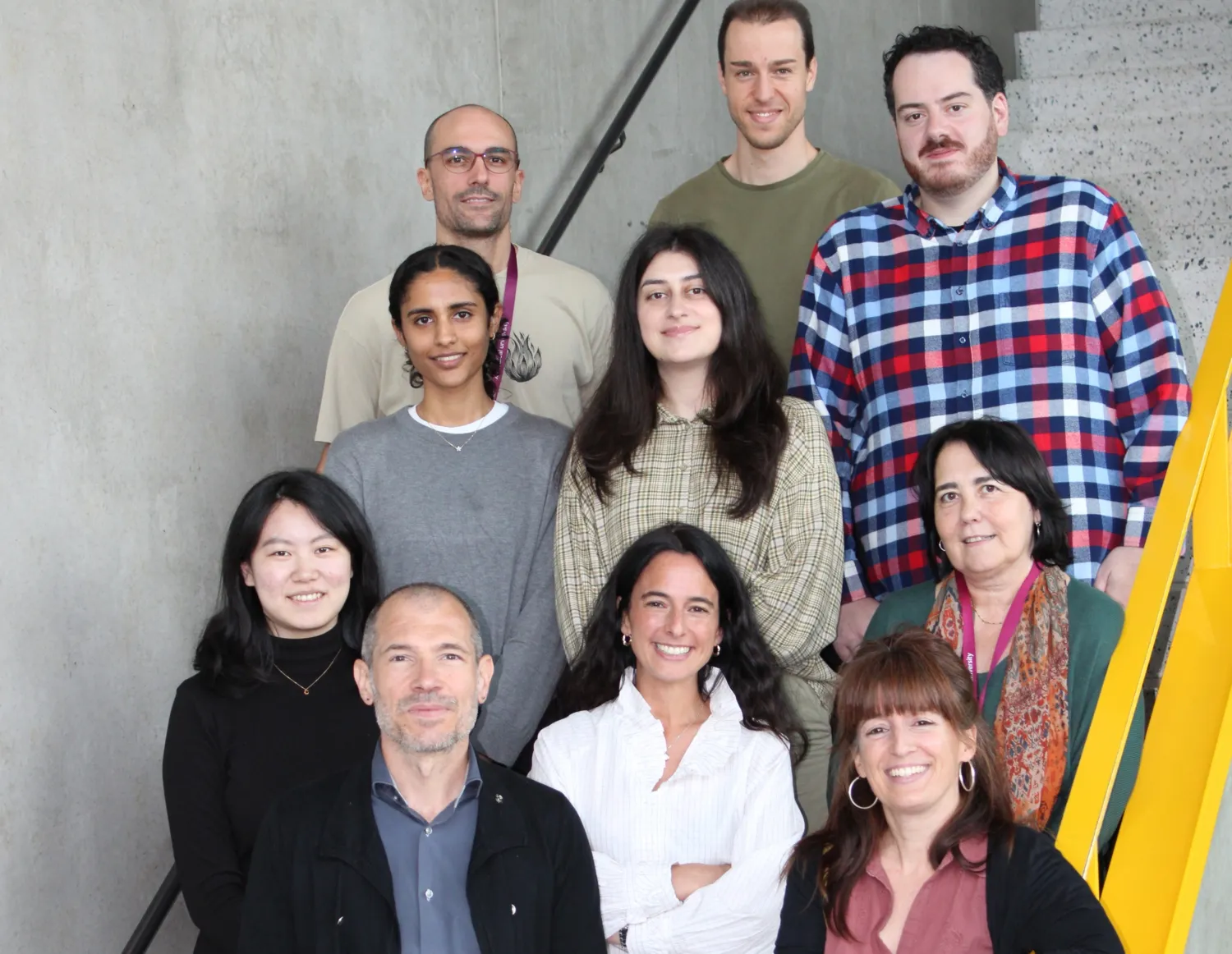
Research news and upcoming activities
Our research
Recognizing aging as a complex and heterogeneous process, our research aims to advance the understanding of health in older age by moving beyond the traditional focus on single diseases toward a multidimensional and longitudinal perspective on health trajectories. By integrating information on chronic diseases, physical and cognitive function, psychosocial factors, lifestyle, and care utilization, we study how complex health profiles develop and influence the needs for health and social care among older adults.
Our research relies on large population-based cohort studies, particularly the Swedish National study on Aging and Care in Kungsholmen (SNAC-K), as well as national health and social care registers and population-based surveys.
Using advanced epidemiological and statistical methods, we analyze how clinical, behavioral, and social factors interact over time to shape health trajectories in older adults. The work is carried out through interdisciplinary collaborations with national and international partners in epidemiology and public health, geriatrics, health services research, and social care. By combining insights from these fields, we aim to generate knowledge that supports more integrated and proactive public health and care systems for aging populations.
In particular, our research focuses on the following areas:
Healthy aging involves more than the absence of disease; for older adults, maintaining functional ability and independence is essential. However, healthcare systems often struggle to detect early signs of health deterioration and to respond swiftly to changing care needs.
To address this challenge, our group has developed the Health Assessment Tool (HAT) and related geriatric health charts, which provide a multidimensional assessment of health by integrating information on diseases, physical function, and cognition. Building on this work, we investigate the predictive capacity and feasibility of implementing HAT in real-world healthcare settings, particularly in Swedish primary care. Our goal is to provide healthcare professionals with evidence-based tools that facilitate early identification of individuals at risk of rapid health decline and support preventive interventions aimed at maintaining functional independence.
Older adults living with multiple chronic conditions frequently interact with numerous healthcare and social care providers. Ensuring effective coordination among these professionals is critical for responding to the growing demands of aging populations. Despite increasing interest in integrated care models, important questions remain regarding how to design, implement, and evaluate truly person-centered care systems, while ensuring patient and public involvement.
Our research examines how complex health profiles influence older adults’ needs for medical and social care services and explores strategies for improving the organization and delivery of care for individuals with multimorbidity and cognitive impairment, including those living with dementia. Using data from aging cohorts, population-based studies, and national registers, and within the framework of the KI Transdisciplinary Research Center for Personalized Dementia Prevention and Care (TraCeDem), we seek to identify approaches that support more integrated and responsive care systems.
Population aging and transformations in long-term care systems have led to an increasing number of older adults providing informal care, often to spouses or close relatives with complex health needs. While this caregiving role can be personally meaningful and is essential for the sustainability of care systems, it may also expose older caregivers to increased physical and psychological strain, particularly as they face challenges related to their own health decline.
Our research investigates the magnitude, characteristics, and health consequences of informal caregiving among older adults. Through dedicated nationwide surveys, routine national registers and longitudinal cohort studies, we map caregiving profiles, care contexts, and the health trajectories of older caregivers. This work aims to identify those most vulnerable to adverse health outcomes and to inform the development of policies and services that better support the often “invisible” informal caregivers in aging societies.
Multimorbidity is often accompanied by progressive alterations in organ function that shape health trajectories in later life. Our research focuses on the interplay between multimorbidity and kidney function, recognizing chronic kidney disease (CKD) both as a consequence of cumulative disease burden and as a contributor to further clinical complexity. Using longitudinal population-based cohorts together with large clinical databases—including the Stockholm CREAtinine Measurements (SCREAM) project—we examine how different combinations of chronic diseases relate to trajectories of kidney function decline and the development of kidney damage markers such as albuminuria. Through this work, we aim to better understand the clinical complexity of multimorbidity and support improved management of older adults with multiple chronic conditions.
Our work also addresses key methodological and healthcare system challenges in recognizing and managing CKD in routine clinical practice. Ongoing research further investigates the population burden of CKD and socioeconomic inequalities in disease detection, monitoring, and treatment.
Lifestyle plays a crucial role in the development of chronic diseases, yet its influence on geriatric syndromes remains insufficiently understood. Our research investigates how dietary patterns, food processing, and nutrients shape multidimensional health and the development and progression of multimorbidity.
We collect current dietary data using state-of-the-art artificial intelligence methods and leverage detailed longitudinal information from national and international population-based cohorts, the Swedish National study on Aging and Care (Kungsholmen, Nordanstig, and Skåne) and Seniors-ENRICA 1 and 2, to examine how diet and other behavioral factors influence the biological mechanisms underlying aging and age-related health decline.
By elucidating these relationships, we aim to identify modifiable determinants that can delay the onset and progression of geriatric syndromes, ultimately promoting healthier aging trajectories and reducing the burden of complex health conditions in older adults.
Publications
All publications from group members
- Journal article: BMJ OPEN. 2026;16(10):e123930Godoy-Cumillaf A; Giakoni-Ramirez F; Munoz-Strale C; de Souza-Lima J; Parra-Saldias M; Duclos-Bastias D; Farias-Valenzuela C; Merellano-Navarro E; Bruneau-Chavez J; Bizzozero-Peroni B
- Journal article: CHILDREN-BASEL. 2026;13(10):1368Lavalle-Mellado P; Godoy-Cumillaf A; de Souza-Lima J; Parra-Saldias M; Duclos-Bastias D; Farias-Valenzuela C; Merellano-Navarro E; Díaz-Goñi V; Bizzozero-Peroni B
- Journal article: JAMA CARDIOLOGY. 2026GBD 2023 Heart Failure Collaborators; Johnson CO; Abbasi M; Abbasifard M; Abbastabar H; ElHafeez SA; Abdel Razeq NM; Abdelgalil AA; Abdolizadeh A; Abdoun M; Abdrabou M; Abdullahi A; Abebe TB; Abejew AA; Abil OZ; Abiodun O; Aboagye RG; Abohashem S; Aboouf MA; Abouelmagd ME; Abouzid M; Abramov D; Abtahi D; Abuadas FH; Abu-Gharbieh E; Abuhelwa AY; Abushanab D; Adams LC; Addo IY; Adedokun KA; Adegbile OE; Adegoke NA; Adeleke OT; Adeniyi MA; Adesina MA; Adesola RO; Adhikari K; Adisu MA; Adoma PO; Afoakwah C; Afrifa-Yamoah E; Sohail Afzal M; Aghaali M; Agide FD; Agordoh PD; Agostinis Sobrinho C; Agrawal P; Agyemang-Duah W; Ahmad D; Ahmad M; Ahmad S; Ahmad S; Ahmad S; Ahmad W; Ahmadi A; Ahmadi S; Ahmadian S; Ahmadzadeh K; Ahmed A; Ahmed GS; Ahmed MB; Ahmed M; Ahmed S; Ahmed SA; Ajami M; Ajayi AI; Akhigbe RE; Akhtar MN; Al Awaidy ST; Al Bahhawi T; Al Hasan SM; Al Nawayseh MK; Al Thaher Y; Al Zaabi OAM; Al Zoubi MAM; Alahdab F; Al-Ahmad MM; Alalalmeh SO; Alam MK; Alam R; Alanezi F; Alanzi T; Al-Ashwal FY; Alavi R; ALBashtawy MS; Aldabbour B; Al-Dalakta A; Aldawsari KA; Al-Dewik N; Aleidi SM; Alfalki AM; Algammal A; Algethami M; Alhabib K; Alhalaiqa FN; Alhumaydhi FA; Ali I; Ali MD; Ali MU; Ali R; Ali SS; Ali SY; Alif SM; Aligaz EM; Alimohammadi M; Na'uzo MA; Al-Jabi SW; Aljohani MS; Aljunid SM; Alkubati SA; Alla F; Allemailem KS; Allouh MZ; Almagharbeh WT; Almahmeed WA; Al-Marwani S; Almazan J; Alnaeem MM; Alniss HY; Alomari MA; Alosta MR; Al-Qudah M; Al-Qudimat AR; Alrawashdeh A; Al-Rifai RH; Alrimawi I; Alsaadi M; Alshahrani NZ; Altaf A; Altobaishat O; Altwalbeh D; Alvis-Guzman N; Al-Worafi YM; Aly H; Alyahya MS; Al-Zalabani AH; Alzoubi A; Alzoubi KH; Al-Zubairi AS; Al-Zyoud WA; Amini S; Amirtharaj AD; Ammirati E; Amu H; Amusa GA; Anagnostakis F; Ananda R; Andrei CL; Ang SP; Anil A; Anjanappa S; Anokye R; Anuoluwa BS; Anuoluwa IA; Anvari S; Anyasodor AE; Apostol GLC; Arabi H; Arabloo J; Aravkin A; Areda D; Aremu A; Arias de la Torre J; Aripov T; Arjmand G; Ärnlöv J; Aryntayeva N; Asamane EA; Ascione G; Asdaq SMB; Ashraf S; Ashraf T; Asiamah-Asare BKY; Aslam MS; Assariparambil AR; Ataç Ö; Athari SS; Atorkey P; Aujayeb A; Aung ZZ; Aurangzeb K; Awan UA; Awol KL; Awotidebe AW; Ayed A; Azad AKM; Azadnia A; Azami H; Azarboo A; Azarian M; Aziz MY; Aziz SA; Azzolino D; Babu AS; Bacha R; Badar M; Bagheri N; Baghlaf K; Baig AA; Bakhshali MA; Balakrishnan S; Baltatu OC; Bandara RP; Banik B; Barqawi HJ; Basharat Z; Bashir S; Bashiri A; Basiru A; Bastan M-M; Batarseh N; Batchi-Bouyou AL; Batool S; Beeraka NM; Behnam B; Belay BM; Bente Kamal Tune SN; Ben-Umeh KC; Berihun AA; Bhagat DS; Bhardwaj N; Bhardwaj P; Bhaskar S; Bhattacharjee P; Bhattacharya S; Bhatti GK; Bhuiyan MMH; Bimal T; Bitar AN; Bizzozero-Peroni B; Bohn L; Borran M; Carvajal AB; Bouaoud S; Boxe C; Brant LC; Bugiardini R; Bui LP; Bulamu NB; Busch F; Bustanji YK; Campos LA; Cao Y; Cao Z; Capodici A; Carvalho F; Chakraborty A; Chakraborty C; Chakraborty S; Chan JSK; Chandrasekaran B; Chattu VK; Chau LD; Chaudhary AA; Cheema AAA; Chen A-T; Chen H; Chen H; Chen MX; Chen X; Chew N; Chi G; Ching PR; Chong B; Chong K; Chopra D; Chopra H; Choudhari SG; Chowdhury EK; Chowdhury R; Chua JMT; Chung S-C; Chung S; Cicero AFG; Corda M; Cosma C; Costa VM; Cruz-Martins N; Dadras O; Dai J; Dai X; Dalakoti M; Damasceno A; D'Amico E; D'Anna L; Darcho SD; Davletov D; Dejenie TA; Delgado-Enciso I; Dergaa I; Derviševic E; Desai HD; Devanbu VGC; Dhali A; Dhane AS; Dhungel B; Di Pumpo M; Dias da Silva D; Do HPT; Do TC; Dohare S; Dorostkar F; Doshi OP; Dourado PMM; Dumbili E; Duraes AR; Duraisamy SB; Dutta S; Dutta S; E'mar AR; Edeh C; Edvardsson DJ; Ejeta D; Ekholuenetale M; Adel El Arab R; El Sayed I; Eladl MA; Elalfy A; Elgendy IY; Elhadi M; El-Huneidi W; Elkhanishy S; Elmeligy OAA; Elmonem MA; Elmoselhi AB; Elnaem MH; Eltahawy AS; Emeto TI; Eva FN; Fabin N; Fadavian H; Fagbamigbe AF; Fakhradiyev I; Fareed M; Farhana A; Al-Juhyiish WF; Fazylov T; Fekadu G; Fekadu G; Fernandez-Jimenez R; Ferrara P; Ferreira N; Fischer F; Flor LS; Fogacci F; Fornari C; Rodrigues CF; Foschi M; Gad AG; Gaipov A; Ganessane E; Gangachannaiah S; Ganguli A; Gao D; Garcia FB; Garg C; Garlasco J; Gaye B; Gebrehiwot M; Matin AG; Getacher L; Getahun GK; Gete KY; Ghaderzadeh M; Ghaffari K; Jolfayi AG; Ghafoury R; Ghamkhar A; Gharaibeh L; Ghasemi M; Ghashghaee A; Ghazy RM; Ghith NMM; Ghoba S; Gil A; Gilani SA; Gillum RF; Gizachew S; Göbölös L; Golechha M; Goleij P; Golinelli D; Golmohammadi M; Goshu YA; Goulart AC; Guadie HA; Guha A; Gunawardane DA; Gupta L; Gupta M; Gupta R; Gupta S; Gutiérrez-Murillo RS; Guzmán-Muñoz E; Hadi NR; Haghtalab A; Halboup AM; Halder P; Halim SA; Hamdy NM; Hamed M; Hamidi H; Hamidi S; Hamilton EB; Hanif A; Hanifi N; Hanna F; Haq MA; Haque OI; Hasaballah AI; Hasan F; Hasan MK; Hasan SMM; Hasani H; Hashempur MH; Hassan IN; Hassan II; Hassan MI; Hassan M; Hassan NAG; Hassan S; Havmoeller RJ; Hay SI; Hayatu A; He W-Q; Heidari G; Heidari M; Hein ZM; Hewage SA; Hezam K; Hiraike Y; Hoang M; Holla R; Hossain A; Hossain MS; Hossain SB; Hosseinzadeh M; Hostiuc M; Huang J; Hushmandi K; Hussein D; Huynh TN; Hwang B-F; Ibitoye SE; Ibrahim FM; Ibrahim RK; Ibrayeva A; Ikram A; Ilic I; Ilic M; Ilyasu S; Imoh LC; Iqbal D; Iqhrammullah M; Irfan B; Islam MR; Ismoldayev Y; Iso H; Iwagami M; Iwu CD; Iwu-Jaja C; Iyalomhe OE; Izadidehkordi S; Izquierdo-Condoy JS; Jaafari J; Jacob J; Jadidi A; Jafari-Khounigh A; Jaganathan V; Jahrami H; Jaiswal V; Yengejeh RJ; Jamal A; Jamaluddin J; Jamil S; Jawaid T; Jayasinghe YA; Jeganathan J; Jeong S; Ji Z; Jonas JB; Joo T; Jose J; Jose J; Joseph AP; Joseph MA; Joshi KJ; Joshua CE; Joukar F; Jozwiak JJ; Jung S-H; Juweid M; Kaambwa B; Kadir DH; Kahe F; Kakkar AK; Kalavani K; Kalra S; Kamorudeen RT; Kamyshnyi O; Kang J; Kankam SB; Kanmiki EW; Kanmodi KK; Kannan S; Kar SK; Karajizadeh M; Karakasis P; Behnagh AK; Karkhah S; Kashoo FZ; Kashyap MK; Kassa NI; Kaur A; Kaur A; Kayode GA; Kayola KK; Kazemian S; Kebede AZ; Kebede YT; Khaksar MA; Khalil AA; Khan A; Khan A; Khan IH; Khan M; Khan MI; Khan MF; Khan MA; Khan MU; Khan YS; Khan Z; Khasbage SU; Khatatbeh H; Khatatbeh M; Kheirallah KA; Khokhar M; Khosla P; Khosravi F; Khosravi S; Khubchandani J; Kifle ZD; Kim HJ; Kim J; Kim K; Kim MS; Kimokoti RW; Kisa A; Kondlahalli SKM; Kolahi A-A; Kompani F; Korzh O; Koulmane Laxminarayana SL; Krishan K; Krishnamoorthy V; Kua C-H; Kuanar A; Kuddus M; Kulimbet M; Kumar A; Kumar A; Kumar L; Kumar N; Kumar P; Kumar S; Kundu S; Kunutsor SK; Kurniasari MD; Kurpad KP; Kurpas D; Kustanti CY; Kusuma D; Kuttybayev A; Kwak T; Kytö V; L C P; Lahariya C; Lai H; Lakanova B; Laksono T; Larsson AO; Le T; Le THM; Ledda C; Lee H; Lee HL; Lee H; Lee RLS; Lee SW; Lee W-C; Leivaditis V; Leone PP; Leong E; Li C; Li J; Li J; Li M; Li M-C; Li Q; Li X; Li ZG; Lian Y; Lin J; Lindholm D; Linn S; Liu H; Liu X; Liu X; Liu X; Liu Y; Llanaj E; Lodhi MS; Lokunarangoda NC; López-Cortés A; López-Gil JF; Lu K; Lubinda J; Lucchetti G; Ludhiadch A; Luo P; Lusk JB; Lv L; Lytvyak E; Madadi F; Madureira-Carvalho ÁM; Maffia P; Mahalingam S; Mahamed SA; Mahmood NH; Mahmoud MA; Majid A; Malik AA; Malik B; Malik T; Malkamu B; Maniya MT; Mannan F; Mannethodi K; Mansourian M; Mantovani LG; Manzoor I; Manzoor S; Maqbool T; Marateb HR; Marino M; März W; Marzo RR; Marzouk S; Masi S; Mathangasinghe Y; Mathur N; Mavrovounis G; McPhail SM; Meftah E; Mehari M; Meto TM; Melisa S; Melwani S; Memon AR; Menezes GA; Mengistie EA; Mensah GA; Meo AS; Meo SA; Mercogliano M; Merlino G; Mesfin RA; Mestrovic T; Mettananda C; Mettananda S; Metwally MM; Miao KH; Miazgowski B; Mikrajab MA; Minervini G; Ming W-K; Khan Minhas AM; Mirshahvalad SA; Mishra V; Mitra T; Mogessie Y; Mohamed AE; Mohamed NS; Ahmed HM; Siraj HM; Mohammad T; Mohammadzadeh Z; Mohammed M; Mohammed O; Mohammed S; Mokdad AH; Mondal H; Montazerinamin S; Moradi A; Morgan AK; Morovvati M; Morsy MM; Mosaddeghi-Heris R; Mostafa MS; Mousavi P; Mozafar M; Yousefi KM; Mubarik S; Muche EA; Mudenda S; Muhammad JS; Mukhopadhyay A; Mulita F; Munjal K; Musa S; Mushtaq A; Muthu S; Muvunyi CM; Mwita JC; Myung W; Nabipoorashrafi S; Nagarajan AJ; Naik GR; Nainu F; Najmuldeen HHR; Nargus S; Nascimento BR; Nascimento GG; Naser MIH; Nasiri H; Nasoufidou A; Nassar M; Natto ZS; Nayak BP; Nekliudov N; Nekouei O; Nepal S; Nguyen D; Nguyen NP; Niazi RK; Nikoobar A; Nketia R; Nkrumah-Boateng PA; Noreen M; Nosseir NS; Noubiap JJ; Nri-Ezedi CA; Ntsekhe M; Nugen F; Nzoputam CI; Nzoputam OJ; Oancea B; Oduro MS; Ogbo FA; Ogunrinde A; Ojedoyin OO; Okeke SR; Okesanya OJ; Oladejo MK; Olagunju AT; Olalusi OV; Moraes Oliveira GM; Olorukooba AA; Olorunlana A; Oluwole OG; Omar Bali A; Orscelik A; Ortiz A; Ostrominski JW; Osuagwu UL; Ouyahia A; Owolabi MO; Oyebanji OA; Oyelade T; Ozsahin I; P A M; Padron-Monedero A; Padubidri JR; Paija DM; Palaniswamy V; Panda SK; Pantazopoulos I; Stoian AP; Papa MV; Papadimopoulos I; Pardhan S; Roudsari PP; Parida A; Parve S; Pasovic M; Passera R; Patel BU; Patel HP; Patel KN; Patel MN; Patel NN; Patel SV; Patil N; Patoulias D; Pattnaik S; Paudel U; Pawar SD; Toroudi HP; Peddireddy AM; Peprah P; Osei EP; Pereira AC; Perna S; Petcu I-R; Petermann-Rocha F; Pham TT; Philip AK; Piracha ZZ; Pirera E; Plotnikov E; Porntaveetus T; Pourasghary S; Pourghazi F; Pruc M; Pugliese NR; Puvvula J; Qasim NH; Qi X; Qureshi A; Shahraki HR; Rafiei D; Raghav P; Raghav YS; Rahim HM-A; Rahimi S; Rahman FS; Rahman F; Hifz Ur Rahman M; Rahman MM; Rahman MR; Rahman M; Rahman MA; Rahmani AM; Rahmati S; Raj JP; Raja A; Raja HAA; Rajendran G; Rajendran J; Rajendran R; Rajizadeh MA; Rajpoot PL; Ramadan MM; Ramadhan K; Ramasamy C; Ramasamy SK; Ramírez-Vélez R; Ramphul K; Rao AG; Rathi I; Rathish D; Ravi R; Rawal L; Reddy MMRK; Redwan EM; Regassa AA; Rehman A; Ur Rehman N; Ren J; Rezaei M; Rezaei N; Rezaeian M; Ribeiro ALP; Rizvi MR; Buendia Rodriguez JA; Röhr S; Roever L; Romadlon DS; Rony MKK; Root KT; Ross AGP; Rotimi K; Rout HS; Roy A; Roy S; Rwegerera GM; Saad AMA; Saad MO; Saadeddin A; Saber-Ayad MM; Saboor M; Saddique MN; Sadeghi E; Sadeghi M; Sadek B; Sadr H; Saeb MR; Saeed S; Saeed U; Saghazadeh A; Saha N; Sahban Rafsanjani A; Saheb Sharif-Askari N; Sahebkar A; Sajadi SM; Saki M; Sakshaug JW; Salami B; Saleem RSZ; Saleem S; Saleh MA; Salehi M; Salem A; Salihu AT; Samodra YL; Samuel VP; Samy AM; Santos IS; Sarate S; Saravanan A; Sarmadi M; Sarode S; Sarveazad A; Sassano M; Satpathy M; Satyam SM; Saurabh A; Far MS; Khai TS; Sayeed A; Schinckus C; Schlaich MP; Schuermans A; Selvaraj C; Selvaraj S; Senthilkumaran S; Sethi Y; Setiawan CH; Alshohadaei SMS; Shabalin S; Shaban-Nejad A; Shabil M; Shahab U; Shaharudin S; Shahid I; Shahid S; Shahid SMA; Shahid W; Shahini E; Shahwan MJ; Shaikh MA; Sham S; Shamim MA; Shams F; Shams-Beyranvand M; Shamsutdinova A; Shan D; Sharifan A; Rad JS; Sharifianjazi F; Sharma A; Sharma A; Sharma B; Sharma K; Sharma RK; Sharma U; Shastry S; Sheidaei A; Shenoy RR; Shetty M; Shetty P; Shetty P; Shi J; Shimul MMH; Shirali PA; Shittu A; Shivarov V; Shoaib A; Shool S; Shorofi SA; Shrestha S; Sidamo NB; Siddig EE; Silva JP; Singh AP; Singh B; Singh BP; Singh H; Singh JA; Singh K; Singh PS; Singh P; Singh SK; Singh S; Sinha MK; Skryabin VY; Sokhal BS; Solanki S; Sood A; Sood P; Soraneh S; Sorrentino M; Spartalis M; Sriram S; Srivastava DB; Stachteas P; Starodubova A; Stubbs B; Su C-Y; Subasi O; Subramaniyan V; Sullman MJM; Sun X; Sundström J; Swain CK; Szarpak L; Tabaja C; Tabatabaei SM; Tabche C; Tabibi R; Tabor BB; Tagiisuran B; Taheri N; Tajabadi S; Tam HL; Tan CS; Tanashat M; Tazhiyeva AY; Tedla MG; Temedie-Asogwa T; Temsah M-H; Teramoto M; Thakar V; Thangaraju P; Thangavelu L; Tharwat I; Thayakaran R; Thomas J; Thornton CS; Ticoalu JHV; Tomo S; Tonapa SI; Touko AD; Tovani-Palone MR; Tran QTH; Tran TQM; Tran TH; Trico D; Triplett T; Tristan CD; Truong QXN; Tse G; Tsegaye GW; Tully PJ; Ul Hassan A; Ullah A; Ullah H; Ullah I; Ullah R; Umair M; Umakanthan S; Umapathi KK; Umar HO; Umar M; Unim B; Unnikrishnan B; Upadhyay E; Usman JS; Uwishema O; Ozsahin DU; Uzunçibuk H; Vaithinathan AG; Valdez PR; Van den Eynde J; Varghese J; Vasankari TJ; Verma P; Vinh TB; Vitiello A; Vlassov V; Vos T; Vu LV; Wada AS; Wang L; Wang W; Wang Y; Ward PR; Wasihun YM; Wei X; Weintraub RG; Wicaksana AL; Wickramasinghe ND; Wu Z; Wubie YM; Xiao H; Xiao N; Xie W; Xu X; Yadegar A; Yahoo S; Yahya G; Yamagishi K; Yan LD; Yang C; Yang H; Yano Y; Yao H; Yassin MA; Yasufuku Y; Yaya S; Yesuf SA; Yewodiaw TK; Yigit A; Yin D; Yismaw YE; Yon DK; Yonemoto N; Younis MZ; Yu C; Yu H; Yu Y; Yunusa S; Yunusa I; Zafar M; Zafarjafarzadeh N; Zaghampour M; Zamora N; Zare I; Zarea K; Zargar S; Zastrozhin M; Zawiah M; Zeariya MGM; Zeru EM; Zhang B; Zhang DX; Zhang H; Zhang JMF; Zhang Y; Zhang Z; Zhanuzakov M; Zhong CC; Zhou X-D; Zhu B; Zhumagaliuly A; Zia H; Zoghi G; Zoromba MA; Zyoud AH; Zyoud SH; Murray CJL; Roth GA
- Review: ENVIRONMENTAL RESEARCH. 2026;306(Pt 3):125324Cekrezi S; Martinez-Andres M; Notario-Pacheco B; Marcilla-Toribio I; Rodriguez-Gutierrez E; Perez-Moreno A; Caraballo-Betancort AM; Garcia PR; Moratalla-Cebrian ML; Bizzozero-Peroni B
- Journal article: HEALTHCARE. 2026;14(18):2963Godoy-Cumillaf A; de Souza-Lima J; Parra-Saldias M; Duclos-Bastias D; Farias-Valenzuela C; Merellano-Navarro E; Bruneau-Chavez J; Diaz-Goni V; Bizzozero-Peroni B
- Journal article: OBESITY SURGERY. 2026;36(10):5325-5338Martinez-Rosales E; Hernandez-Martinez A; Lopez-Sanchez L; Torrente-Sanchez MJ; Esteban-Simon A; Villa-Gonzalez E; Barranco-Ruiz Y; Rodriguez-Perez MA; Alcaraz-Ibanez M; Gomez-Navarro C; Aceituno J; Reyes-Parrilla R; Aparicio-Gomez JA; Carmona-Rodriguez L; Soriano-Maldonado P; Martinez-Forte S; Fernandez-Alonso AM; Ferrer-Marquez M; Soriano-Maldonado A; Artero EG
- Journal article: EUROPEAN JOURNAL OF PREVENTIVE CARDIOLOGY. 2026;:zwag469Zacarias-Pons L; Blanch J; Alves-Cabratosa L; Dominguez-Armengol G; Marti-Lluch R; Ribas-Aulinas F; Ponjoan A; Romero V; Garcia-Ortiz L; del Cura-Gonzalez I; Ramos R
- Journal article: NUTRIENTS. 2026;18(17):2866Peral-Martinez F; Bizzozero-Peroni B; Diaz-Goni V; Olivo-Martins-de-Passos T; Peraile-Huerta AM; Prieto-Ayuso A; Jimenez-Lopez E; Martinez-Vizcaino V; Mesas AE
- Article: JAMA-JOURNAL OF THE AMERICAN MEDICAL ASSOCIATION. 2026;336(8):673-698Razo C; DeCleene NK; Johnson CO; Stark BA; LeGrand K; Aalruz H; Abaraogu UO; ElHafeez SA; Abdelmasseh M; Abdelnabi M; Abd-Elsalam S; Elshenawy RA; Abdelwahab SI; Abdolizadeh A; Abdollahi A; Abdoun M; Abdrabou M; Abdulah DM; Abdullahi A; Abdul-Rahman T; Abebe MS; Getahun HA; Abiodun OO; Abiodun O; Abohashem S; Abonie US; Abourashed NM; Abramov D; Abrar MM; Abtahi D; Abu Farha RK; Abubakar B; Abuhelwa AY; Abukhadijah HJ; Aburuz S; Abushanab D; Adams LC; Adamu NLL; Adane MM; Addo IY; Adedokun KA; Adegbile OE; Adegoke NA; Adekola SA; Adeleke OT; Adesina MA; Adisu MA; Adnan M; Afoakwah C; Afolabi AA; Afrashteh F; Afrifa-Yamoah E; Afzal S; Agordoh PD; Agyemang-Duah W; Ahmad A; Ahmad K; Ahmad S; Ahmad S; Ahmed A; Ahmed GS; Ahmed LA; Ahmed MS; Ahmed MS; Ahmed MSA; Ahmed M; Ahmed N; Ahmed SA; Ahmed Z; Aiyer A; Ajami M; Akalanka KHM; Akhtar MN; Akindele MO; Akkaif MA; Akrami AE; Akyea RK; Al Hasan SM; Al Zoubi MAM; Alahdab F; Al-Ahmad MM; Alajajian S; Alajlani MM; Alalwan TA; Al-Aly Z; Al-Amri IS; Alanzi TM; Alarifi A; Al-Ashwal FY; Al-Azayzih A; Al-Azzam S; Al-Bashaireh AM; Albashtawy M; Al-Dewik N; Aleidi SM; Algahtani FD; Algammal AM; Alhabib KF; Alhalaiqa FN; Ali A; Ali A; Ali BR; Ali MD; Ali MU; Ali R; Ali SS; Al-Iede M; Alif SM; Alipour M; Al-Jabi SW; Aljunid SM; Alkhatib MH; Alkubati SA; Allawi RH; Allemailem KS; Allouh MZ; Almagharbeh WT; Almahmeed W; Al-Marwani S; Almazan JU; Alnaeem MM; Alniss HY; Alomari MA; Alotaibi HFF; Alqahtani SA; AlQudah M; Alqudimat MR; Al-Qudimat AR; Al-Raddadi RM; Alrimawi I; Alrousan SM; Alsbou M; Alshahrani NZ; Al-Shami AS; Altaany Z; Altaf A; Althobiani MA; Altwalbeh D; Alwafi H; Al-Worafi YM; Aly H; Al-Zalabani AH; Alzoubi A; Alzoubi KH; Al-Zubairi AS; Amafah J; Mohammadi MA; Amin A; Amini S; Amini-Salehi E; Amusa GA; Ananda RA; Ancuceanu R; Ang SP; Anieto EM; Anil A; Anjana P; Anuoluwa BS; Anvari S; Anwar SL; Anyasodor AE; Appati W; Arabloo J; Arafa EA; Arafat M; Aravkin AY; Areda D; Arefnezhad R; Aregawi BB; de la Torre JA; Aripov T; Arockiaraj J; de Arruda GA; Asdaq SMB; Asghari-Jafarabadi M; Ashraf S; Ashraf SA; Ashraf T; Asiamah-Asare BKY; Atac O; Athar M; Athari SS; Atorkey P; Aurangzeb K; Awan SJ; Awan UA; Awol KLL; Awotidebe A; Ayala CO; Ayli BI; Azad AKM; Azarboo A; Aziz SA; Azzam AY; Azzolino D; Babiker R; Babu AS; Babu GR; Badar M; Badiye AD; Badran AA; Baghlaf KK; Baig AA; Bakhshali MA; Balabekova M; Balakrishnan S; Baltatu OC; Banach M; Banik PC; Barqawi HJ; Barrow A; Barua L; Bashir MI; Bashir S; Bashiri A; Bastan M-M; Bayat M; Bayih MT; Beeraka NM; Begum T; Behera P; Behera SM; Behnam B; Ramirez DFB; Belayneh M; Bello AB; Belo L; Berihun AA; Bhaskar S; Bhattacharjee P; Bhatti GK; Bhatti JS; Biswas A; Biswas B; Bizzozero-Peroni B; Bodur M; Bogale SK; Bohn L; Boloor A; Bolourinejad P; Bonny A; Carvajal AB; Bouaoud S; Boudalia S; Britton G; Bugiardini R; Busch F; Bustanji Y; Butt ZA; Campos LA; Cao Y; Catapano AL; Cegolon L; Cembranel F; Cenko E; Cerin E; Chadwick J; Chakraborty C; Chandika RM; Chandrasekar EK; Chandrasekaran B; Chattu VK; Lam DC; Chaudhary AA; Chaudhuri S; Cheema AAA; Chen A-T; Chen H; Chen H; Cheng H; Cheung KC; Chew NS; Chi G; Chichagi F; Ching PR; Cho WCS; Choi D-W; Chong B; Chopra D; Chopra H; Chopra S; Choudhari SG; Chu D-T; Chukwu CW; Chung S-C; Chung S; Cicero AFG; Cosma C; Criqui MH; Cruz-Martins N; Dadras O; Dahabiyeh L; Khatri BD; Dai X; Dai Z; Dalakoti M; D'Amico E; Damtie ET; Dandona L; Dandona R; D'Anna L; Danpanichkul P; Darcho SD; Dardas LA; Das SK; Davletov D; Davletov K; Dejenie TA; Del Bo C; Delgado-Enciso I; Denova-Gutierrez E; Dergaa I; Derseh HA; Dervisevic E; Desale AT; Devanbu VGC; Devegowda D; Dewan SMR; Dhali A; Dhimal M; Dhungel B; da Silva DD; Didehvar K; Ding X; Thanh CD; Thao HPD; Dohare S; Dong D; D'Oria M; Dorostkar F; Doshi OP; Doshi RP; Dourado PMM; Dowou RK; Dresse MT; Du M; Duncan BB; Duraes AR; Ebohon O; Ebraheim LLM; Edeh C; Eftekhari B; Sedeh AE; Ekholuenetale M; El Arab RA; Eladl MA; Eldaboush A; El-Dahiyat F; Elgendy IY; Elhadi M; Elhoumed M; El-Huneidi W; Elmeligy OAA; Elmonem MA; Elmoselhi AB; Elnaem MH; Eltahawy AS; Etaee F; Fabin N; Fadaka AO; Fagbamigbe AF; Fakhradiyev IR; Fakorede S; Farasani A; Fareed M; Farhana A; Faris MEM; Farsi F; Fatima Z; Fayaz M; Fazylov T; Fekadu G; Fernandez-Jimenez R; Ferreira N; Fischer F; Fogacci F; Fonzo M; Foschi M; Gadanya MA; Gajdacs M; Galali Y; Ganesan B; Ganesh B; Gangachannaiah S; Gao D; Garcia-Azorin D; Garg P; Gasevic D; Gautam RK; Gaye B; Gebresilassie MH; Getacher L; Gete KY; Ghadirian F; Ghaffari K; Jolfayi AG; Ghamkhar A; Gharaibeh L; Ghasemi M; Ghazy RM; Ghimire S; Ghith N; Gil AU; Gilani SA; Gill PS; Gnedovskaya EV; Goh LH; Gohari K; Gohil MN; Golechha M; Goleij P; Golmohammadi M; Goulart AC; Goyal A; Grada A; Grover A; Gu L; Gubari MIM; Gufue ZH; Guha A; Gunawardane DA; Guo Z; Gupta R; Gupta S; Gurgoglione FL; Guzman-Esquivel J; Guzman-Munoz E; Haghtalab A; Nam NH; Hailu KT; Halder P; Hamdy NM; Hamidi H; Hamidi S; Hammad EA; Hamoudi R; Hanif A; Hanifi N; Hankey GJ; Harsini S; Hartmann P; Hasan I; Hashempur MH; Hasnain S; Hassan A; Hassan IN; Hassan I; Hassan N; Hassan TS; Ahmed OH; Hayat K; Hebert JJ; Helmy YA; Hezam K; Hiraike Y; Holla R; Hoseinzadeh M; Hostiuc M; Hostiuc S; Hotwani P; Htay MNN; Hu Y; Huang J; Huang Y-S; Hushmandi K; Hussein D; Hussein MA; Hwang B-F; Ibitoye SE; Ibrahim IA; Ibrahim KS; Ibrayeva A; Ikiroma A; Ikram J; Ilesanmi OS; Ilic IM; Ilic MD; Imam MT; Imani M; Imodoye SO; Imoh LC; Inbaraj LR; Ionescu AI; Ionescu RT; Iqhrammullah M; Irham LM; Ishaqui AA; Islek D; Ismail NE; Ismoldayev Y; Isola G; Iwagami M; Iyer M; Izquierdo-Condoy JSS; Jacob J; Jafari-Khounigh A; Jahanshahi A; Jahrami H; Jakovljevic M; Jamal A; Jamali N; Jamaluddin J; James J; Jamshidi M; Jansen R; Jarrahi E; Javaid SS; Jawaid T; Jayasinghe YA; Jebasingh FK; Jemal M; Jeong S; Jeswani BM; Ji Z; Jibat NT; Jin W; Jokar M; Joo T; Joseph AP; Joseph MA; Joseph N; Sheldon JV; Raj JM; Joshi K; Joshua CE; Jung S-H; Jurisson M; Vaishali K; Kadir DHH; Kahe F; Kakkar AK; Kalani R; Kalavani K; Kalra S; Kamenova S; Kamorudeen RT; Kamyshnyi O; Kanaan SF; Kanmodi KK; Kansal S; Kantar RS; Kapoor N; Kar D; Karajizadeh M; Karakasis P; Karasneh RA; Karimi A; Behnagh AK; Karun S; Kashoo FZ; Kashyap MK; Kausar MA; Kazemian S; Kebede YT; Kesse-Guyot E; Khademi R; Khader YS; Khajuria H; Khaleel A; Khalid N; Khalid S; Khalil AA; Khalili A; Khalili P; Khan A; Khan M; Khan MAS; Khan MI; Khan MAB; Khan MH; Khan S; Khan S; Khan YS; Khasbage SU; Khatatbeh MM; Kheirallah KA; Khoshvaght S; Khosla P; Khosravi S; Kim HJ; Kim K; Kimokoti R; Kisa A; Kishore L; Kivimaki M; Kokkorakis M; Kolahi A-A; Kompani F; Kondybayeva A; Korzh O; Kostev K; Laxminarayana SLK; Krishan K; Kua C-H; Kuddus M; Kulimbet M; Kulkarni V; Kumar C; Kumar D; Kumar GA; Kumar J; Kumar L; Kumar N; Kumar SK; Kundu A; Kundu S; Kunutsor SK; Kurniasari MD; Kurpad KP; Kusuma D; Kyto V; Lahariya C; Lai DTC; Lai H; Lajunen T; Lakanova B; Lallukka T; Lantos T; Larebo YM; Larsson AO; Lasrado S; Duc TL; Thao TTL; Thoa L; Trang TBL; Ledda C; Lee H; Lee H; Lee S-W; Lee SV; Lee SW; Lee W-C; Leivaditis V; Lema GK; Lemma DA; Lenjisa J; Lewis MS; Li C; Li M-C; Li Q; Li S; Li X; Li Y; Lim L-L; Lindholm D; Liu H; Liu X; Liu X; Liu Y; Livingstone KM; Llanaj E; Lodhi MS; Lokunarangoda NC; Lopez-Gil JF; Lorkowski S; Lucchetti G; Lui PPY; Luo P; Lv L; Lytvyak E; Amin HIM; Ma KS-K; Mabrok M; Machoy-Rakoczy M; Madinehzad SA; Maffia P; Gomez JAM; Mahalleh M; Mahmood NH; Malik AA; Malik MZ; Malik T; Malta DC; Mamand DR; Maniya MT; Mannethodi K; Mansoor F; Mansourian M; Manzoor S; Maqsood K; Marateb HR; Marghani BH; Marino M; Martinez-Piedra R; Martini D; Martini S; Martorell M; Marz W; Marzouk S; Masi S; Masrouri S; Mathur N; Matozinhos FP; Mattiello R; Maude RJ; Mavrovounis G; McPhail S; Mehto S; Meles HN; Mendoza W; Menezes GA; Menezes RG; Mengistie EA; Menon TP; Mensah GA; Merlino G; Mestrovic T; Mettananda CDK; Mettananda S; Metwally MMM; Jonasson JM; Mikrajab MAN; Minhas AMK; Mirrakhimov EM; Mitra S; Mitra T; Mittal M; Modi D; Mohamed MG; Mohamed NS; Ahmed KAHM; Mohammad AM; Mohammad T; Mohammadi A; Mohammadi M; Mohammadi S; Mohammadian-Hafshejani A; Mohammed O; Mohan S; Mohsen Y; Molla TS; Molokhia M; Monazzami A; Moni MA; Namin SM; Ghalibaf AM; Morovvati M; Heris RM; Motappa R; Mousavi SA; Kiasary SMSM; Mozafar M; Yousefi KM; Mubarik S; Muhammad JS; Munkhsaikhan Y; Munshi A; Musa S; Muthu S; Mwita JC; Myung W; Nabipoorashrafi S; Nagarajan AJ; Naik GR; Naik H; Nainu F; Nargus S; Nartey Y; Nasrollahizadeh A; Nassar M; Natto ZS; Nauman J; Naureen Z; Navaratna SNK; Nawaiseh HK; Nayak BP; Nayak VC; Nazari M; Ndakotsu AK; Nega AT; Nega MH; Negash AA; Negash A; Negoi I; Abadi RNS; Nematollahi MH; Cao DN; Cuong TN; Hau THN; Nghia PN; Phat TN; Van TN; Niazi RK; Nieddu L; Nketia R; Nomura S; Noreen M; Nawsherwan; Noubiap JJ; Nri-Ezedi CA; Ntsekhe M; Nugen F; Nur A; Oancea B; Odat RM; Oddi FM; Odediji SA; Ogunmodede OS; Oh I-H; Ojedoyin OO; Ojo OA; Okati-Aliabad H; Okekunle AP; Okonji OC; Oliveira GMM; Olorukooba AA; Ong QC; Ordak M; Orru H; Orscelik A; Ortiz A; Ortiz-Prado E; Osborne A; Osei GN; Ostrominski J; Osuagwu UL; Oumer A; Ouyahia A; Owolabi MO; Oyebola K; Ozsahin I; Anand MP; Padron-Monedero A; Padubidri JR; Palicz T; Panda SK; Pandi-Perumal SR; Panos GD; Papa MV; Papadimopoulos I; Pardhan S; Parija PP; Parikh RR; Pascucci E; Pasovic M; Passera R; Patel KN; Patel M; Patel NN; Patel NR; Patel S; Patil A; Patil S; Patoulias D; Pattnaik S; Toroudi HP; Pekarcikova J; Peprah P; Pereira G; Perico N; Perna S; Petermann-Rocha F; Pirera E; Pirnejad H; Plotnikov E; Poddighe D; Poluru R; Porntaveetus T; Pradhan PMS; Prasad M; Prashant A; Prates EJS; Pugliese NR; Puvvula J; Qi X; Qiu J-Y; Qureshi A; Radhakrishnan V; Raghav P; Raghav YSR; Raghuveer P; Rahamon SK; Rahim F; Rahim HM-A; Rahimi MS; Rahman FM; Rahman M; Rahman MHU; Rahman M; Rahman MA; Raj JP; Raja A; Rajendran J; Rajput P; Ramadan MM; Ramasamy C; Ramasamy SK; Rao AG; Rao M; Rao SJ; Rashedi V; Rasouli-Saravani A; Rath S; Rathi I; Rathish D; Rauniyar SK; Rawaf DL; Rawaf S; Rawassizadeh R; Ray A; Reddy MMRK; Redwan EM; Rehman NU; Remuzzi G; Rezaei M; Rezaei N; Rezaeian M; Rodriguez JAB; Roever L; Romadlon DS; Romoli M; Rony MKK; Ross AGP; Roy S; Roy S; Rubeshkumar P; Russo M; Rwegerera GM; Saad AMA; Saber-Ayad MM; Sabet CJ; Sadarangani KP; Rafiei SKS; Saddique MN; Sadee BA; Sadeghi E; Sadeghi E; Sadeghi M; Sadek B; Sadek M; Sadr H; Saeb MR; Saeed M; Saeed U; Saeedi M; Safiullah M; Saghazadeh A; Sagoe D; Sah AK; Sharif-Askari FS; Sahebkar A; Sajadi SM; Sajid MR; Saki M; Sakshaug JW; Salami AA; Saleem RSZ; Saleh MA; Salehi M; Salihu AT; Salimi S; Samargandy S; Samodra YL; Samy AM; Saravanan A; Sarfo JO; Sarmadi M; Sarode GS; Sarode SC; Sarrafzadegan N; Sassano M; Sathian B; Narayanan MKS; Far MS; Schlaich MP; Schuermans A; Schwarz G; Sejben A; Selvaraj S; Semreen MH; Senol YC; Serban D; Sessa F; Sethi Y; Setiawan CH; Sewor C; Seylani A; Shahid S; Shahini E; Shahrahmani F; Shahwan MJ; Sham S; Shamim MA; Shamsi A; Shan D; Shanawaz M; Shannawaz M; Sharif N; Sharifan A; Sharma BK; Sharma B; Sharma K; Sharma M; Sharma RK; Sharma U; Sharma V; Shastry S; Shehzadi S; Sheidaei A; Shenoy RR; Shetty M; Shetty PH; Shi F; Shi H-Z; Shi Y; Shimels T; Shiri R; Shittu A; Shiue I; Shoaib A; Shool S; Shorofi SA; Shrestha S; Shuval K; Sia C-H; Siddig EE; Siddiqi AK; Siddiqua A; Silva DAS; Silva LMLR; Simkhada PP; Singh A; Singh B; Singh H; Singh H; Singh JA; Singh L; Singh P; Singh PS; Singh P; Singh S; Singh SK; Singh S; Singh V; Sinha MK; Sinha R; Skryabin VY; Sokhal BS; Sood P; Soraneh S; Sorensen RJD; Sorrentino M; Spartalis M; Srivastav P; Stachteas P; Stanikzai MH; Starodubova AV; Straube S; Stubbs P; Su C-Y; Subramaniyan V; Suhag A; Sulaieva O; Sulaiman SK; Odidi MS; Sulistiyorini D; Sun J; Sun Z; Swain CK; Szarpak L; Ty SS; Damavandi P; Tabares-Seisdedos R; Tabatabaei SM; Tabatabaeizadeh S-A; Tabatabai S; Tabche C; Tadele A; Tagiisuran B; Ali ETO; Soodejani MT; Taiba J; Tajabadi S; Talic S; Talukder A; Zadeh SST; Adugna DT; Tampa M; Tan J; Tanabayeva D; Tanashat M; Tang J; Tantisattamo E; Tariku MK; Tariq S; Tavangar SM; Tedla MG; Temsah R; Teramoto M; Tesfamariam WB; Tesfu AA; Tewari J; Thakar V; Thangavelu L; Tharwat I; Tharwat S; Thienemann F; Thiruvengadam M; Thomas NK; Ticoalu JHV; Tiruye TY; Tiwari K; Tleshev M; Tomo S; Tonelli M; Topor-Madry R; Touvier M; Tovani-Palone MR; An TT; Thang HT; Nguyen TMD; Trico D; Tristan CD; Tse BG; Tseriotis V-S; Tualeka AR; Tye SC; Udoakang AJ; Ullah A; Ullah R; Ullah S; Umair M; Umar L; Upadhya D; Upadhyay E; Usman JS; Ozsahin DU; Uzuncibuk H; Vaithinathan AG; Vakili O; Van den Eynde J; Varghese J; Vasankari TJ; Vellingiri B; Venketasubramanian N; Verma AK; Verma P; Villalobos-Daniel VE; Vlassov V; Wan J-Y; Wang C; Wang N; Wang Q; Wang S; Wang S; Wang W; Wang W; Wang Y; Wang Y; Wang Z; Wani TAA; Waqar AB; Wei MY; Weintraub RG; Wibowo YC; Wicaksana AL; Wickramasinghe DP; Wickramasinghe ND; Wilandika A; Witts WK; Wonde TE; Wongsin U; Wu P; Xiao G; Xie W; Xu S; Xu S; Xu W; Xu X; Yadav V; Yadegar A; Yahoo S; Yamagishi K; Yang H; Yano Y; Yao H; Yarahmadi A; Yaribeygi H; Yesuf SA; Yin D; Yismaw YE; Yon DK; Yonemoto N; Yu C; Yu EA; Yu H; Yu Y; Yuan Q; Yuzbashian E; Zafar M; Zaghampour M; Zamagni G; Zamora N; Zanghi A; Zargar S; Zawiah M; Zeariya MGM; Zeru EM; Zhang B; Zhang CJP; Zhang H; Zhang JMF; Zhang Y; Zhang Z; Zhanuzakov M; Zhao Z; Zheng M-H; Zhong A; Zhong CC; Zhou H; Zhou J; Zhou X-D; Zhu Z; Zhumagaliuly A; Zitoun OA; Zoghi G; Zoromba MA; Zumla A; Zyoud AH; Zyoud SH; Zyoud SH; Hay SI; Mokdad AH; Murray CJL; Roth GA
- Article: JOURNAL OF INTERNAL MEDICINE. 2026;300(5):642-658Kalmbach L; Abbad-Gomez D; Beridze G; Rodriguez-Artalejo F; Vetrano DL; Calderon-Larranaga A; Carballo-Casla A
- Article: CARDIOVASCULAR DRUGS AND THERAPY. 2026;40(4):1485-1502Amrouch C; Vetrano DL; De Bacquer D; Ferri N; Simal I; Damiano C; Dai L; Calderon-Larranaga A; Brys ADH; De Spiegeleer A; Lip GYH; Johnsen SP; Wastesson JW; Johnell K; De Smedt D; Petrovic M
- Journal article: SCIENTIFIC REPORTS. 2026Olivo-Martins-de-Passos T; Mesas AE; Beneit N; Díaz-Goñi V; Peral-Martínez F; Cekrezi S; Recio-Rodríguez JI; Martínez-Vizcaíno V; Bizzozero-Peroni B; Jiménez-López E
- Review: INTERNATIONAL JOURNAL OF EATING DISORDERS. 2026Diaz-Goni V; Mesas AE; Jimenez-Lopez E; Olivo-Martins-de-Passos T; Peral-Martinez F; Peraile-Huerta AM; Visier-Alfonso ME; Garrido-Miguel M; Bizzozero-Peroni B
- Article: SCANDINAVIAN JOURNAL OF PUBLIC HEALTH. 2026;54(5):512-521Kirvalidze M; Hanson E; Magnusson L; Dahlberg L; Wimo A; Morin L; Calderon-Larranaga A
- Article: JOURNAL OF INTERNAL MEDICINE. 2026;300(1):39-50Tazzeo C; Gregorio C; Rizzuto D; Fratiglioni L; Innocenti F; Bjurgert J; Maggi S; Welmer A-K; Zucchelli A; Calderon-Larranaga A; Vetrano DL
- Preprint: JMIR PREPRINTS. 2026Gil Rodríguez M; Amaya-Pascasio L; Hernández-Martínez A; Rodríguez-Camacho M; Fernandez-Escabias M; Carrilho-Candeias S; Ramos-Teodoro M; Rodríguez-Solana A; Orellana-Jaén A; Fernández-Escabias R; Tomás-García M; Castro-Ropero B; Del Olmo-Iruela, L; López-López MI; García-Luna K; Morales-Márquez F; Garrigo González-Garzón L; Gómez-García S; Pérez-Ortega I; Álvarez-Ariza MDM; Rodríguez-Pérez M; Rodríguez-Sánchez AJ; Villegas-Rodríguez I; Amaro-Gahete FJ; Soriano-Maldonado A; Martínez-Sánchez P
- Journal article: JMIR RESEARCH PROTOCOLS. 2026;15:e99013Leon-Garcia M; Alvarez-Perez S; Gesto-Gomez J; Urbano-Molina C; Soto-Diaz S; Cardenas-Valladolid J; Rodriguez-Rodriguez L; Diaz-Holgado A; del Cura-Gonzalez I; De La Cruz-bertolo J; Garcia-Barrio N; Cruz-Bermudez JL; Garcia-Fernandez C; Rodriguez-Antolin C; Garcia-Aldars L; Moreda-Sanchez EM; Lopez AR; Alonso-Cortes JMV; Gonzalez AIG; Salinero-Fort MA
- Article: JAMA NETWORK OPEN. 2026;9(6):e2620254Mrhar A; Carballo-Casla A; Grande G; Gregorio C; Triolo F; Valletta M; Fredolini C; Gregoric Kramberger M; Kuhar A; Winblad B; Fratiglioni L; Calderon-Larranaga A; Vetrano DL
- Article: NUTRIENTS. 2026;18(12):2018Diaz-Goni V; Peral-Martinez F; Olivo-Martins-de-Passos T; Visier-Alfonso ME; Beneit N; Jimenez-Lopez E; Mesas AE; Bizzozero-Peroni B
- Editorial: JOURNAL OF CLINICAL EPIDEMIOLOGY. 2026;194:112204Gonzalez-Gonzalez AI; Fabbri E; Schurmann L; Blom J; Puzhko S; Caldero-Larranaga A; Grede N; Guthrie B; Hanf M; Meyer G; Perera R; Rijken M; Scherer M; Smith SM; Steinman MA; Straus S; Valderas JM; Van Den Akker M; Montori VM; Muth C
- Show more
Funding
- Swedish Research Council (VR)
- The Swedish Research Council for Health, Working Life, and Welfare (Forte)
- Karolinska Institutet Faculty Board (Senior Researcher position)
- Karolinska Institutet Strategic Research Area in Epidemiology – SfoEpi
- Karolinska Institutet Foundation for Medical Research
- Karolinska Institutet Foundation for Geriatric Diseases
- Region Stockholm network healthcare funding
- Swedish Society of Medicine
- David and Astrid Hagelén Foundation
- Martin Rind Foundation
- Gamla Tjänarinnor Foundation
- Osterman Foundation
- Swedish Alzheimer's Foundation
- Sigurd and Elsa Golje Foundation
- Ragnhild and Einar Lundström Foundation
Staff and contact
Group leader
- Amaia Calderón-LarrañagaPrincipal Researcher | Docent
All members of the group
- Joan Ars RicartAffiliated to Research
Physiotherapist and Researcher in geriatric rehabilitation, movement patterns and device-measured physical activity/sedentary behaviour, with an implementation focus.
- Giorgi BeridzePostdoctoral Researcher
- Bruno Bizzozero PeroniPostdoctoral Researcher
Postdoctoral researcher in life-course epidemiology, specializing in lifestyle factors, cardiometabolic health, mental and neurocognitive disorders, and population-based prevention research.
- Adrián Carballo CaslaPostdoctoral Researcher
Nutritional epidemiologist at KI’s Aging Research Center. We study how diet shapes healthy ageing and chronic diseases to inform personalised dietary guidance for older adults.
- Rachel Ann Da CostaPhd Student
- MARIA ISABEL CURA-GONZALEZAffiliated to Research
- Åsa Hedberg RundgrenAffiliated to Research
- Alba Hernandez-MartinezAffiliated to Research
- Francesco InnocentiAffiliated to Research
- Mariam KirvalidzeResearch Coordinator
MD, MPH, PhD at Karolinska Institutet researching aging, informal caregiving, and health outcomes, with experience in epidemiology, public health policy, and global health institutions.
- Emmanouil KokoroskosPhd Student
Resident doctor in Family Medicine and PhD student at KI, focusing on aging and primary care. Based at ARC and the Division of Family Medicine and Primary Care.
- Yiming MaPhd Student
- Lucia Saez-GonzalezAffiliated to Research
Researcher in population health, epidemiology, and ageing. My work focuses on the social, psychosocial, behavioural, and sex- and gender-related determinants of healthy ageing and health inequalities
Contact and visit us
Postal address
Aging Research Center, Department of Neurobiology, Care Sciences and Society
Karolinska Institutet
SE-171 77 Stockholm
Visiting address
Tomtebodavägen 18 A, Widerström Building, floors 9 and 10
SE-171 65 Solna
Map to Widerström building, Tomtebodavägen 18a, Solna
Funded projects
Monitoring older adults’ health for preventive and early interventions: use of the Health Assessment Tool (HAT) in the Swedish primary care setting
- Funder: Swedish Research Council (Vetenskapsrådet)
- Main applicant: Amaia Calderón-Larrañaga
- Duration: 2022-2024
Does our healthcare system truly fit older people? Impact of multidimensional health trajectories on the use of medical and social care services
- Funder: Swedish Research Council for Health, Working Life and Welfare (Forte)
- Main applicant: Amaia Calderón-Larrañaga
- Duration: 2018-2020
Phenotypes of healthier aging: the role of environmental, behavioural and biological factors on health trajectories
- Funder: Swedish Research Council (Vetenskapsrådet), Starting Grant
- Main applicant: Amaia Calderón-Larrañaga
- Duration: 2017-2019
Determinants of health changes in the elderly population: a person-centered dynamic approach
- Funder: Strategic Young Scholar Grant from Karolinska Institutet Strategic Research Area in Epidemiology – SfoEpi
- Main applicant: Amaia Calderón-Larrañaga
- Duration: 2017-2019
KI Transdisciplinary Research Center for Personalized Dementia Prevention & Care (TraCeDem)
- Funder: Swedish Research Council for Health, Working Life and Welfare (Forte)
- Main applicant: Amaia Calderón-Larrañaga
- Duration: 2026-2031
Identifying new strategies for integrated person-centered care of older adults with dementia: from early signs to severe stages
- Funder: Swedish Research Council for Health, Working Life and Welfare (Forte)
- Main applicant: Amaia Calderón-Larrañaga
- Duration: 2025-2027
Person-centered and integrated care for older people: Successful experiences across Sweden
- Funder: Swedish Research Council for Health, Working Life and Welfare (Forte), Conference Grant
- Main applicant: Amaia Calderón-Larrañaga
- Duration: 2023
Caregiving and immune health in older adults: evidence from a Swedish population-based cohort
- Funder: Stiftelsen Ragnhild och Einar Lundströms Minne
- Main applicant: Mariam Kirvalidze
- Duration: 2026-2027
Consequences of providing informal care to spouses with incident stroke: a national register-based study in Sweden
- Funder: Stiftelsen Ragnhild och Einar Lundströms Minne
- Main applicant: Mariam Kirvalidze
- Duration: 2024-2025
Older adults’ contribution to informal caregiving: temporal trends, profiles and adverse health consequences
- Funder: Swedish Research Council for Health, Working Life and Welfare (Forte)
- Main applicant: Amaia Calderón-Larrañaga
- Duration: 2022-2024
Effectiveness of interventions to address the negative health outcomes of informal caregiving to older adults: an umbrella review
- Funder: Swedish Research Council for Health, Working Life and Welfare (Forte)
- Main applicant: Amaia Calderón-Larrañaga
- Duration: 2021
Mind the Diagnostic Gap: Undiagnosed Chronic Kidney Disease and Its Impact on Multimorbidity Measurement and Outcomes
- Funder: Svenska Läkarsällskapet (Swedish Society of Medicine)
- Main applicant: Giorgi Beridze
- Duration: 2027-2028
Pathways towards healthier aging: exploring the interplay between multimorbidity, kidney function decline and poor diet quality in older adults
- Funder: Svenska Läkarsällskapet (Swedish Society of Medicine)
- Co-applicants: Amaia Calderón-Larrañaga and Giorgi Beridze
- Duration: 2025-2027
Bidirectional associations between multimorbidity and kidney function
- Funder: Martin Rind Foundation
- Main applicant: Giorgi Beridze
- Duration: 2025-2027
Multimorbidity patterns and the risk of albuminuria: Findings from the Stockholm Creatinine Measurements (SCREAM) project
- Funder: Sigurd and Elsa Golje Foundation
- Main applicant: Giorgi Beridze
- Duration: 2025-2026
Multimorbidity and kidney function in old age: longitudinal trajectories and synergistic effects
- Funder: Consolidator bridging grant from Karolinska Institutet Strategic Research Area in Epidemiology – SfoEpi
- Main applicant: Amaia Calderón-Larrañaga
- Duration: 2024-2026
Kidney function decline in old age – biomarker profile and associations with chronic disease accumulation
- Funder: Sigurd and Elsa Golje Foundation
- Main applicant: Giorgi Beridze
- Duration: 2023-2024
Associations between different patterns of multimorbidity and the evolution of kidney function in older adults
- Funder: Sigurd and Elsa Golje Foundation
- Main applicant: Giorgi Beridze
- Duration: 2022-2023
Beyond the Plate: Integrating Novel Techniques and Exposure Dimensions in Geriatric Nutritional Epidemiology
- Funder: Riksbankens Jubileumsfond, Erik Rönnberg's Donations
- Main applicant: Adrián Carballo-Casla
- Duration: 2027–2029
Personalized diet for healthier longevity: the role of cardiovascular disease and cognitive impairment
- Funder: David and Astrid Hagelén Foundation
- Main applicant: Adrián Carballo-Casla
- Duration: 2025-2027
Personalized diet for healthier longevity: the role of dietary changes, sensitive windows of exposure, and psychosocial background
- Funder: Swedish Research Council for Health, Working Life and Welfare (Forte), Starting Grant
- Main applicant: Adrián Carballo-Casla
- Duration: 2025-2027
Leveraging artificial intelligence for novel dietary data collection in older adults
- Funder: Karolinska Institutet Strategic Research Area in Epidemiology – SfoEpi
- Main applicant: Adrián Carballo-Casla
- Duration: 2025-2026
Biological signatures of dietary patterns and long term multimorbidity accumulation in older adults: insights from a Swedish population-based study
- Funder: Foundation for Geriatric Diseases
- Main applicant: Adrián Carballo-Casla
- Duration: 2026
Diet quality and malnutrition in older adults: a multicohort study
- Funder: Foundation for Geriatric Diseases
- Main applicant: Adrián Carballo-Casla
- Duration: 2024