Multimorbidity and frailty in older adults – Davide Liborio Vetrano group

Our research aims to identify personalized prevention and intervention targets that can extend healthspan and improve outcomes for older adults. Using a geroscience approach, we study how biological aging interacts with clinical and functional factors to drive vulnerability. By focusing on multimorbidity, frailty, and dementia, we work to refine risk stratification, improve prognostication, and support healthier aging trajectories.

Research news

Our research

Recognizing aging as a complex and heterogeneous process, our overarching aim is to identify clinically meaningful and targetable health phenotypes that can improve the health and wellbeing of older adults. By decomposing and integrating key health domains – such as chronic disease burden, physical function, and cognitive performance – we develop replicable models that classify individuals into more homogeneous health profiles.

Multimorbidity, frailty, disability, and dementia are central geriatric syndromes that we use both as analytical frameworks and as clinically relevant phenotypes. These constructs serve as actionable targets for personalized prevention and intervention strategies, while also functioning as robust metrics for risk stratification across populations.

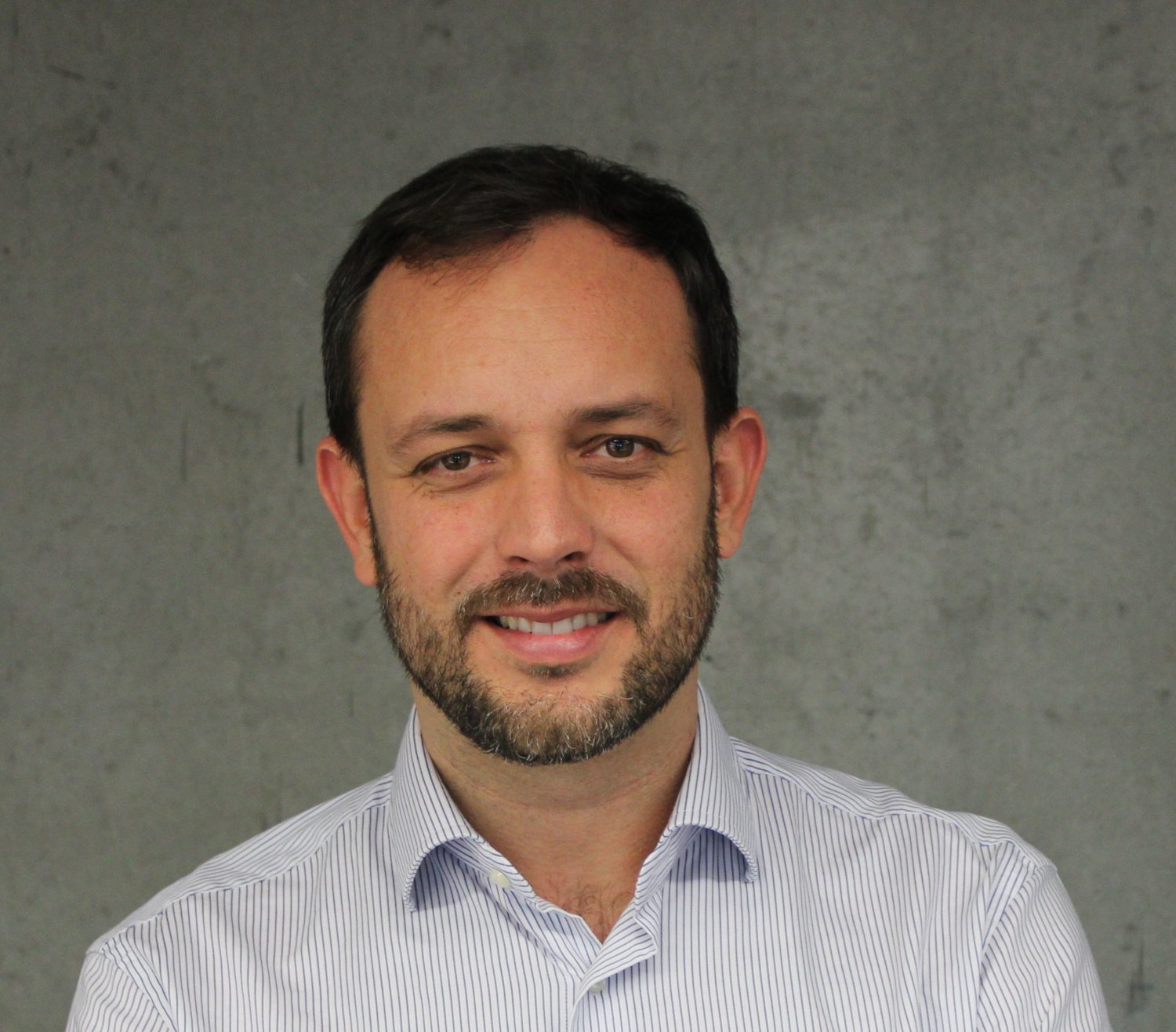
Led by Davide Liborio Vetrano, our research seeks to elucidate the biological, clinical, and psychosocial determinants of major geriatric syndromes and to understand how these factors shape future health trajectories. A core component of our work is the development and application of advanced statistical and modelling approaches, which allow us to address key methodological challenges such as intermittent observation of health trajectories, unobserved health states, and high-dimensional longitudinal processes. This specific development area is co-led together with Caterina Gregorio.

In close collaboration with Swedish and international partners, our group focuses on the following research areas:

Translational geroscience

Multimorbidity, frailty, sarcopenia and dementia are among the most prevalent and burdensome conditions affecting older adults. By leveraging large panels of blood-based biomarkers—analyzed individually and in combination—we aim to: (1) clarify the biological pathways involved in the development and progression of these geriatric syndromes; (2) elucidate the biological mechanisms underlying the complex interplay between somatic and mental health; and (3) build stratification tools to identify individuals at high risk of adverse health outcomes.

Multimorbidity development and progression

Multimorbidity, defined as the co-occurrence of multiple chronic diseases within an individual, often initiates or accelerates complex clinical profiles, including frailty and dementia. Our work places strong emphasis on understanding how diseases systematically cluster in older adults. Specifically, we aim to: (1) develop rigorous, clinically meaningful models to classify individuals—cross-sectionally and longitudinally—into multimorbidity patterns; (2) describe how less severe patterns evolve into more complex phenotypes and frailty; and (3)  assess the prognostic implications of different multimorbidity patterns across diverse outcomes, settings, and patient groups.

Frailty assessment and population stratification

Frailty is a clinical syndrome marked by increased vulnerability to even minor stressors and is strongly associated with poorer survival and functional decline. Using innovative analytical strategies, our group focuses on: (1) validating robust models to measure frailty across diverse clinical and research settings, with particular emphasis on primary care; (2) investigating secular trends in frailty at the population level; and (3) identifying determinants of accelerated frailty progression.

Impact of acute events on health trajectories

Older adults’ health trajectories are deeply influenced by acute events such as infections, cardiovascular incidents, and traumatic injuries. Our research seeks to: (1) quantify the impact of acute events on clinical and functional trajectories—for example, on cognitive decline or frailty development; (2) examine the consequences of acute events on healthcare utilization patterns; and (3) understand how acute events interact with pre-existing geriatric syndromes to shape future adverse outcomes.

Risk profiles of intense and avoidable healthcare utilization

Older individuals living with complex combinations of clinical and functional impairments are frequent users of healthcare services. Maintaining a focus on combinations of clinical and functional phenotypes, we aim to identify risk profiles for: (1) recurrent transitions across living situations and healthcare settings; and (2) avoidable or unplanned care episodes, with particular attention to hospitalizations.

Development of advanced analytical approaches

Aging research demands tailored statistical methodologies capable of addressing challenges such as intermittent observation of health trajectories, unobserved health states, and complex, high-dimensional longitudinal processes. This research line advances statistical methods in aging research—with a particular focus on multimorbidity, frailty, and geroscience—through both theoretical contributions and applied modeling in population-based studies. We develop and apply innovative techniques including dynamic and cross-sectional network approaches, latent variable models, multistate models, and microsimulation. A key goal is to make these methods broadly accessible by implementing them in open-source, user-friendly statistical software, facilitating both interpretability and methodological robustness. We also systematically compare alternative methodological strategies and study-design scenarios using simulated data, helping researchers choose the most appropriate tools for specific scientific questions. Through these methodological efforts, we aim to bridge the gap between statistical innovation and empirical aging research, ultimately contributing to a deeper and more nuanced understanding of aging and its determinants.

Several data sources have been used and are currently used by our group, including population-based studies (SNAC-K , NEAR), Nordic Countries National Patient Registers, and InterRAI  data from several European, North American and Asian countries. 

Publications

All publications from group members

Funding

  • Horizon programs European Commission
  • Marie Skłodowska-Curie Actions
  • Swedish Research Council (VR)
  • Swedish Research Council for Health, Working Life and Welfare (FORTE)
  • NordForsk
  • Canadian Consortium on Neurodegeneration in Aging
  • Svenska Läkaresällskapet
  • Karolinska Institutet
  • SFO Epi – Karolinska Institutet
  • SFO StratNeuro – Karolinska Institutet
  • MSD-Karolinska Institutet partnership

Staff and contact

Group leader

All members of the group

Visiting address

Aging Research Center, Department of Neurobiology, Care Sciences and Society, Tomtebodavägen 18 A, Solna, SE-171 65 Solna, Sweden

Postal address

Aging Research Center, Department of Neurobiology, Care Sciences and Society, Karolinska Institutet, Stockholm, SE-171 77, Sweden

Past research group members and visiting researchers

  • Blair Rajamäki, visiting postdoc from University of Eastern Finland (2025)
  • Alessandra Pescina, visiting Master’s student from Politecnico di Milano (2024-2025)
  • Valentina Manzoni, visiting Master’s student from Politecnico di Milano (2024-2025)
  • Clare Tazzeo, PhD Student (2022-2025)
  • Xin Xia, PhD Student at Karolinska Institutet (2021-2023)
  • Elena Baldasso, Master’s student at Milano Bicocca University (2022-2023)
  • Giuliana Locatelli, Master’s student at Milano Bicocca University (2022-2023)
  • Merle Hendel, Master’s student at Maastricht University (2020-2021)
  • Roselyne Akugizibwe, Master’s student at KI (2020-2021)
  • Hao Luo, Assistant professor at Hong Kong University (2021)
  • Riccardo Calvani, postdoc at KI (50%, 2020)
  • Anna Picca, postdoc at KI (50%, 2020)

Funded projects

Davide Liborio Vetrano group’s current research is fully funded through research grants obtained in national and international competitions.

Projects

Transdisciplinary Research Center for Personalized Dementia Prevention & Care (TraCeDem)

Funder: Swedish Research Council for Health, Working Life and Welfare (FORTE). 
Co-PI: Davide Liborio Vetrano.
Duration: 2026-2032.

NEXT Generation Transdisciplinary Aging Research for Nordic Excellence

Funder: NordForsk. 
Co-PI: Davide Liborio Vetrano
Duration: 2026-2031.

Improving transitional care for Swedish older adults living with multimorbidity: integrating data-driven evidence and simulating personalized interventions (TRANSIT-ID)

Funder: Swedish Research Council for Health, Working Life and Welfare (FORTE). 
PI: Davide Liborio Vetrano.
Duration: 2025-2030.

Multinational Assessment of Risk factors and Vascular disease in Elders with Dementias using Longitudinal cohorts

Funder: Canadian Consortium on Neurodegeneration in Aging.
Local PI: Davide Liborio Vetrano
Duration: 2025-2029.

Bridging Grant at the Consolidator level.

Funder: KI Strategic Research Area in Neuroscience (StratNeuro).
PI: Davide Liborio Vetrano
Duration: 2025-2027.

Understanding Frailty Towards a Future of Healthy Ageing (UNION)

Funder: European Commission – Marie Curie Doctoral Network.
Local PI: Davide Liborio Vetrano
Duration: 2024-2028.

A complex systems approach to metrics of aging for personalized interventions (LETMEAGE)

Funder: European Commission – Marie Curie Postdoctoral Fellowship.
PI: Davide Liborio Vetrano. Beneficiary: Caterina Gregorio.
Duration: 2025-2027.

Pursuing new frontiers for a healthier aging: simulation-based manipulation of biological pathways involved in multimorbidity, frailty and dementia development

Funder: The Strategic Research Area in Epidemiology and Biostatistics (SFOepi), KI – consolidator grant. 
PI: Davide Liborio Vetrano.
Duration: 2023-2026.

Biomarker signatures of progressing multimorbidity: in pursuit of personalized approaches to clinically complex older individuals

Funder: Swedish Research Council. 
PI: Davide Liborio Vetrano.
Duration: 2021-2025.

Trajectories of care needs and care transitions after age 60: the interplay between individuals’ frailty, their environment, and personal perspectives

Funder: Swedish Research Council for Health, Working Life and Welfare (FORTE). 
PI: Davide Liborio Vetrano.
Duration: 2021-2025.

Atrial Fibrillation integrated approach in FraIl, multimoRbid and polyMedicated Older people (AFFIRMO)

Funder: European Commission. 
Local PI, WP leader: Davide Liborio Vetrano.
Duration: 2020-2026.

Individualized CARE for OLDer persons with complex chronic conditions in-home care and nursing homes (I-CARE4OLD)

Funder: European Commission. 
Local PI, WP leader: Davide Liborio Vetrano.
Duration: 2020-2025.

Impact of lower respiratory tract infections on older individuals’ global health status and healthcare utilization: results from a longitudinal population-based study

Funder: Partnership Karolinska Institutet and MSD.
PI: Davide Liborio Vetrano.
Duration: 2022-2023.

Biomarker signatures of the multimorbidity-frailty continuum: in pursuit of personalized medicine for older adults

Funder: The Strategic Research Area in Epidemiology and Biostatistics (SFOepi), KI – starting grant. 
PI: Davide Liborio Vetrano.
Duration: 2021-2023.

Immunization, frailty and healthy aging

Funder: Partnership Karolinska Institutet and MSD.
PI: Davide Liborio Vetrano.
Duration: 2019.