
The ubiquitin/proteasome system in neurodegenerative diseases and cancer – Nico Dantuma's Group

Our major objectives are to understand the role of the ubiquitin/proteasome system in the development of neurodegenerative diseases and cancer and to explore the therapeutic potential of modifiers of this system.

People standing next to each other by a railing.
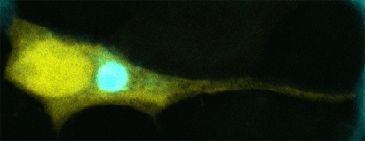
Microscopic picture of a neuronal cell

Our research

A tight balance between the synthesis of new proteins and recycling of old and damaged proteins is critical to keep cells healthy. Disturbances in protein homeostasis (i.e. ”proteostasis”) can result in accumulation of dysfunctional proteins that clump together forming protein aggregates that are toxic for cells. 

Accumulation of protein aggregates lies at the core of a number of neurodegenerative diseases, such as Alzheimer’s, Parkinson’s and Huntington’s disease. Neurons, like all cells, are equipped with an efficient system for intercepting abnormal, dysfunctional and misfolded proteins and targeting them for recycling: the ubiquitin-proteasome system. The question remains why the ubiquitin-proteasome system fails to efficiently recycle misfolded proteins in these diseases and, more importantly, if it is possible to therapeutically stimulate its activity thereby boosting recycling of misfolded proteins. These are important questions that we study in our group using advanced in-house developed tools and cell biology methods. 

Cancer cells, on the other hand, are heavily relying on the ubiquitin-proteasome system to deal with the large number of dysfunctional proteins that they produce. Consequently, they are more sensitive than healthy cells to drugs that partially block the ubiquitin-proteasome system. This is already used in the clinic and several types of proteasome inhibitors have been introduced for the treatment of cancer, in particular multiple myeloma and mantle cell lymphoma. Using our unique tools, we are identifying and characterizing new compounds that can inhibit the ubiquitin-proteasome system and kill cancer cells.

Finally, the ubiquitin-proteasome system, instead of being a target itself, can also be used as a tool in therapeutics. Small molecules have been developed that instruct the ubiquitin-proteasome system to eliminate disease-causing proteins. This concept of “Targeted Protein Degradation” allows to destroy and inhibit almost any protein, including proteins that were considered undruggable. 

We are studying the ubiquitin-proteasome system in health and disease. Our overarching aim is to better understand conditions that affect its functionality as well as investigate possibilities to therapeutically target or exploit the ubiquitin-proteasome system in neurodegenerative diseases and cancer. 

Publications

Selected publications

Funding

Grants

  • Swedish Research Council
    1 January 2025 - 31 December 2027
    The removal of misfolded or otherwise damaged proteins from the intracellular environment is of critical importance for cells as these aberrant proteins can give rise to toxic protein aggregates. The main proteolytic mechanism for the destruction of misfolded proteins is the ubiquitin-proteasome system (UPS), which is a central player in cellular protein quality control. The UPS is a complex machinery involving hundreds of different proteins, many of which have distinct enzymatic activities and are, therefore, potentially druggable targets. In recent years, both inhibition and stimulation of the UPS have gained credit as means for therapeutic intervention in human diseases. Malignant cells typically produce high levels of misfolded proteins, which render them exquisitely sensitive to drugs that inhibit UPS activity. On the other hand, stimulation of the UPS may prevent the accumulation of aggregation-prone proteins in neurons, which plays a central role in a variety of age-related, neurodegenerative disorders, such as Alzheimer’s disease. We have previously established tools for the monitoring of UPS activity in normal and malignant cells and started a drug discovery campaign for UPS inhibitors. Here we propose 1) to study the mode of action of a novel inhibitor of the UPS with anti-tumor properties, 2) explore the potential of two cellular targets for stimulating the UPS and 3) inveistigate the status of the UPS in human embryonic stem cell-derived neuronal lineages.
  • Targeting the ubiquitin-proteasome system in cancer
    Swedish Cancer Society
    1 January 2025 - 31 December 2027
  • Swedish Brain Foundation
    1 July 2023 - 30 June 2025
  • Swedish Research Council
    1 January 2022 - 31 December 2024
  • Swedish Cancer Society
    1 January 2022
    Dysfunctional protein degradation plays an important role in cancer. Marking proteins with ubiquitin is central to protein degradation because it stimulates specific protein degradation. Substances that inhibit the function of ubiquitin in protein degradation can be used to kill cancer cells. Slowing down protein breakdown is a relatively new way of cancer treatment. In this project, we plan to identify new molecular targets and develop new substances to slow protein degradation in cancer cells. In a genetic screen, we have identified genes that stimulate or slow down protein degradation. We want to understand how they work and whether they could be used to modify protein degradation for a therapeutic purpose. We will also investigate two new substances that we have identified in screens for their potential to slow down protein degradation. We have seen that these substances are toxic to cancer cells. Our goal is to understand how they kill cancer cells and to study their activity in a mouse model. We want to develop substances that slow down ubiquitin-dependent processes into drugs that block protein degradation in different ways. Blocking protein degradation is a relatively new strategy for anti-cancer therapy. So far, there are only a few approved anti-cancer drugs that work this way. They have been used for a couple of years now for the treatment of multiple myeloma.
  • Target identification of a novel inhibitor of the ubiquitin-proteasome system and autophagy
    Novo Nordisk Foundation
    1 April 2020 - 31 March 2021
  • In vivo validation of a novel inhibitor of the ubiquitin/proteasome system
    Novo Nordisk Foundation
    1 August 2019 - 31 July 2020
  • Deutsche Forschungsgemeinschaft
    1 January 2018 - 31 December 2021

Staff and contact

Group leader

All members of the group

News archive