MINT – Klas Karlgren's team

The MINT team focuses on research in medical education and in particular pedagogical encounters, simulation, and digital tools to support learning.

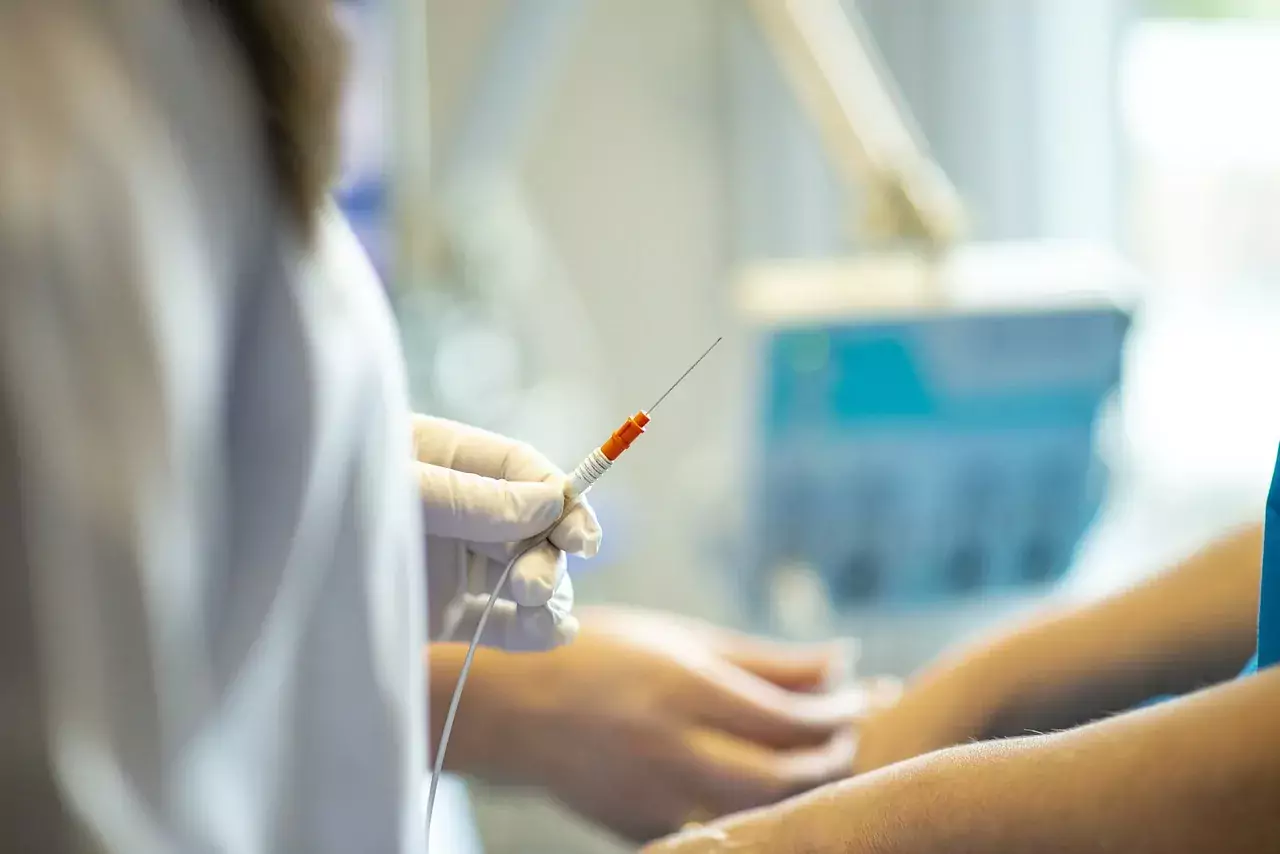
Medical equipement

About us

Medical educational research

Medical educational research is an interdisciplinary field which investigates learning on individual and system levels in both formal education as well as in health care. 

Pedagogical encounters

Pedagogical encounters are defined as situations where the learner and the teacher/facilitator/professional meet and interact for the purpose of learning.

Our interests

The MINT team has an interest in analyzing interactions and practices related to learning in healthcare as well as designing technology to support these. Much of our research uses a design science methodology which can involve both qualitative and quantitative methods.
Research

Some of our projects

  • UM-HEART-VR (see separate tab)

Within the Erasmus call for Digital Transformation in higher education the project will support three Malaysian healthcare schools in adopting this VR technology, offering an immersive, scalable, and culturally adaptable environment for practice-based learning, allowing students to safely handle challenging clinical situations.

Internationalisation of the Curriculum (IoC) has become a fundamental factor in Higher Education where best practices aim to ensure inclusive and equitable quality education.

ReHIn aims to create web-based educational resources to raise awareness and enable integration of refugees into the EU health culture and system.

  • ACoRD - advancing co-creation of RLOs to digitalize healthcare curricula
  • CEPEH - Chatbots Enhance Personalised European Healthvare Curricula
  • ENTICE - Evaluaing Novel Tangible and Intangible Co-creative Experimental medical education
  • dCOG - Care when and where it matters - A distributed COGnition approach

Publications

All publications from group members

Staff and contact

Group leader

All members of the group

UM-HEART-VR

Logotypes for the UM-HEART-VR project.

UM-HEART-VR aims to strengthen how communication and empathy are taught in healthcare education in Malaysia and, in the longer term, across the wider Asian region. 

The project supports Malaysian higher education institutions in the health sector by introducing Virtual Reality (VR)-based Problem-Based Learning (PBL) approaches that can enrich teaching and learning.

The project contributes to the digital transformation of healthcare education while also supporting more empathetic, communication-focused clinical practice. Its main objectives are to modernize curricula, strengthen staff capacity, improve teaching resources, support institutional development, and encourage collaboration at national and regional level.

More specifically, UM-HEART-VR will identify where communication and empathy skills can be meaningfully integrated into existing health education curricula. It will support medical and nursing educators, educational technologists, and subject experts in developing the skills needed to co-design and deliver VR-based PBL teaching. The project will also introduce and validate high-quality VR learning resources that can be embedded into existing or newly developed courses focused on communication and empathy in healthcare.

UM-HEART-VR offers a structured approach to VR-based training that supports experiential learning and helps align healthcare education with European and international practice. Through collaboration with experienced European partners, the project supports knowledge exchange, capacity building, and curriculum development across participating Malaysian higher education institutions.

Project period

1 January 2026 to 31 December 2028

What is UM-HEART-VR?

It stands for Upskilling Malaysian HEAlthcaRe for Empathy and Communication Through Virtual Reality

UM-HEART-VR brings immersive VR empathy and communication training to Malaysian healthcare education, bridging EU expertise with digital transformation to shape more compassionate, future-ready professionals

Contact

Profile image

Maxine Harjani

Research Assistant
Keywords:
Artificial Intelligence Computer Simulation Ecological Momentary Assessment Gamification High Fidelity Simulation Training Human Computer Interaction (Social aspects at 50804) Learning Nursing Other Educational Sciences Pedagogy Simulation Training War, Crisis, and Security Studies Show all
Content reviewer:
26-03-2026