
Our research
When we age, our tissues are characterised by a progressive loss of tissue function and regenerative capacity, which limits our physical performance and general health. The purpose of our research is to increase the knowledge about specific genetic and molecular factors that influence the onset of age-related diseases and affect health and disease. Advances in genomic technologies have made it possible to analyse somatic mutations in the whole genome of human cells and show that all cells accumulate mutations during development and ageing. This ongoing mutagenic process results in a tissue composed of cells with different genetic makeups, and is referred to as somatic mosaicism.
The specific aims include the development of a genetic atlas of somatic mutations across various cells of the human body. This atlas helps us to improve the current understanding of genetic events in cancer development and age-associated diseases, and to better comprehend the mutational processes that lead to differences in the somatic mutation landscape in different cells. Our results may also contribute to the development of therapies that could counteract the propagation of somatic mutagenesis, for example by the activation of DNA repair. Our results indicate that the underlying mechanism responsible for age-related somatic mutagenesis, across most tissues, is the gradual loss of efficiency of DNA repair systems with ageing (Franco, Helgadottir et al., Genome Biology 2019;20(1):285).
Other projects in the lab include the study of the very rare premature ageing disorder Hutchinson-Gilford Progeria Syndrome (HGPS, progeria) and the development of novel treatment strategies (Whisenant et al., Nat Commun 2022;13(1):3068). HGPS affects one in 18 million individuals and is caused by a de novo point mutation in the lamin A gene, LMNA c.1824C>T, leading to mis-splicing and production of a truncated lamin A protein named progerin. Children with HGPS show typical symptoms of accelerated ageing and die in their teens due to accelerated atherosclerosis and cardiovascular disease. The underlying pathomechanisms remain unclear, and clinical trials have shown only limited success, emphasizing the importance of new treatment strategies.
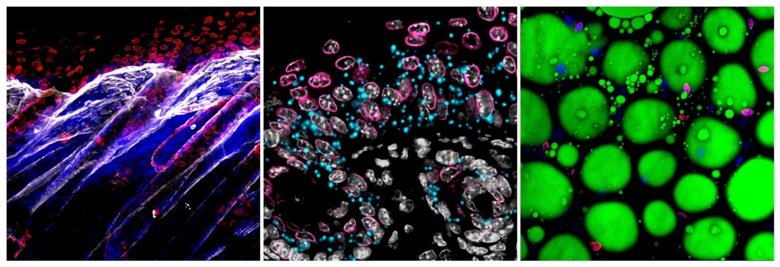
Most recently, we have published two studies highlighting functional implications of somatic mutations in ageing and age-related vascular disease, beyond their established role in cancer. In the first study, we identified clusters of progerin-positive cells and the classical HGPS mutation (LMNA c.1824C>T) as a somatic mutation in the arterial wall and blood of patients with chronic kidney disease. Our results highlight the clonal occurrence of this specific somatic mutation, which has not previously been associated with non-HGPS patients, and the potential risks it poses when cell proliferation is driven by extensive, long-term tissue damage (Revêchon et al., Nat Aging 2025;5(6):1046–1062).
In the second study, we used an in vivo model to mimic the accumulation of somatic mutations that occurs in skeletal muscle during regeneration and ageing. We showed that an accumulation of somatic mutations in the skeletal muscle led to impaired muscle regeneration, smaller muscle fibers, reduced muscle mass gain and decreased grip strength (Vrtačnik, Merino et al., Nat Aging 2025;5(9):1739-1749). These results suggest that somatic mutations can compromise somatic cell function and contribute to skeletal muscle ageing.
Our works shows that studying somatic genetic variations in age-related disease, as well as rare conditions like Hutchinson-Gilford progeria syndrome, is important, as it may reveal novel disease contributors with relevance to public health. The impact of our studies may be beneficial for ageing and promote healthy ageing, as well as encouraging the identification of novel treatments that alleviate age-associated diseases.
Looking for new group members
We are looking for talented and highly motivated postdocs and students to join our research group.
To apply, Please submit cover letter, CV with publication list, and contact information of two references to the group leader: Maria.Eriksson.2@ki.se
Looking for a BSc or MSc project?
Undergraduate students (BSc, MSc in Molecular biology or similar) with an interest in molecular genetics and who find our research of interest may send an email to Maria Eriksson. We usually accept one undergraduate student per semester. Please include a CV and a letter of interest.