
What is RIKI?
Research Infrastructure at KI (RIKI) is Karolinska Institutet's joint organisation for research infrastructure. It houses the resources, technologies and services that KI's researchers need to conduct advanced medical research.
A common entrance for researchers
RIKI provides researchers at KI with a more cohesive and accessible structure. Common standards, coordinated booking, technical support and clear processes reduce the administrative obstacles that can otherwise take time away from the research itself. The goal is for researchers to be able to concentrate on their research.
How RIKI is managed
RIKI is led by a Director of Research Infrastructure who has overall responsibility for strategic development, resource allocation and coordination. The director is supported by a head of administration who is responsible for operational support. The operations are then organized into units with department heads.
The researchers' influence over the organization's direction is ensured through advisory groups linked to the management and to the individual departments.
Funding
RIKI is financed through a combination of government grants, external contributions and fees from those using the infrastructure.
Follow RIKIs process
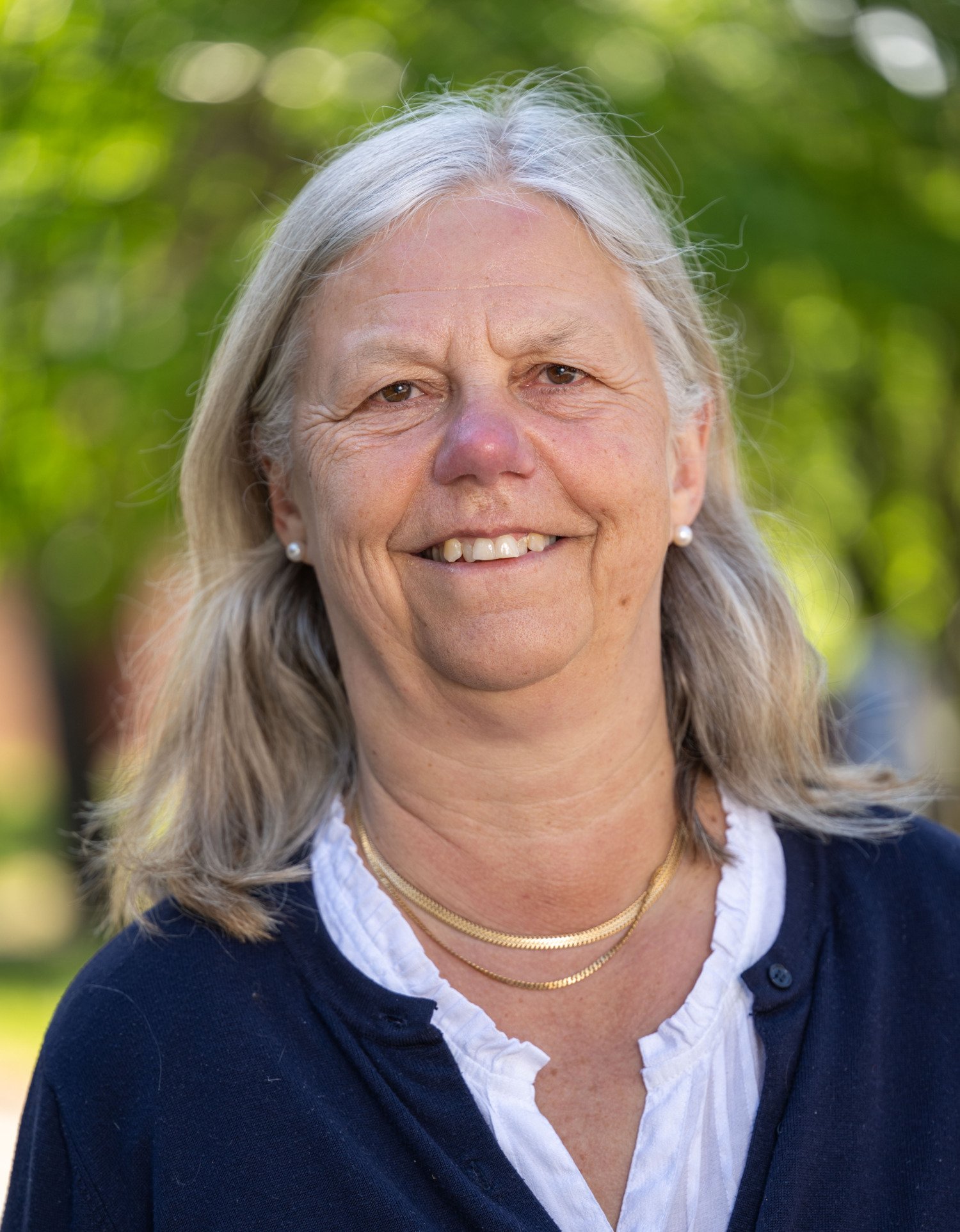
Karin Dahlman Wright, Director of Infrastructure, shares
The importance of a good work environment and communication
I look forward to working with five more core facilities from KI South. Welcome BEA, BSL3, FFC, LCI and SICOF from October 1st! We are now preparing to include additional core facilities and freezer facilities at KI South later this year. It feels very satisfying that we are following the plan we have laid out. Thanks to everyone involved!
As RIKI grows, the professional services needs to expand and develop to support core facilities and other research infrastructure in a professional way. Camilla Fors Holmberg is responsible for ensuring that the professional services go together with the development of RIKI. We have recently welcomed Fredrika Aronsson as HR partner and Polina Mörk as Controller.
A good work environment lays the foundation for a strong RIKI
RIKI will coordinate and strengthen KI's research infrastructure. For RIKI to be strong a good work environment and a good collaboration is required. We have already established a collaboration committee at RIKI. I see this as a very important platform for dialogue and have experience from having a fruitful collaboration with union representatives from various previous roles at KI.
We will soon have our first meeting in RIKI's work environment group with the task of supporting and developing systematic work environment processes. The group will function as a forum for dialogue and collaboration on issues related to work environment, health, safety and includes employer representatives, safety representatives and central environment and safety representatives. As I prioritize having direct dialogue on these important issues, I plan to will participate in the group's meetings. Please get in touch if you have any questions or ideas regarding RIKI's work environment.
Good communication contributes to a good work environment
Good communication and dialogue are important contributions to a good work environment. We need to develop channels for communication and dialogue within RIKI. A newsletter and a Teams channel will be launched in October and around the turn of the year we plan to start core facility manager meetings and employee meetings. I really look forward to meeting you all. Please feel free to suggest agenda items for such meeting and other joint dialogue forums. When RIKI is fully established in the summer of 2027, we plan to have a kick-off.
/Karin
Previous insights
As we now celebrate the first half of this year with RIKI and wish everyone a nice summer, it is gratifying that the process of incorporating units and planning for the autumn incorporations has gone so smoothly. Thank you to everyone involved who contributed to this! It is exciting to think that RIKI will be established in a year and we can fully focus on our work to further strengthen KI's research infrastructure.
Recently, I participated in a panel focusing on career development for those working in research infrastructures at the SciLifeLab facility forum. It was clearly highlighted that KI was the first in Sweden to have a career path for those working within research infrastructure, which we should be proud of. Several other higher education institutions have now followed suit, based on the unique circumstances of each higher education institution and with slightly different titles for the positions. There was a great deal of consensus on the importance of continuing and broadening the work with career development in the context of research infrastructure. This is something we will do within RIKI. Competence development for people working in research infrastructure is one of the goals within RIKI.
We also got an international perspective from the UK and Warwick University where they have established a very detailed career system for people with technical and methodological service and development. My spontaneous thought was that the system was quite complicated but an exciting aspect that was highlighted was that people with this career are part of the academic organ.
Some of you may have noticed that bunkers are being built in the Inventum laboratory at Scheeles väg 5. These will become part of RIKI. This research infrastructure is a joint initiative of the Stockholm trio (KI, KTH and SU), and an important complement to the Centre for Medical Radiation Science. The idea is that researchers and teachers within the centres will use the infrastructure for research and education.
I wish everyone a nice summer and see you in August,
/Karin
There is a lot happening within RIKI and I would like to make some observations about recent events.
In the implementation group, we are systematically working to prepare the incorporation of additional core facilities and research infrastructures into RIKI so that Comparative Medicine, including core facilities for zebrafish and transgenic animals, and KI Biobank will be joined. You will notice high activity during the autumn and we will elaborate more on this after the summer.
Last week we participated in a security patrol in KI Biobank. Educational and confidence-inspiring. We also had the opportunity to highlight that we saw representative roles in, among other, biosafety and chemicals as incredibly important functions but that, after dialogue with the corresponding central functions within KI, should wait before appointing these at the RIKI level. That is until we have received more units in the autumn. If there is a representative lacking, the director will retain the position. CM will retain their representatives.
As you may know, the President has assigned RIKI to be responsible for the procurement of hardware for high performance computing and AI and to build a core facility for AI within RIKI. This is work that begins now. Here we will utilize all the expertise that exists within RIKI in how to establish and run a core facility.
This week the I have my last meeting as chairman of the Council for the Environment and Sustainable Development, but this does not mean that my interest in climate, environment and sustainable development decreases. On the contrary, I look forward to working with these issues on an operational level and see great opportunities for RIKI to be a pioneer in this area!
/Karin