
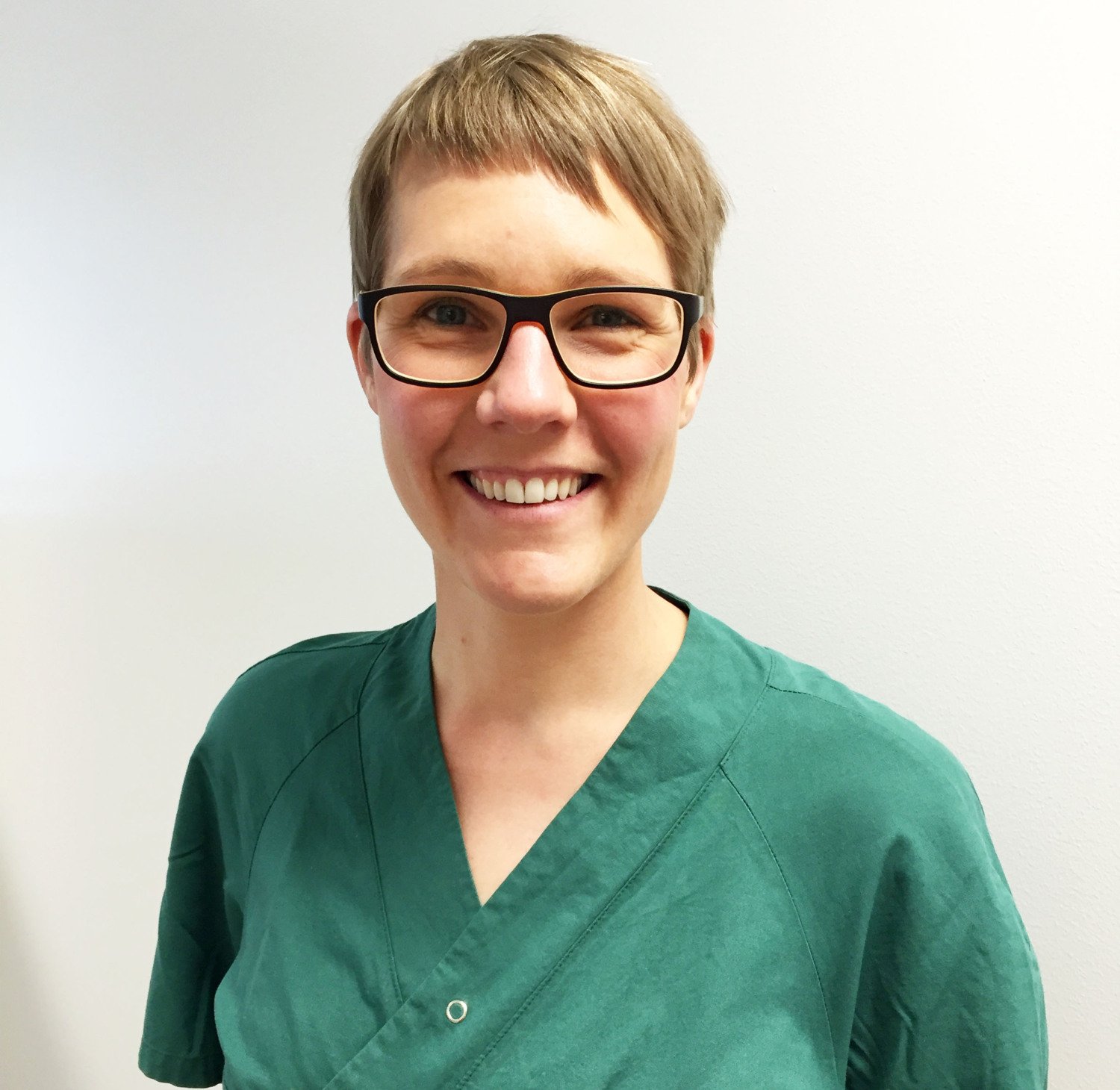
Anna Rossander, doctoral student at Health Informatics
"I investigate how to use SNOMED CT, a very large medical terminology system, with different information models. In my research, I challenge the stance that we must all use the same model to share information. Instead, I investigate different ways to use SNOMED CT and how information can be transferred between structures."
Tell us a bit about yourself and your background. What did you do before you started your doctoral studies?
I studied medicine at KI, but I also did part of my studies in Berlin and New Zealand. After medical school, I became a urologist. I have worked in Gävle, Gothenburg (Sahlgrenska) and Kungsbacka. Before medical school, I studied history, law and philosophy at the University. I also worked at a rehabilitation centre and at an IT company.
How did you become interested in doing research and what made you want to be a doctoral student at our department LIME?
I was so frustrated that information about the patients I met didn’t flow between the different systems I used and between the different health care services involved. I contacted Gothenburg University to find out if there was any knowledge on how this could be improved. It was a classic Dunning-Kruger; I thought, "How difficult can it be? I can text between different phones, right?" Ten years later, I am still working on a small piece of the puzzle needed to solve it.
LIME is Sweden's medical informatics institution with the most knowledgeable supervisors and fellow PhD students. I also appreciate the structure around the PhD students; if I need help, someone will probably notice even before I do!
If you were to describe your current doctoral research project in one or two sentences for a class of eight-year-olds, how would you describe it?
I try to help computer systems understand each other so that, for example, if you have to be picked up by an ambulance, the people at the hospital can see the information from the ambulance in their system and don’t have to ask you lots of questions you’ve already answered. It will also make it easier for researchers to invent new treatments and identify people who might need extra care.
Can you tell us about your PhD research project? What makes your research stand out?
I investigate how to use SNOMED CT, a very large medical terminology system, with different information models. In my research, I challenge the stance that we must all use the same model to share information. Instead, I investigate different ways to use SNOMED CT and how information can be transferred between structures.
What are you working on right now and in the nearest months?
I am doing the last interviews for the fourth study in my PhD. Together with a master's student, I am investigating four different ways of structuring negations, for example, that someone has not had a heart attack, or is not allergic to eggs. It is a mixed-methods study, and we are examining, quantitatively, the correctness of transfer and, qualitatively, respondents' experiences with the different models.
What is the best and most interesting part of being a doctoral student?
Initially, the most intriguing part was being able to spend time finding answers to questions in my field of work instead of guessing. The further I’ve come in my studies, the more I appreciate the skills I have acquired in critical thinking and methodological writing. I have good use for it at my job as well!
Can you describe the challenges (if any) in being a student at doctoral level?
There are some well-described troughs to pass, and it can be pretty lonely since, by definition, there is rarely someone else doing what you are doing.
What is your relationship with other doctoral students like?
Since I live and work in Gothenburg, I am far too seldom at KI. I participate as often as I can, both in person and digitally, and that works for the research discussions, but I miss the social networking. I network in the international health informatics field at conferences and via LinkedIn, but there aren't many PhD students in the field.
What do you like to do when you are not doing research?
I have two teenagers, a cat and a boyfriend. I enjoy being outdoors and have just bought a sailing boat!
What do you envision yourself doing after graduation?
I hope to maintain a link to academia and do some teaching and supervision, which I enjoy, but I do not want to leave practice entirely. Ten years from now, I might have left my employment to work independently from a boat sailing the seven seas.
Do you have any advice for someone thinking about applying for doctoral studies?
Go for it! Try to find a supervisor that you are comfortable with and can talk freely to. Pick a problem area that interests you; everything becomes interesting when you dig into it, but it helps if you have an urge to improve your field. The PhD project is just a small part of your doctoral studies; appreciate those parts for their own good.
Name: Anna Rossander
Age: 45
Born: Stockholm, Sweden
Educational background: Medical degree from Karolinska Institutet
Date for start of doctoral studies: started 2017 at Gothenburg University and transferred to KI in 2024
Title of PhD project: Aspects of semantic interoperability within healthcare – Exploring terminology binding
Employment: Industrial PhD employed by Region Västra Götaland as an informatician at the Unit for Informatics and Standardisation