

Why are monkeys used in research?
At Karolinska Institutet, research involving monkeys (non-human primates of the macaque genus) is conducted in one of Sweden’s most advanced and animal-friendly facilities – the Astrid Fagraeus Laboratory (KM-F).
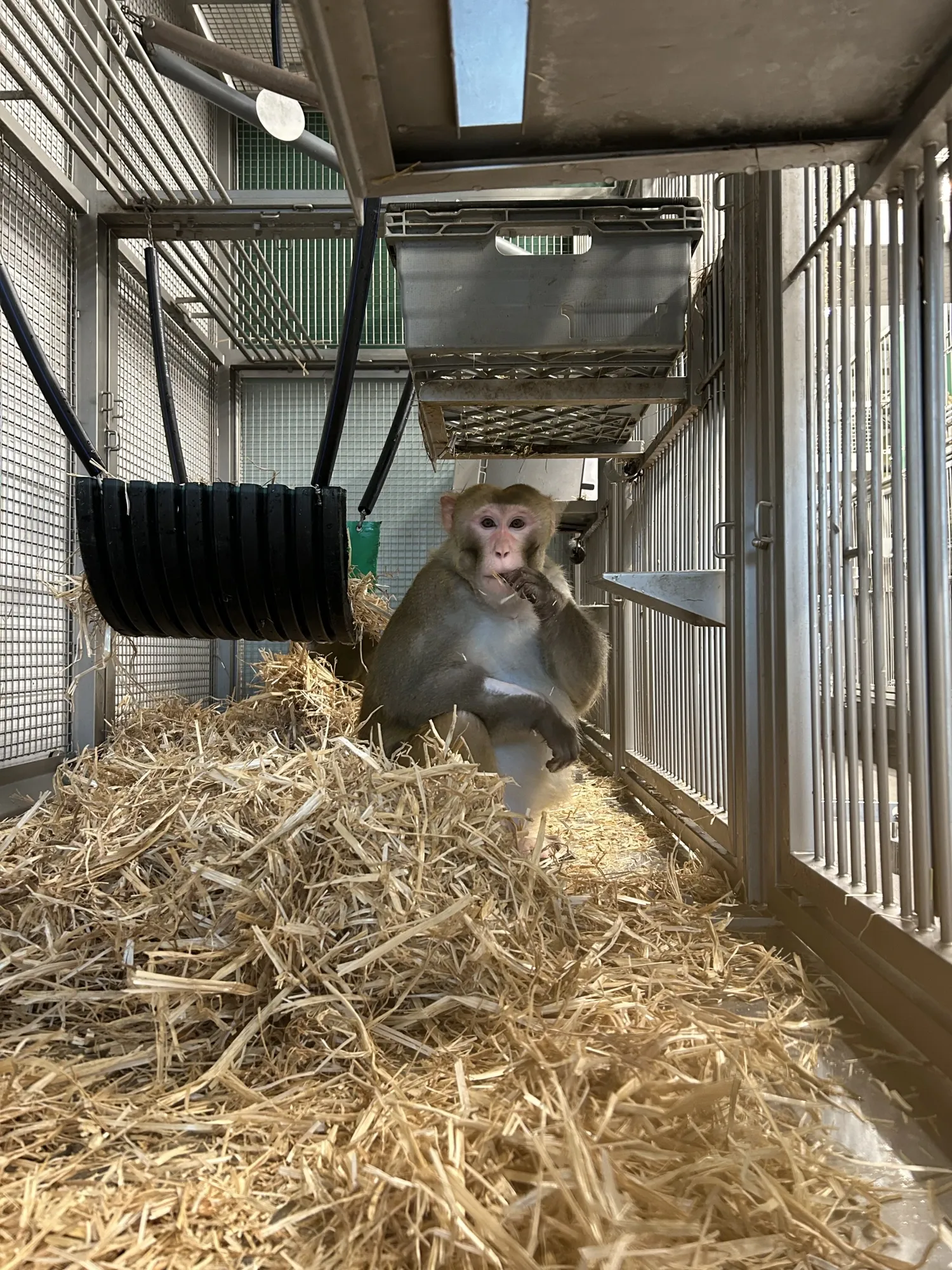
Research with monkeys
Monkeys are used in animal experiments only when other methods or animal species cannot answer the research questions being addressed. Monkeys share on average about 94 percent of their DNA with humans, making their physiology and immune system significantly more relevant for translating research results to humans than studies conducted in rodents such as mice.
Because monkeys are larger and have longer lifespans than rodents, they can also be followed over long periods to observe how well vaccinations or other treatments work. In vaccine research, this is particularly important to evaluate the need for and the effect of booster doses.
Research at Karolinska Institutet
The two types of monkeys used in research at Karolinska Institutet are rhesus macaques and crab-eating macaques. The research mainly concerns brain disorders (Alzheimer’s disease, Parkinson’s disease, depression, psychosis, among others) and the development of new drugs for these conditions. Research also focuses on developing vaccines against severe infectious diseases. For example, our understanding of coronavirus and HIV, as well as the antiviral drugs and vaccines available today, is the result of medical research on animals. Other examples where monkey research has been necessary include improved diagnostic methods and the development of new treatments for certain cancers.
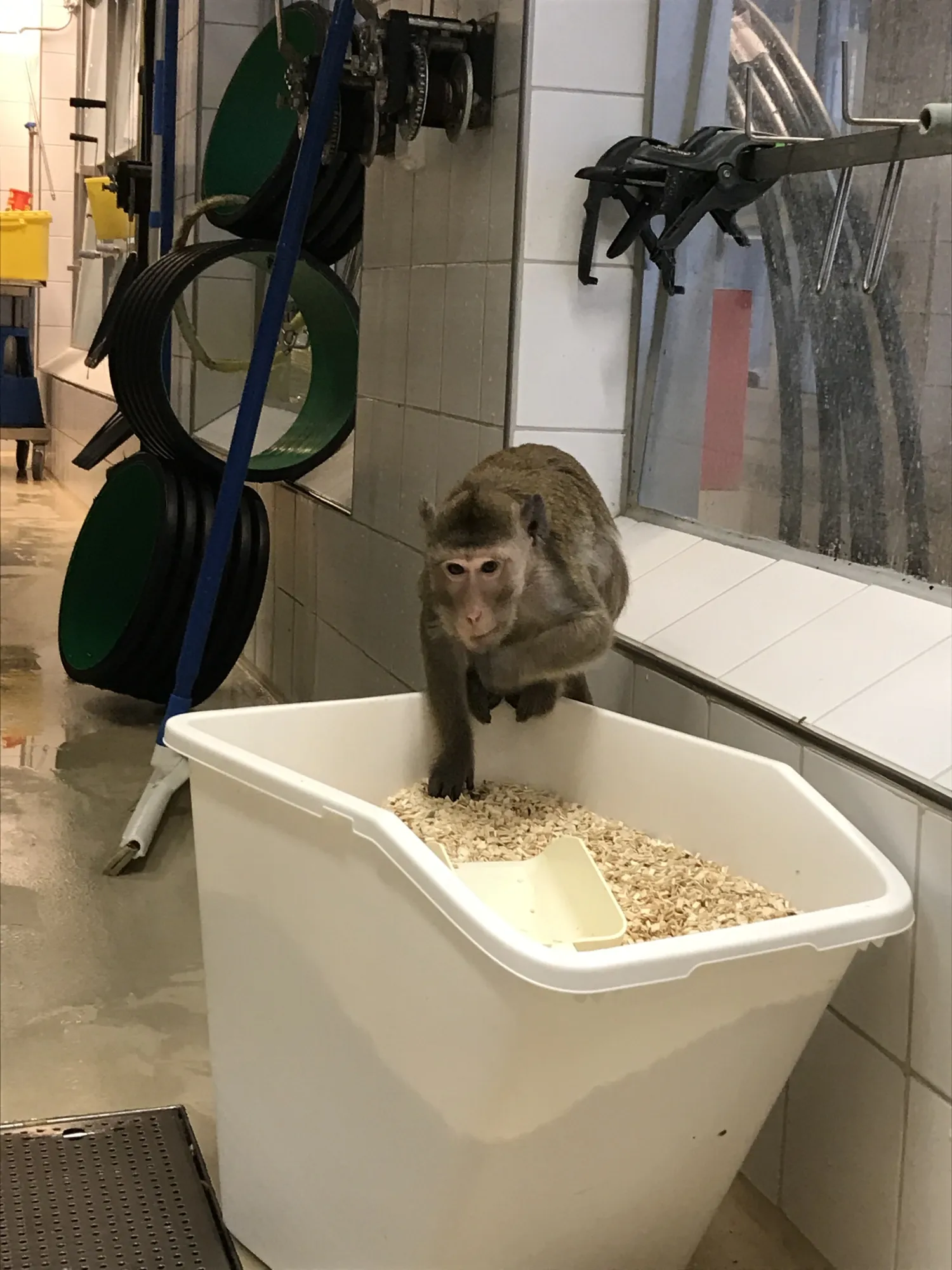
Vaccine research
Vaccination is one of the most significant inventions in science and has saved millions of lives. Despite this, effective vaccines are still lacking for several life-threatening infectious diseases.
The development of new vaccines is often a complex and lengthy process. Before a vaccine or drug candidate can be tested in humans, both Swedish and European legislation require that it first must be evaluated in animal models. Animal models are crucial for assessing both safety and effectiveness. Without them, it would in practice be impossible to develop new vaccines against serious infections. Because developing vaccines against the most dangerous infections is highly challenging, the need to understand the underlying immunology has become increasingly important. For this knowledge to be relevant, the immune response after vaccination must resemble that of humans as closely as possible.
Because macaques are so similar to humans, they play a unique and irreplaceable role in the later stages of vaccine development. The target group for vaccines is usually healthy individuals, including children. This makes it especially important to ensure that the vaccine is both safe and provides protection before it is administered to a healthy person. Therefore, macaques are only used in connection with exceptionally promising vaccine candidates that have already undergone extensive testing in several other systems, including cell-based studies and often also in rodents.
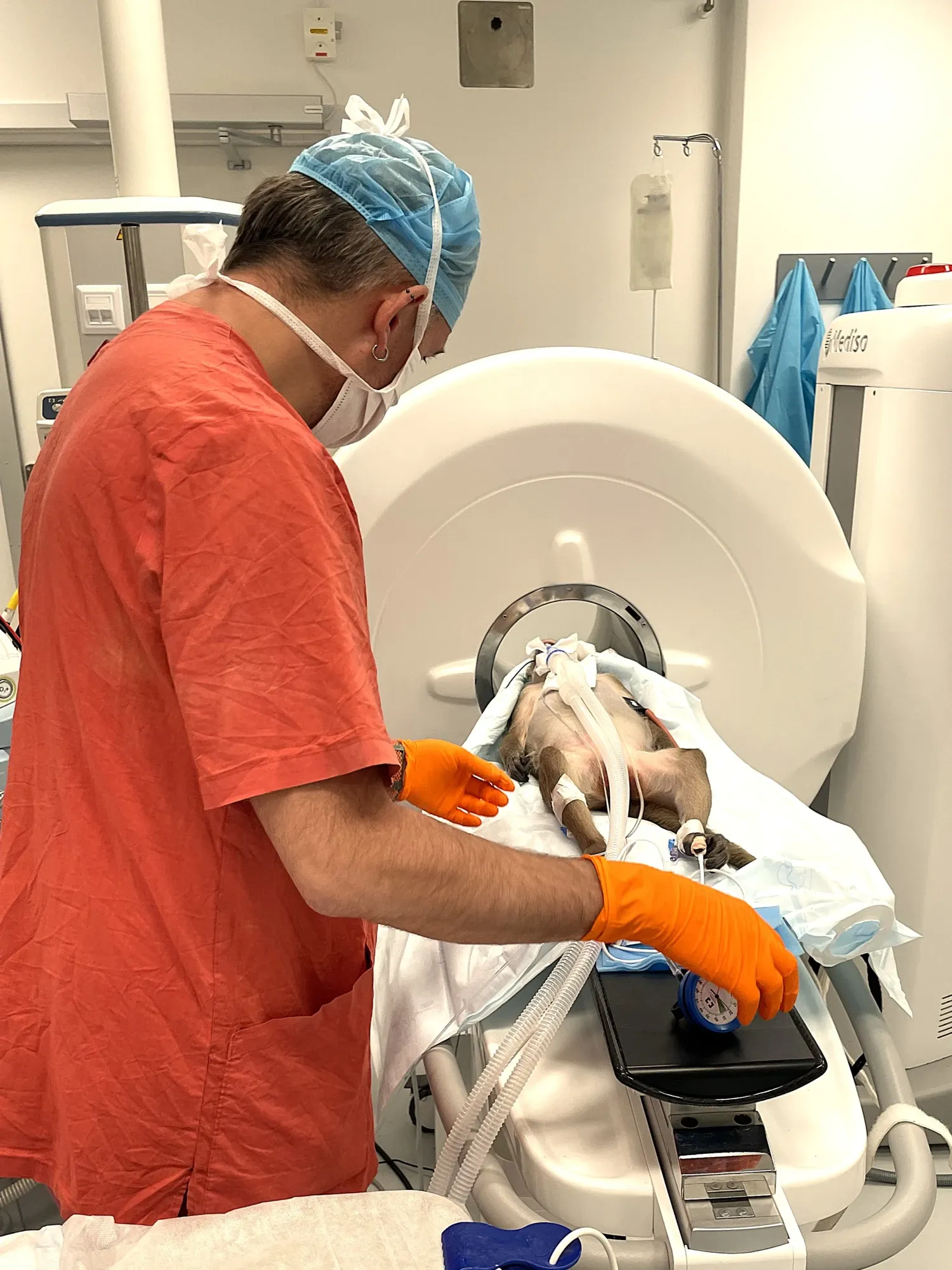
Body exam with PET imaging
Monkeys have been used in research with the imaging technique positron emission tomography (PET) since the 1980s. Over the decades, invaluable information has been obtained which has been fundamental for understanding and diagnosing diseases affecting the brain but also other organs such as cancer.
As with vaccine development, it is important to study new drug properties in a species as closely related to humans as possible. A critical step in evaluating new drugs is demonstrating that the drug reaches the organ it is intended to treat. This is especially important for drugs that target brain diseases, as the brain is protected by the blood–brain barrier, which prevents many potential drugs from passing through.
To significantly increase the likelihood of successful clinical trials in humans—and to benefit patients as quickly as possible—PET studies in macaques can provide unique insights into this process. PET can also improve clinical trials by helping determine the right dosage for the right patient, and it has proven important in optimizing how drugs are administered to reduce unnecessary side effects and maximize effectiveness. These experiments therefore make clinical trials in humans less risky and increase the likelihood that the drug will succeed.