

Veterinary care when monkeys are used in research
At Karolinska Institutet research involving monkeys, non-human primates of the macaque genus, is conducted in one of Sweden’s most advanced and animal-friendly facilities.
Regular health screenings
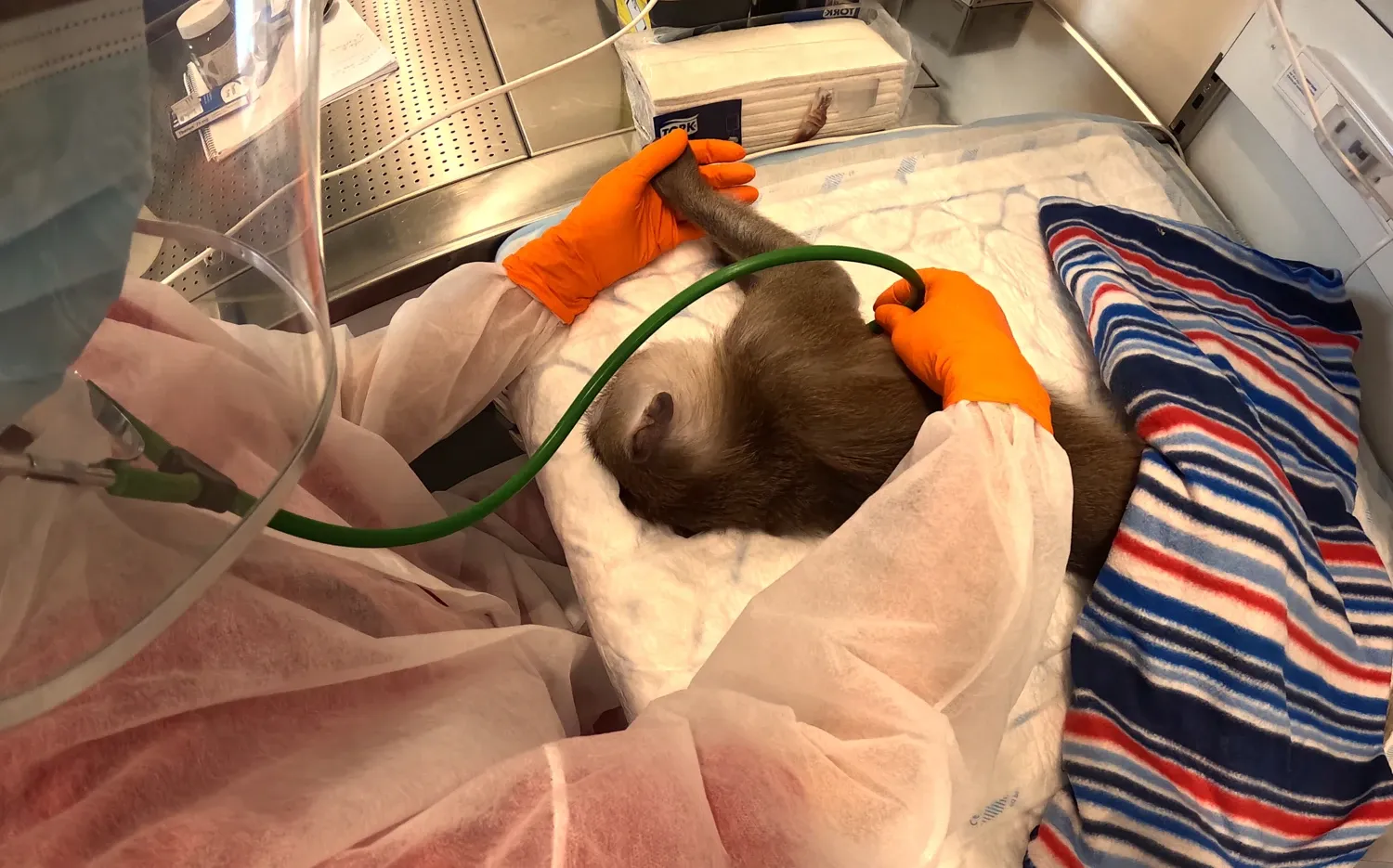
Using healthy animals in research is important both for animal welfare and to ensure that research results are reliable. To ensure that KI’s macaques are healthy, regular health assessments and check-ups are carried out on all animals.
During health assessments, each individual is anesthetized and undergoes a clinical examination. The animal’s weight is recorded, its temperature is measured, and a veterinarian performs a thorough physical examination.
In connection with the health assessment, blood and fecal samples are also taken to test for viruses, bacteria, and parasites. Since macaques can carry tuberculosis—a disease that poses a risk to both animals and humans—they are also tested annually for tuberculosis using a skin tuberculin test and/or a blood test.
Veterinary care
Because macaques naturally apply strict hierarchies in their groups, conflicts can sometimes arise. Aggression between animals can occur both in the wild and in captivity, despite active efforts to maintain stable social groups. If an animal becomes injured or ill, a veterinarian is always available to assess, examine, and treat it.
In some cases, animals may need to be anesthetized for more thorough examination and treatment, such as cleaning or suturing wounds.
The veterinarian always determines whether the animal requires pain relief or other medications, such as antibiotics. KI’s veterinarians are available to ensure that the animals receive appropriate veterinary care whenever needed.