

Housing environment for the macaques
At Karolinska Institutet (KI), research involving macaques is conducted at the Astrid Fagræus Laboratory (KM F), one of Sweden’s most advanced and animal focused research facilities. The two species used in research are rhesus macaques and crab eating macaques, both non human primates. Ensuring animal welfare is a central part of daily work.
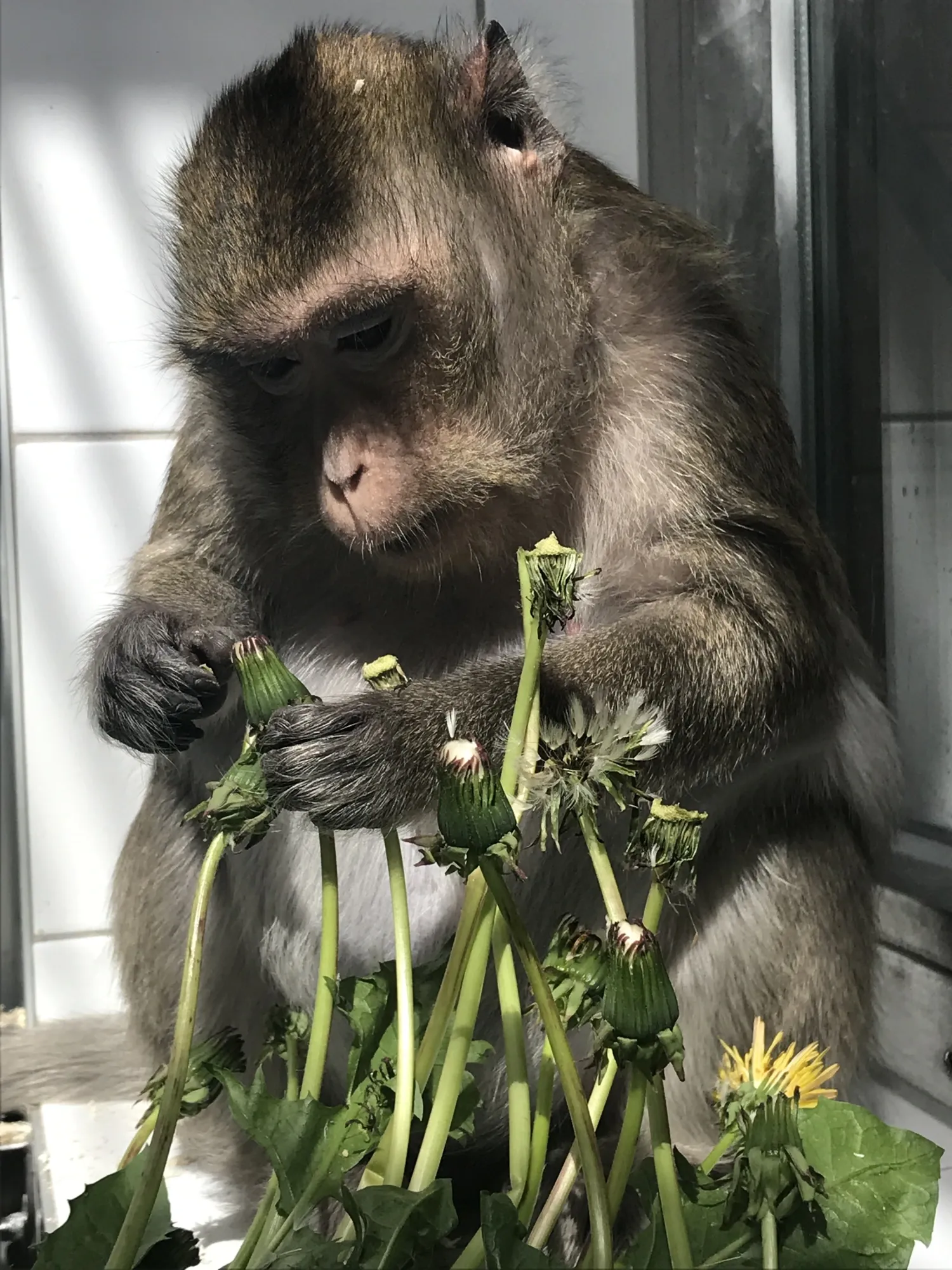
The facility is accredited by AAALAC International, an independent organization that promotes high standards of animal care in research worldwide. This accreditation confirms that KI meets rigorous requirements for responsible and ethically sound animal research.
An environment similar to their natural living conditions
The macaques at KI live in large, well-equipped cage systems and enclosures with access to outdoor areas when research studies and weather allow.
They can jump, climb, play and interact with each other—just as they would in nature.
The environment is designed to encourage natural behaviours. It includes:
- Climbing and activity structures: ropes, shelves, swings, climbing frames and mirrors
- Resting and hiding places: comfortable places to sit and hiding spots
- Access to water: opportunities to bathe and play with water, for example in a tub
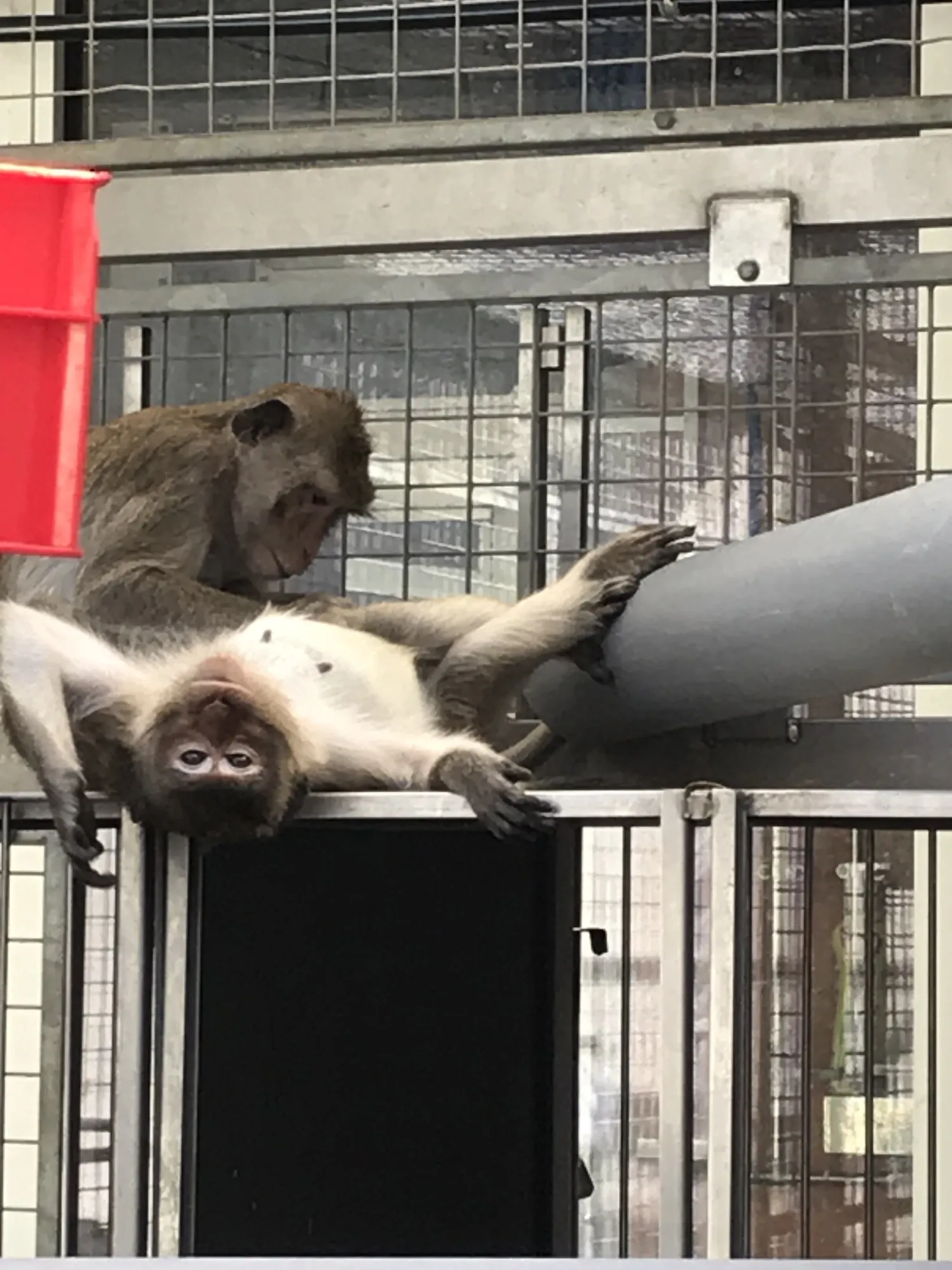
Macaques live together – just as in nature
Macaques are highly social animals. They always live together with others—never alone.
The groups consist of 2–14 individuals and are formed with great care.
As in nature, macaques have a hierarchy. This requires careful observation to ensure that all animals are doing well.
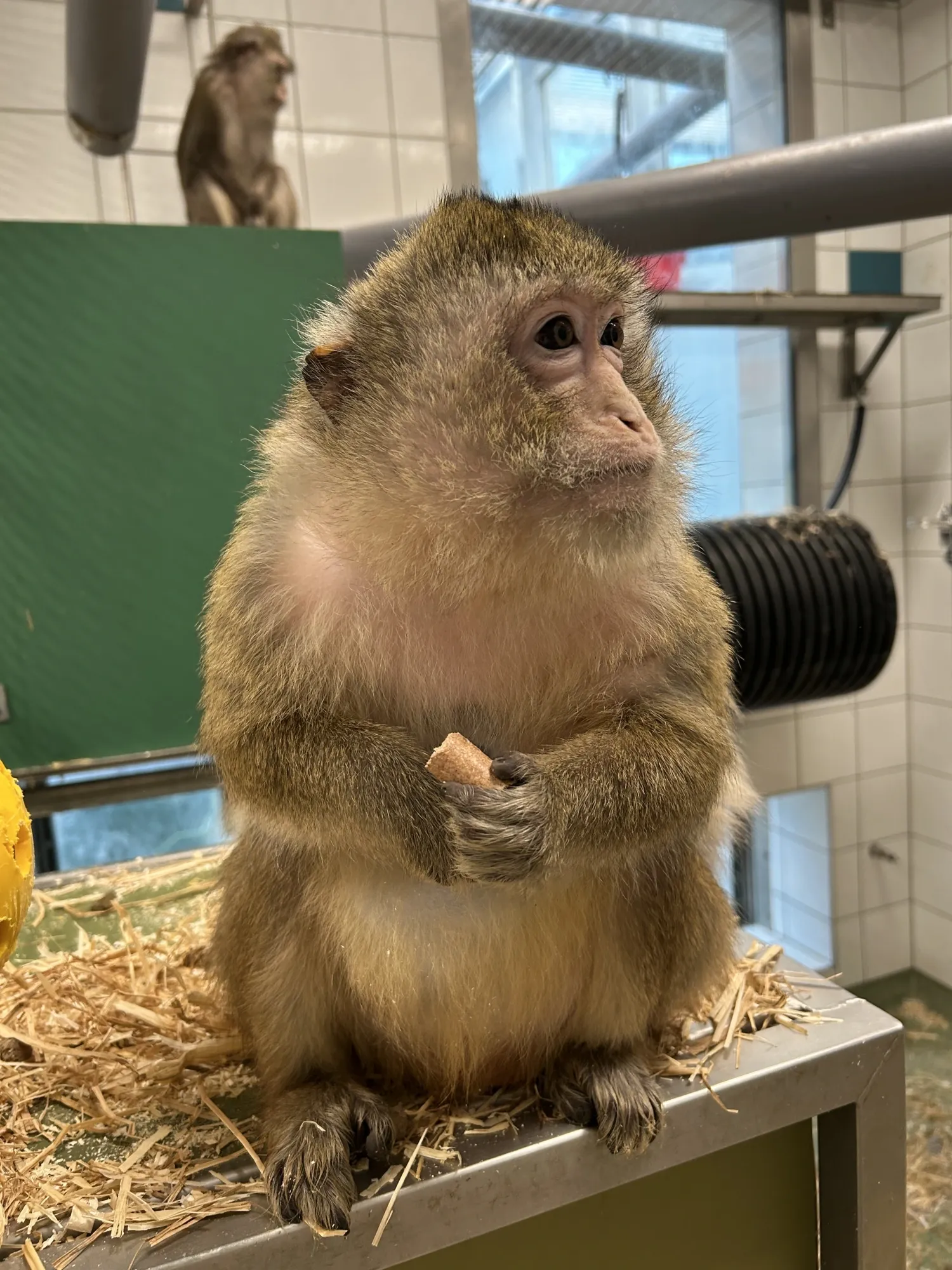
Visual barriers create a sense of safety
To avoid unnecessary stress, the macaques can withdraw behind visual barriers. This provides security and reduces conflicts, especially in larger groups.
Visual barriers, such as solid panels, allow animals to move out of direct sight. Mirrors are also used to increase the animals overview without direct eye contact, which can be perceived as threatening.
Macaques are generally cautious in new situations. When they receive new platforms or objects, they explore their environment carefully.
When macaques arrive at Karolinska Institutet
Animals that have been transported must have a period of acclimatisation before they can be included in studies. For KI’s macaques, this period is always at least six weeks.
All macaques housed at KI’s facility have more than twice the living volume required by law.
Where they are housed depends on the type of study they will be part of. At KI, studies can be conducted at three different biosafety levels:
- Biosafety level 1 (BSL-1): Work is carried out with agents that do not cause disease in healthy humans, or that pose a very low risk of disease.
- Biosafety level 2 (BSL-2): Agents that can cause mild or moderate disease are handled here, but vaccines or treatments are available. Examples include respiratory syncytial virus (RS virus) and the stomach ulcer bacterium Helicobacter pylori.
- Biosafety level 3 (BSL-3): Higher safety is required. Staff must use additional protective equipment and the laboratory is separated from other areas. Agents at this level can cause serious or life-threatening disease and may spread in the community. Examples include tuberculosis, rabies and SARS-CoV-2.
Uninfected macaques (BSL-1)
Macaques that are not infected are housed in large indoor cages or enclosures with access to outdoor areas. At KI’s animal facility there are glass-enclosed exercise yards with sliding doors and roof hatches that can be closed when the weather is cold. When the temperature approaches 0 degrees Celsius, animal technicians together with a veterinarian assess whether the macaques can be outdoors or not, based on weather, wind, humidity and the animals’ behavior.
Macaques at higher biosafety levels (BSL-2 and BSL-3)
By law, macaques at these biosafety levels must be housed in cages that are about one meter deep, one meter wide and two meters high (a volume of two cubic metres). Because macaques are always kept in groups of at least two individuals, the minimum volume for a group is four cubic meters.
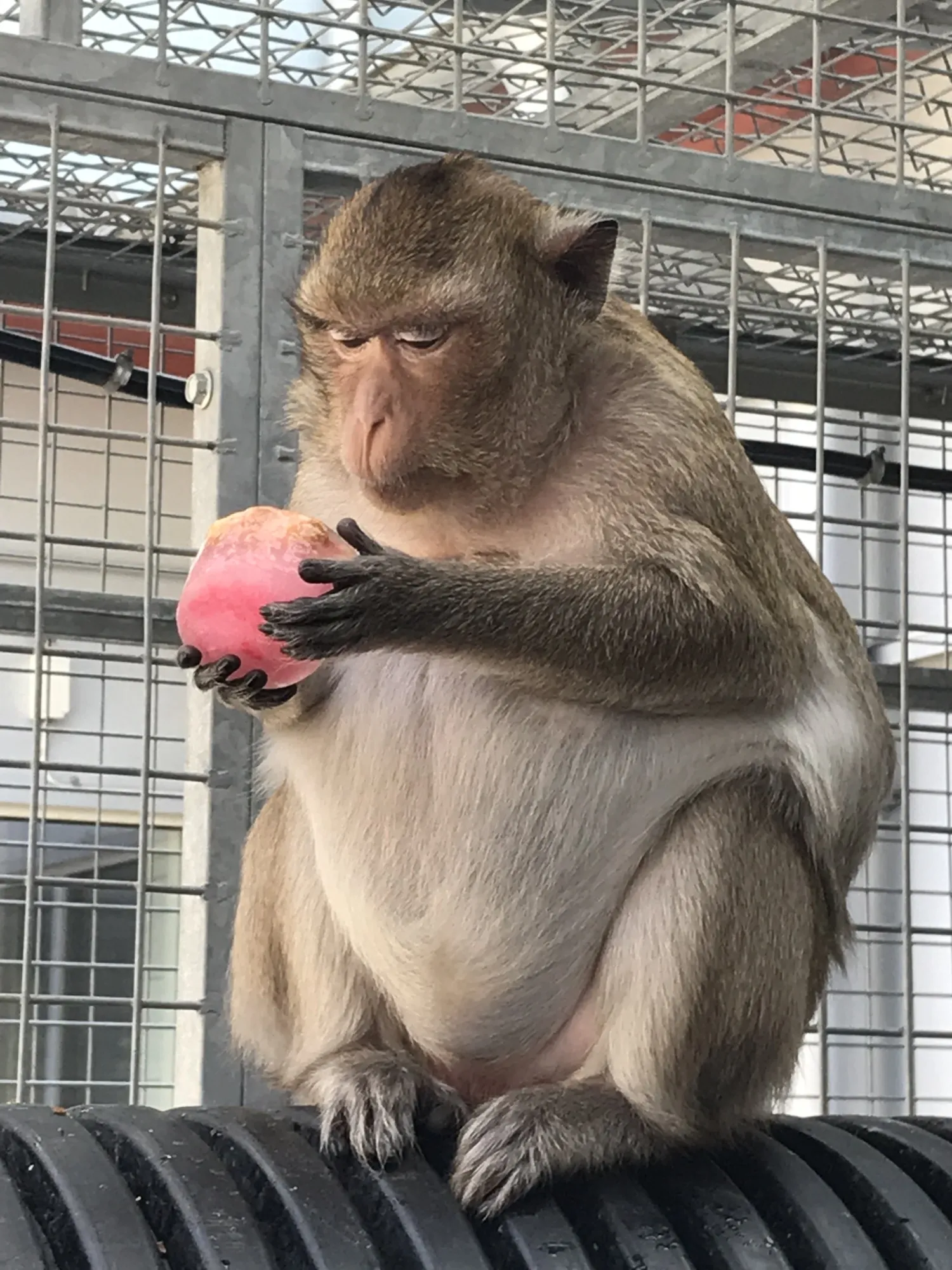
Security, control and variation
An important part of animal wellbeing is that they can experience control over their daily life. Positive reinforcement is therefore used in all handling and training—for example, by rewarding the animals with a treat when they cooperate.
This makes the animals more secure, curious and less stressed.
Environmental enrichment for physical and mental stimulation
For macaques to thrive, they need both mental and physical stimulation. This is achieved through environmental enrichment.
Food-based enrichment – food as an activity
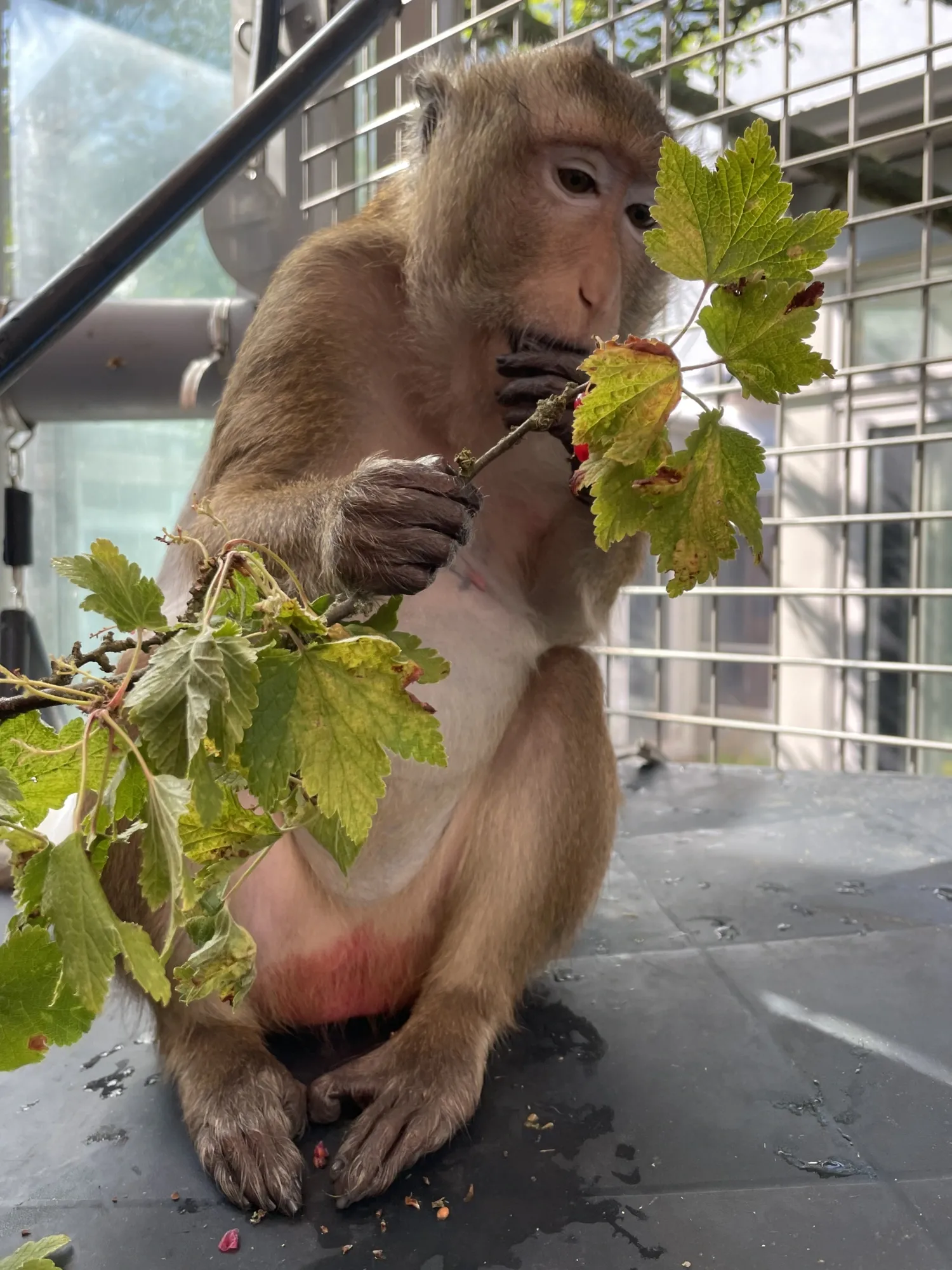
The macaques work for part of their food, just as they would in the wild. They search for seeds in straw, pick pellets from feeding puzzles or gnaw on frozen treats in ice blocks.
These activities reduce both stress and conflicts within the groups.
Toys and objects
Branches, cones, cardboard boxes, mirrors, plastic bottles and other objects stimulate senses such as smell, touch and sight.
All enrichment is planned according to a schedule so that each animal receives equivalent stimulation. For example, one day a week the macaques receive tennis balls and bottles filled with different materials such as seeds, hay and feed.
Feeding puzzles are provided, as well as loose feed and seeds hidden in different places to stimulate foraging. Hay and straw are also placed in more difficult-to-reach locations, all to keep the macaques occupied.
The animals are offered new enrichment and different challenges every day.
Macaques like to pick at and tear apart materials. In the video, a crab-eating macaque has been given a book as an activity.
Bath tubs
Many macaques enjoy bathing. They are therefore offered the opportunity to bathe at least once a week, which often leads to play, splashing and other spontaneous activities.
Sometimes they receive bubble baths with children’s bath foam, with seeds placed at the bottom of the tub to encourage play and foraging.
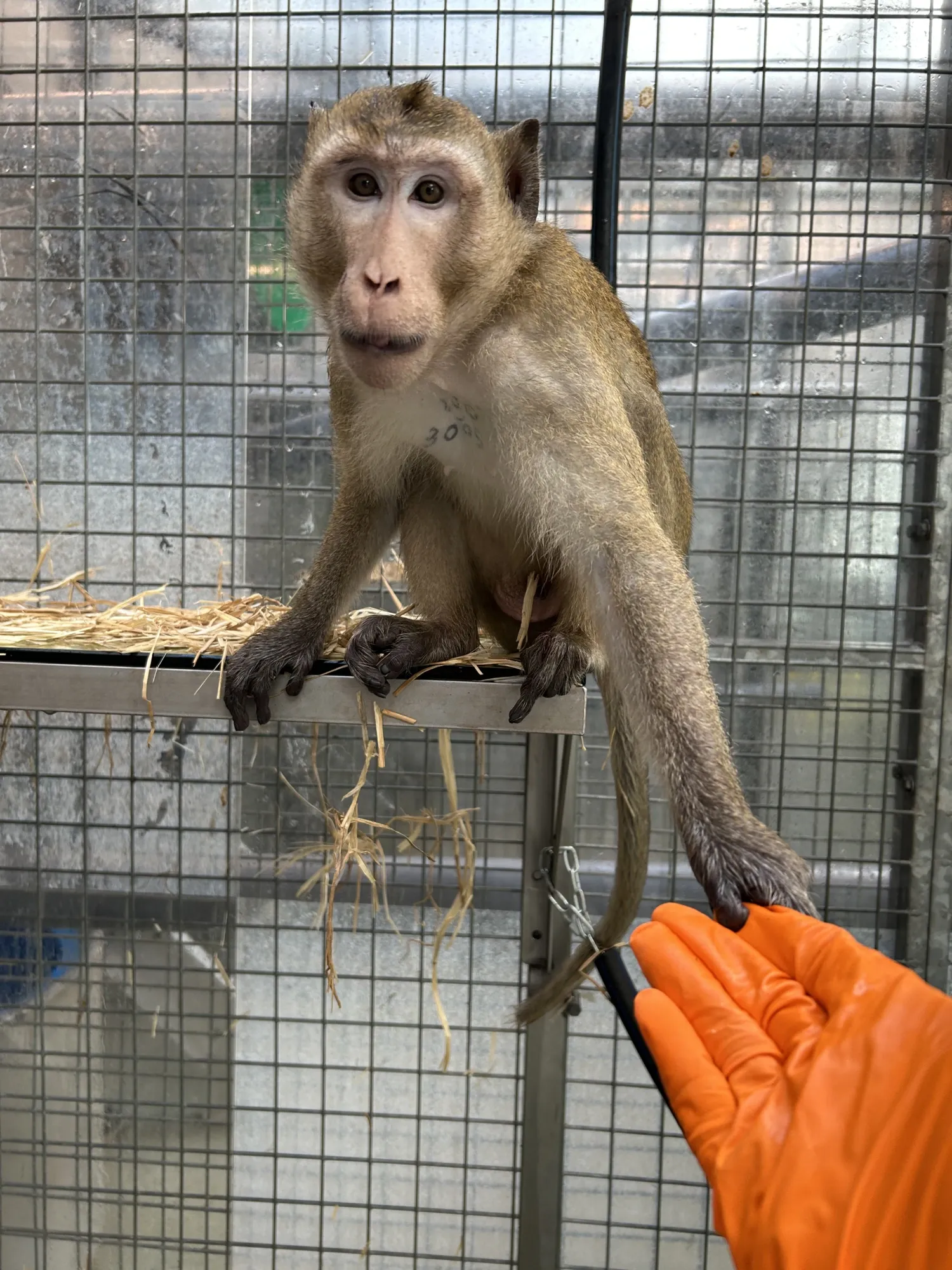
Training for cooperation and improved animal welfare
To help the macaques feel safe during, for example, health checks or sampling, they are trained using positive reinforcement.
This means that the animal voluntarily cooperates in exchange for a reward.
Training always takes place in the home environment, which reduces stress and improves the animals’ wellbeing. It also improves the reliability of research results, since stress affects the body and can influence research outcomes.
Research conducted with respect for animals
Conducting research with animals places high demands on both the organization and the staff. At Karolinska Institutet, the goal is clear: the macaques should have a safe, stimulating, and the most natural environment possible.
All research is based on the 3R principle (Replacement, Reduction and Refinement), and animal care is built on respect, knowledge and continuous work to improve animal welfare.
Everyone who works with the macaques has completed training in animal handling and receives ongoing further education in the field.