Urology – Anna Lantz's research group

Our research group conducts research in urological cancer, with a particular focus on prostate and bladder cancer, as well as benign urological conditions. Our aim is to develop better methods for early detection, more precise treatments, and improved quality of life for patients. We work with clinical trials, advanced imaging, artificial intelligence, and registry-based research to create more individualized care and reduce side effects while maintaining good treatment outcomes.

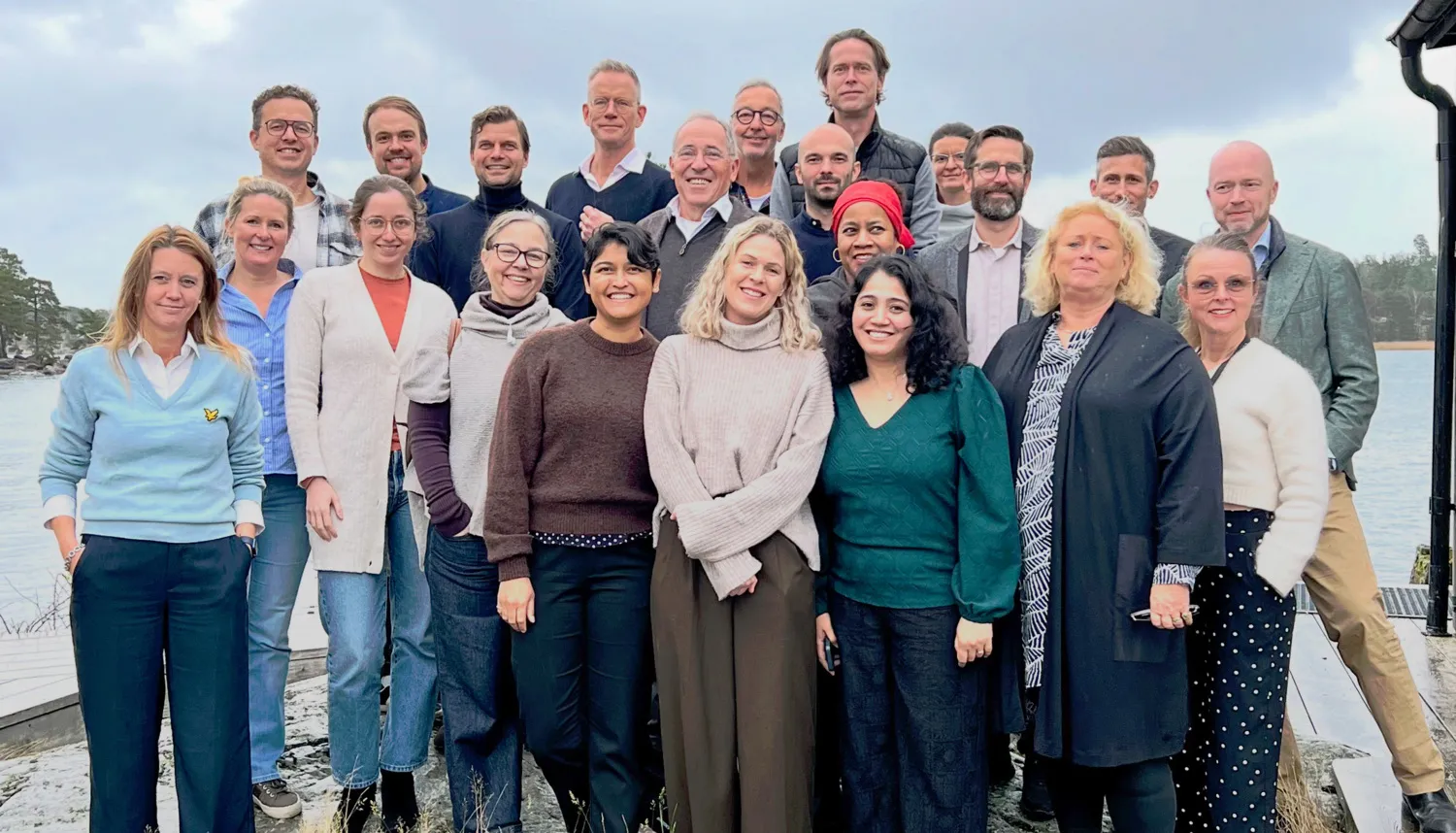
Group picture of 22 people

News from the group

Event list for the group

Our research

Publications

All publications from group members

Staff and contact

Group leader

Contact persons

All members of the group

Visiting address

Karolinska Institutet, Institutionen för molekylär medicin och kirurgi, Karolinska Universitetssjukhuset, D4:53, Eugeniavägen 3, Stockholm, 17164, Sverige

PRIS study

Prostate Cancer IRE Study

A randomized controlled trial of focal therapy versus radical prostatectomy for localized prostate cancer

The Prostate Cancer IRE Study (PRIS) is an investigator-initiated randomized controlled trial. It compares focal treatment with irreversible electroporation (IRE) with radical prostatectomy in selected men with localized, intermediate-risk prostate cancer.

The trial asks whether treating only the clinically significant tumour, rather than the whole gland, can reduce treatment-related morbidity while keeping cancer control adequate.

Study at a glance

Study at a glance
DesignProspective randomized controlled trial, 1:1 allocation
PopulationMen with localized, MRI-visible, intermediate-risk prostate cancer (ISUP grade group 2–3)
InterventionFocal therapy with irreversible electroporation (IRE)
ComparatorRadical prostatectomy
Sample size112 randomized participants
Primary endpointUrinary incontinence at 12 months
Key secondary outcomesErectile function, urinary function, quality of life, adverse events, progression-free and treatment-free survival, health economics
Principal InvestigatorAssociate Professor Anna Lantz, MD, PhD
SponsorKarolinska University Hospital, Stockholm, Sweden
Trial registrationClinicalTrials.gov NCT05513443
StatusRecruitment completed; 12-month follow-up ongoing

Current status

Recruitment to PRIS is complete. All 112 planned participants have been randomized. The primary analysis will be carried out once every participant has completed 12-month follow-up.

Background and rationale

Radical treatment gives effective oncological control in localized prostate cancer but can cause considerable morbidity, particularly urinary incontinence and erectile dysfunction.

Advances in prostate MRI and targeted biopsy now make it possible to localize clinically significant cancer within the prostate. This is the basis for focal therapy, which treats the index lesion with a safety margin and spares benign tissue and adjacent structures such as the urethral sphincter, bladder neck and neurovascular bundles.

Prospective comparative evidence between focal therapy and standard radical treatment is still limited. PRIS was designed as an exploratory randomized trial to provide that evidence, with functional outcome at 12 months as its primary focus.

Irreversible electroporation

IRE is a non-thermal ablation technique. High-voltage electrical pulses delivered between needle electrodes increase cell-membrane permeability and disrupt the membranes, causing cell death. The technique is CE-marked and is already used in Sweden for ablating tumours of the liver.

In PRIS, treatment is given under general anaesthesia. The target is localized with MRI/transrectal ultrasound fusion. Needles are placed transperineally around the lesion through a brachytherapy grid, and the pulses are then delivered (NanoKnife system).

Eligibility

PRIS includes men with localized intermediate-risk prostate cancer who are suitable for radical prostatectomy. The key inclusion criteria are:

  • age ≥40 years
  • a single MRI-visible lesion (≤EPE 3, volume <4.0 cm³)
  • Gleason 3+4 or 4+3 in the target, with no Gleason pattern 4 in systematic biopsies outside it
  • PSA ≤20 ng/mL
  • clinical stage ≤T2b
  • life expectancy ≥10 years.

The full inclusion and exclusion criteria are in the study protocol.

Outcomes

Primary endpoint: urinary incontinence at 12 months, defined as the use of ≥1 pad per day on EPIC-26.

Secondary outcomes: erectile function, urinary and voiding function, health-related quality of life, adverse events, progression-free and treatment-free survival, and health-economic outcomes.

The trial assesses functional and oncological outcomes together, to address the possible trade-off between less treatment morbidity and durable cancer control.

Follow-up

Patient-reported outcomes (urinary, sexual and general quality of life) are collected at baseline, 3, 6, 12 and 24 months.

Participants treated with focal IRE are followed with:

  • MRI at 2–4 weeks
  • PSA at 3, 6, 12 and 24 months
  • MRI at 12 and 24 months
  • targeted and systematic biopsies at 12 months, to detect residual or recurrent clinically significant cancer.

Men with significant residual disease are offered curative treatment.

Study organization

Sponsor: Karolinska University Hospital, Stockholm, Sweden
Principal Investigator: Anna Lantz, MD, PhD, Associate Professor
Co-Principal Investigator: Tobias Nordström, MD, PhD, Associate Professor

A Scientific Steering Committee with national and international expertise in prostate cancer diagnostics, surgery, focal therapy, epidemiology and clinical research oversees the trial.

Documents and publications

Study documents and results will be added here as the project progresses. The trial is registered on ClinicalTrials.gov under the identifier NCT05513443.