
Menstrual Health
Our group explores how menstrual health is experienced at various life stages, particularly among marginalized populations such as migrants and those affected by female genital mutilation, to inform inclusive and responsive health interventions.
We further have a specific focus on Youth SRH which encompasses how oppressed SRHR impacts the health, menstrual health, gender equality, and equity of young people in Sweden.
Menstrual health research projects and collaborations
- Menstrual health among adolescent athletes aged 12-18 years
- MESH: Menstrual health as an entry point to sexual and reproductive health among young people
- Menopause: experiences of Peri and Menopause transition among women in Sweden
- Inequities in sexual and menstrual health among young people in Sweden
- Menstrual health among women with experience of female genital mutilation/cutting
- Breaking Barriers: Advancing Research on Heavy Menstrual Bleeding, Treatment Access and Education in Somaliland
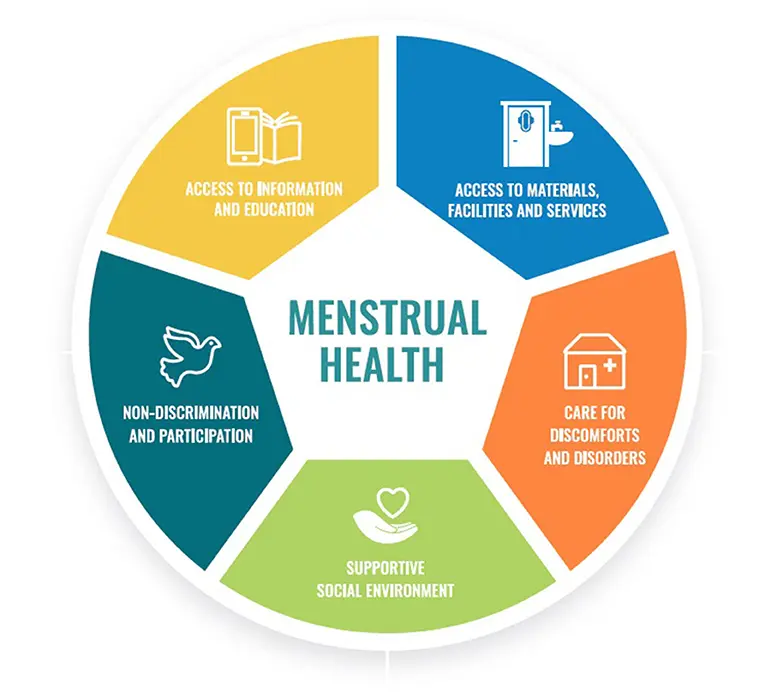
Menstrual health across the life course refers to the state of complete physical, mental, and social well-being in relation to the menstrual cycle, from menarche (the first period) through the reproductive years, and into perimenopause and menopause. It encompasses not only the absence of menstrual-related disorders but also the ability to access accurate information, appropriate care, supportive environments, and dignified management of menstruation at every stage of life.
Menstrual health among adolescent athletes aged 12-18 years
In Sweden, floorball is one of the most popular organised indoor team sports among children and adolescents. In collaboration with the Swedish Floorball Federation, the Floorball Research & Development Center, and Umeå University we aim to generate evidence on menstrual health experiences among adolescent floorball players and coaches to better understand their needs and identify actions to promote a menstrual health-friendly environment within floorball clubs.
Our research focuses on:
- Understand adolescent girl floorball players’ experiences of menstruation while playing floorball, participation, and management strategies, as well as their perspectives on changes needed to create a more menstrual health-friendly environment within floorball clubs.
- Examine the impact of menstrual-related symptoms on sport participation and management strategies among adolescent girls playing floorball in Sweden.
- Understand floorball coaches’ experiences of barriers to and opportunities for communication about menstrual health with female adolescent athletes and for fostering supportive norms and environments.
Findings from studies will generate ideas for the Swedish Floorball Federation future programmatic and policy change, co-creation of menstrual health in coach training programmes, in order to promote gender equity and menstrual health-friendly environment in floorball clubs.
Funding: The project is funded by The Swedish Research Council for Sport Science