
Together - for participation and belonging in society for people with acquired brain injury
The lives of people with acquired brain injury have been described as a "black hole" when rehabilitation is completed. Many have experiences of isolation, limited participation in social activities and in society.
About the project
The aim of the project is to increase knowledge about the situation for people with acquired brain injury in terms of experiences of participation and sense of belonging in society. We will investigate when and how experiences of participation and belonging are created.
Another aim is to increase knowledge about how people with acquired brain injury share experience-based knowledge about living with the injury. For example, it can be about what knowledge is shared and what it means to share knowledge.
The co-research group
In the project, people living with acquired brain injury work together with researchers. We have formed a group – the co-research group – with three persons with acquired brain injury and two of the participating researchers. The persons with acquired brain injury are employed as research assistants at KI for the work they do in the group. In this way, the experience-based knowledge about living with acquired brain injury becomes integrated into the entire research process.
The co-research group meets weekly and discusses issues related to the project's sub-studies. For example, we have identified social media as an important environment for studying the sharing of experience-based knowledge, and we have written information texts about the studies together to make them easier to read.
Co-workers in the study
The co-research group
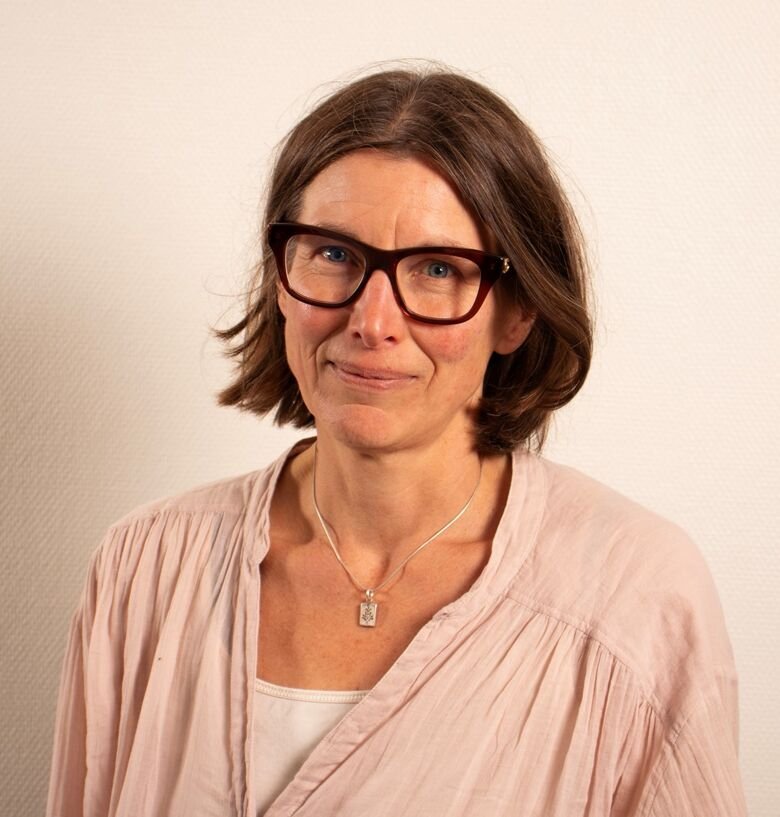
Malin Tistad
"My name is Malin Tistad and I'm an affiliated researcher at Karolinska Institutet. I also work as a researcher and teacher at Dalarna University. I am responsible for the research project.
I think it's really important to work together with the people that the research is about. The fact that we have now created the co-research group and started working together is both inspiring and important."
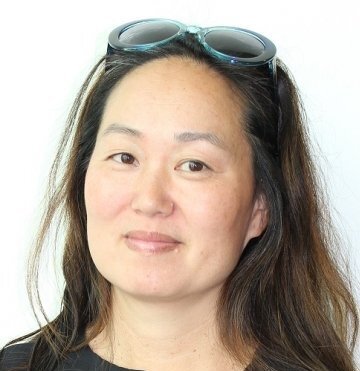
Lill Hultman
"My name is Lill Hultman and I am an affiliated researcher at Karolinska Institutet working in this project. I also work as a researcher and teacher at the social work program at Södertörn University.
It is engaging to work in the research group and I learn a lot. Hopefully, we can contribute to better living conditions for people with acquired brain injury and their relatives."
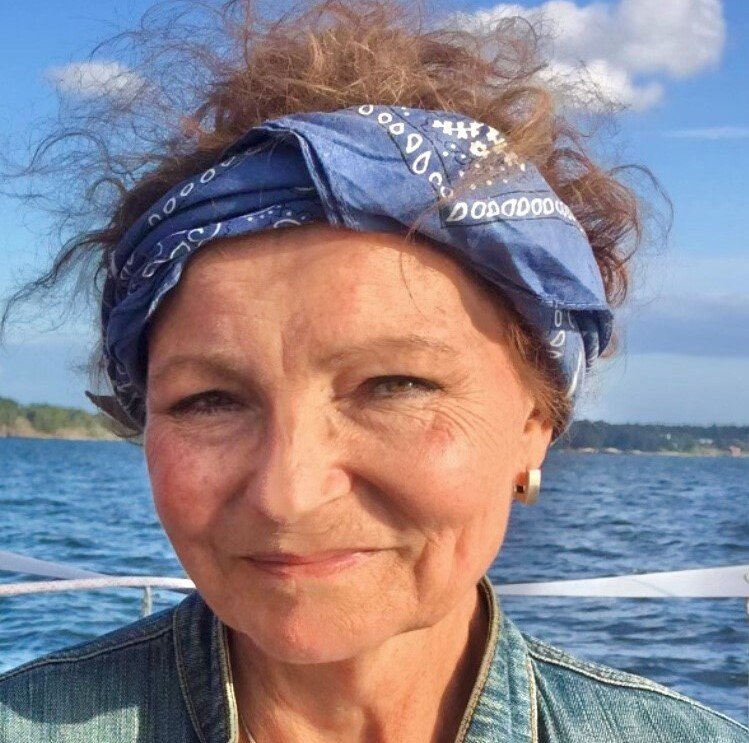
Jeanette Nelson
"My name is Jeanette Nelson. In 2014, I suffered an aneurysm in the brain. It became an emergency open operation. Afterwards, I developed a disability of the type aphasia. Before that, I worked as a flight attendant and health coach at SAS. I have also worked as a physiotherapist.
I want to share the knowledge I have gained through my own experiences."
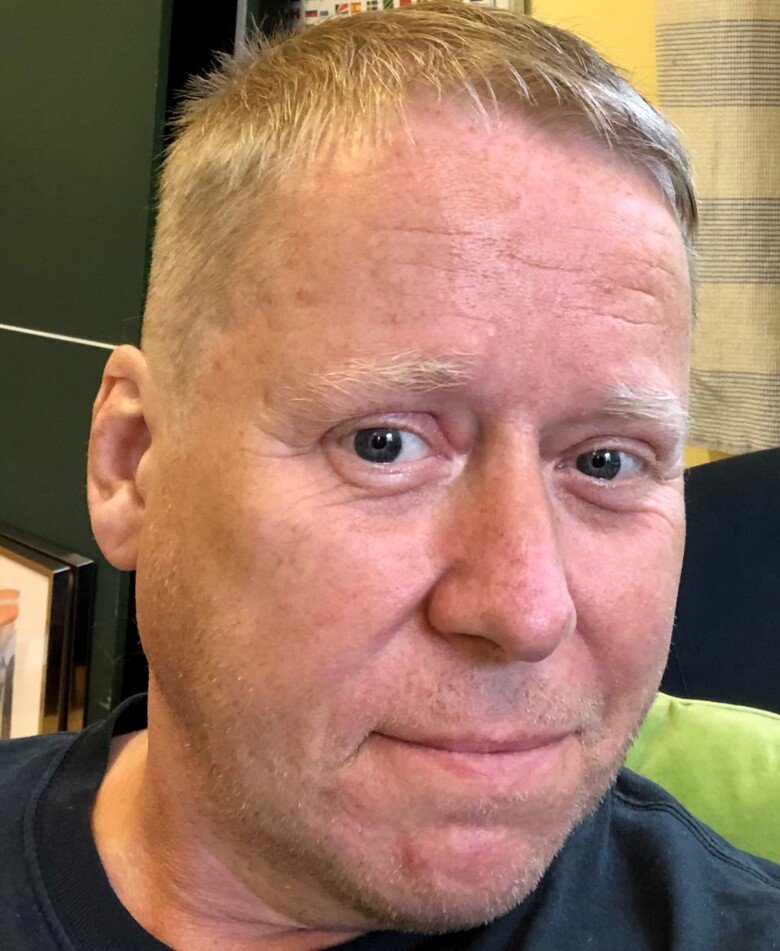
Fredrik Sandman
"My name is Fredrik Sandman. I had a stroke and aphasia in 2013. I am a board member of the Aphasia Association Stockholm County.
I am passionate about this, I want me and others to have it easier in their everyday life with stroke and aphasia."
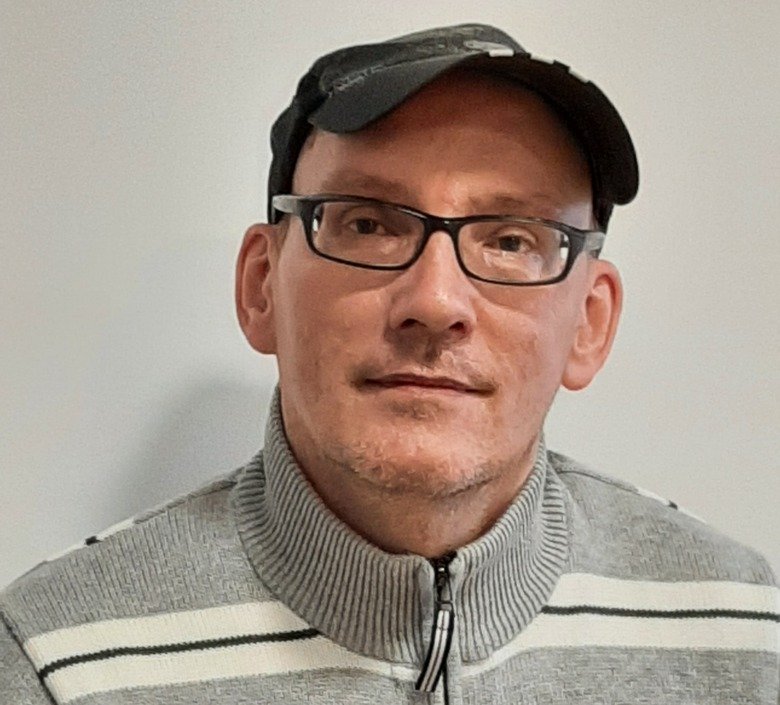
Mikael Åkerlund
"My name is Mikael Åkerlund and I am a former postal employee who had a stroke in 2005. I think that issues relating to participation in society are important and concern us all, but perhaps above all those of us with disabilities.
I hope to share some of the experiences I have gathered during these years with acquired brain injury."
Övriga medarbetare
Susanne Guidetti, Karolinska Institutet
Annie Palstam, Göteborgs universitet
Ulla-Karin Schön, Stockholms universitet
Lena von Koch, Karolinska Institutet
Elisabet Åkesson, Karolinska Institutet
News
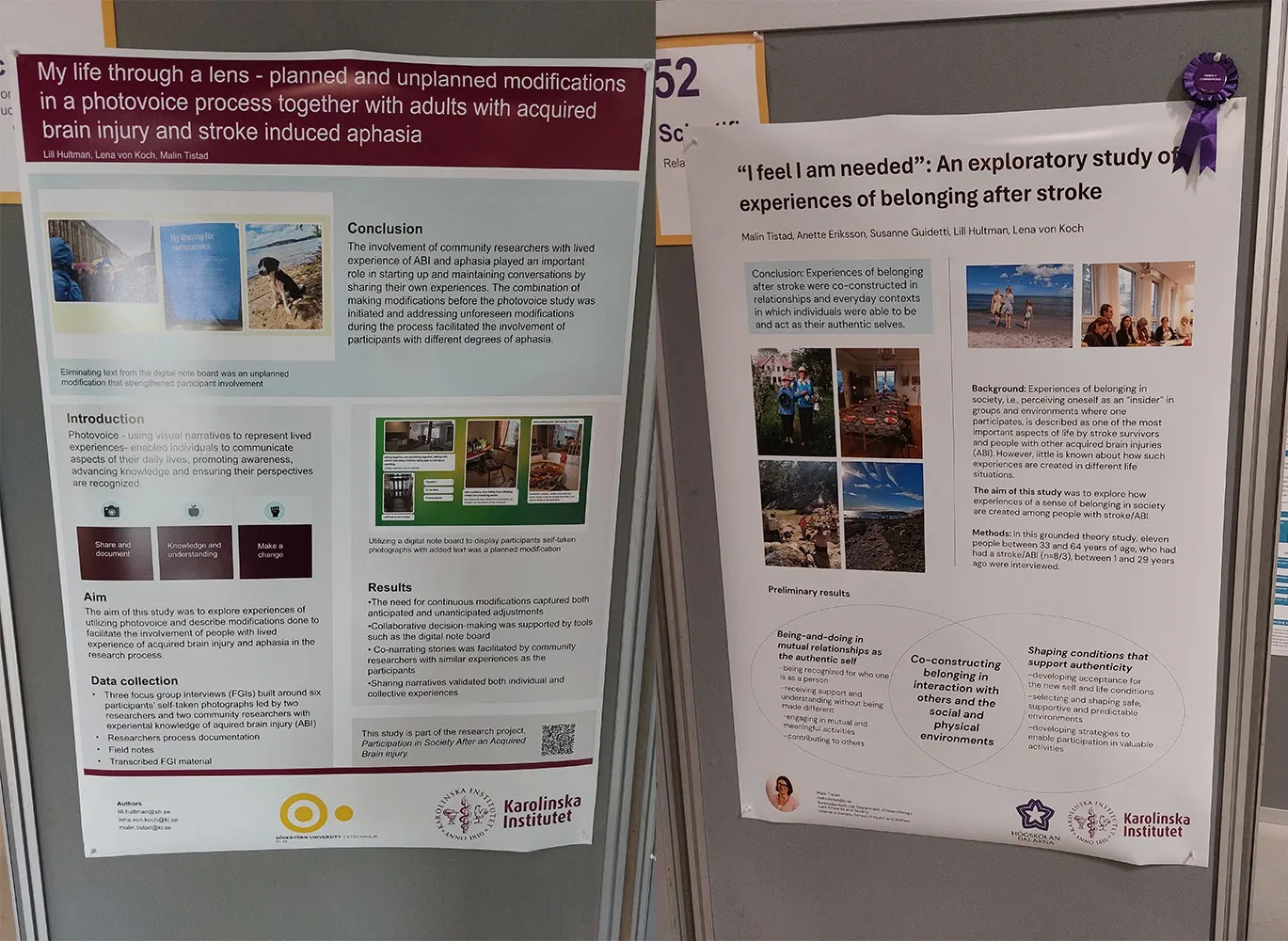
March 2026 posters at the European Life After Stroke Forum conference in Älvsjö
The IHOP project was represented by two posters at this year's ELASF conference, which this year was in Älvsjö. The poster "My life through a lens -planned and unplanned modifications in a photovoice process together with adults with acquired brain injury and stroke induced aphasia" has a methodological perspective and is about how we have worked with Photovoice as a method together with people with aphasia. The poster "I feel I am needed": An exploratory study of experiences of belonging after stroke is about how experiences of belonging are created in different contexts after stroke and other acquired brain injuries.
May 2025 Presentation at the European Stroke Conference
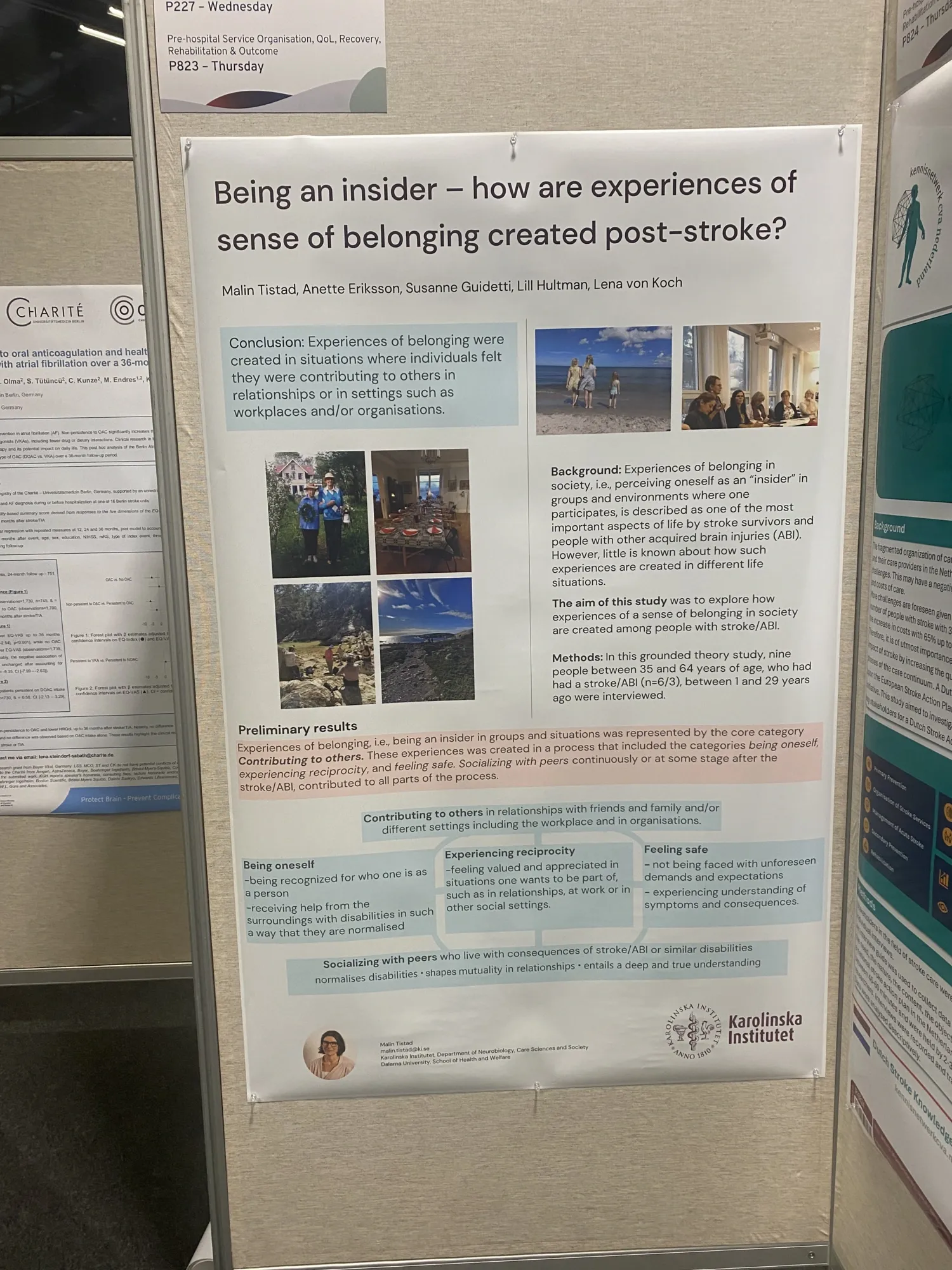
Lena von Koch represented the IHOP project at the European Stroke Conference in Helsinki with a poster. The poster, titled "Being an insider – how are experiences of sense of belonging created post-stroke?" presented preliminary results such as how experiences of belonging are created after stroke or other acquired brain injuries.
2025 March, September and October, three publications on experiences of participating in peer support groups on Facebook are now available!
Finally, our three studies on Facebook groups for people with stroke have been published.
One study is based on interviews with people who are members of Facebook groups for people with stroke and/or other acquired brain injuries. The study shows that online support groups such as Facebook can provide the opportunity for individuals to receive meaningful validation. They get confirmation of who they are after their stroke/brain injury by first learning from others, then starting to develop compassion for themselves and others, and finally being able to help support others with their own experience.
Link to the article here
In another study, we have studied the posts and comments that the participants make on Facebook in the group to see which topic areas are brought up by the group members. We saw that there were 5 question areas where the participants wanted:
- Tell us about everyday life with the consequences of stroke
- Dealing with the emotional struggles of life after stroke
- Making progress and enjoying everyday life
- Navigating societal services and societal requirements
- Continuing everyday life describes stories
Link to the article here
In the third study, we studied how participants express their roles in interacting with others on Facebook and identified five ways to express their identity: as survivor, wayfinder, mentor, fighter and outsider. Members often alternated between these roles. Based on changes in health, emotional state or interaction with society.
Link to the article here
March 2025 Participation in a seminar on co-creation in research at the Department of Physiotherapy at Karolinska Institutet
The Division of Physiotherapy invited Malin Tistad, Mikael Åkerlund, Fredrik Sandma and Jeanette Nelson to talk about their experiences of collaboration in research between academic researchers and people with their own experience. We shared concrete experiences about how we have worked, but also reflections on, for example, the importance of being paid for the work as a co-researcher, who you represent and about changing your planning when things don't go as planned.
Link to a video presenting the results of the study here: https://play.du.se/media/t/0_dc7lnc2z
December 2024 Article in the Swedish Stroke Association's magazine Strokekontakt
In the magazine Strokekontakt 4/2024 you can read about our joint work and about the results of the Facebook studies.
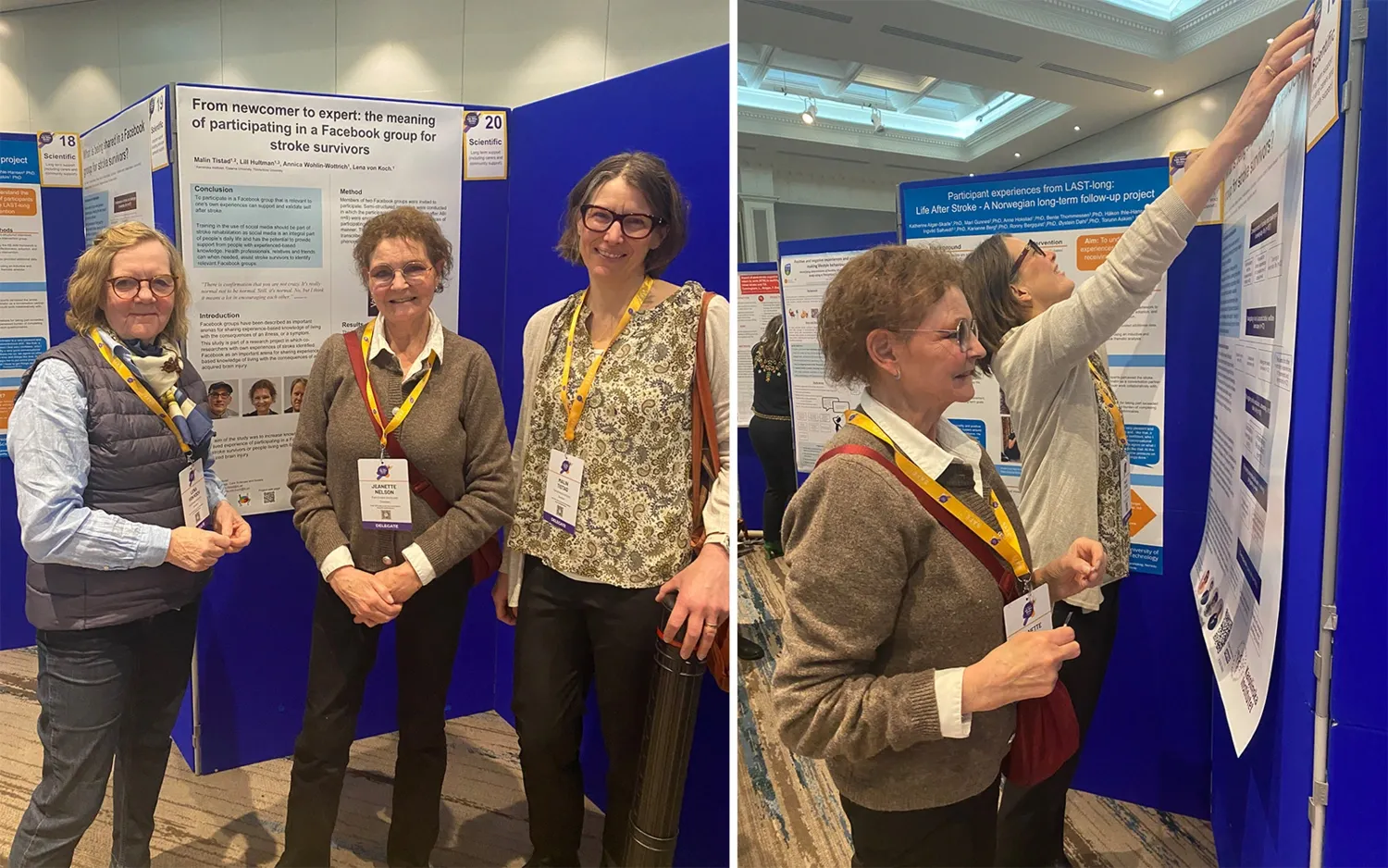
March 2024 We presented our research at the European Life After Stroke Forum conference in Dublin
Jeanette Nelson, Lena von Koch and Malin Tistad went to Dublin and participated in a conference organized by the European Life After Stroke Forum. We had three posters with us with results from our studies. It is important and rewarding that so many people with their own experience of stroke participated in the conference and presented at the sessions.
Publications
Article published in Forskning om funktionshinder pågår (in Swedish)
In Forskning om funktionshinder pågår 2023 issue 2, pp.3-5, there is an article published about the co-research group entitled, Akademiska forskare och personer med förvärvad hjärnskada forskar tillsammans. (Academic researchers and people with acquired brain injury research together)
Forskning om funktionshinder pågår – nr 2 2023 (diva-portal.org)
Article published in Socialvetenskaplig tidskrift (in Swedish, abstract in English)
The article Som erfarenhetsforskare, då är man med och bestämmer i forskningsprojektet (As an experiential researcher, when you are involved in deciding in the research project) is now available to read in Socialvetenskaplig tidskrift.
Article published in Hjärnskadeförbundet Hjärnkraft's magazine (in Swedish)
Hjärnskadeförbundet Hjärnkraft's magazine number 1/2023 p. 18 there is an article about the co-research group entitled Researchers and people with their own experience of acquired brain injury collaborate in research projects.
The co-research group contributed with a film to the Marie Cederschiöld Days
The co-research group contributed with a film to the Marie Cederschiöld Days, which had the theme An ethical approach and co-creation in health care and social care.
Here you can see the film (about 6 min) where we together share reflections linked to collaborating in research.
Photos from conferences and other events
Participation at the Nordic Network of Disability conference, Island, 2023
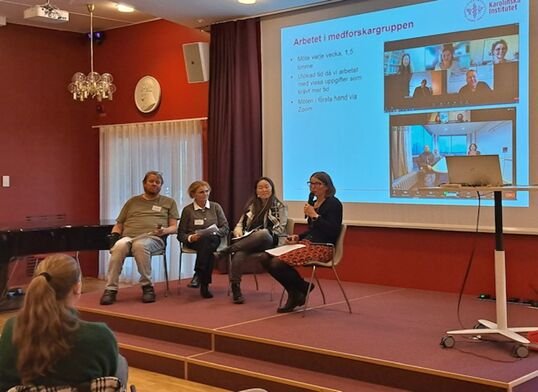
Presentation for the “Hjärna tillsammans” network
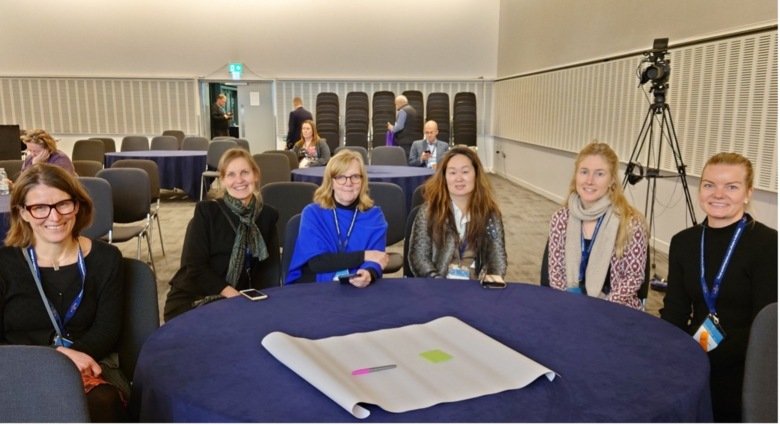
Participation at UK Stroke Forum November 29 – December 1, 2022
Posters

Participation at the ICIC22 conference 23-25 May
Lena von Koch, Fredrik Sandman and Malin Tistad participated in the ICIC22 (International Conference on Integrated Care) conference in Odense, Denmark 23-25 May. At the conference, research entitled: "United for Participation in Society-exploration of an ongoing research process in a participatory health research project" was presented
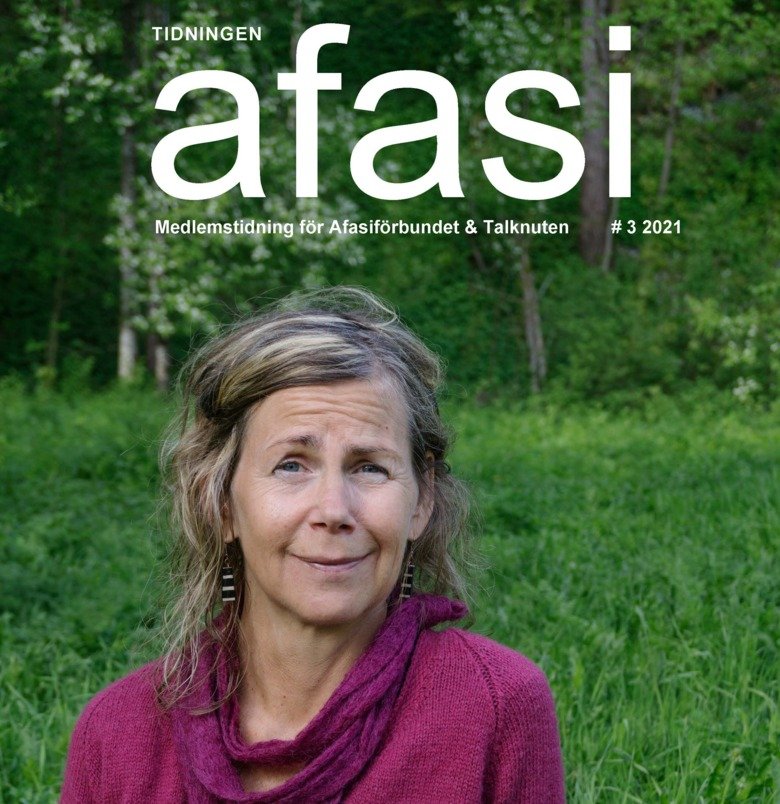 Photo: n/a.
"Erfarenhetsbaserad forskning" - artikel i tidningen Afasi.
I Afasiförbundets medlemstidning Afasi nr. 3/2021 kan du läsa en artikel om projektet. Tidningen läggs ut som ljudfil på Afasiförbundets webb och finns att lyssna på gratis.
Dokument
Finansiärer
The projeckt is finaced by Forte - the Swedish Research Council for Health, Working Life and Welfare.