

Psychoneuroimmunology
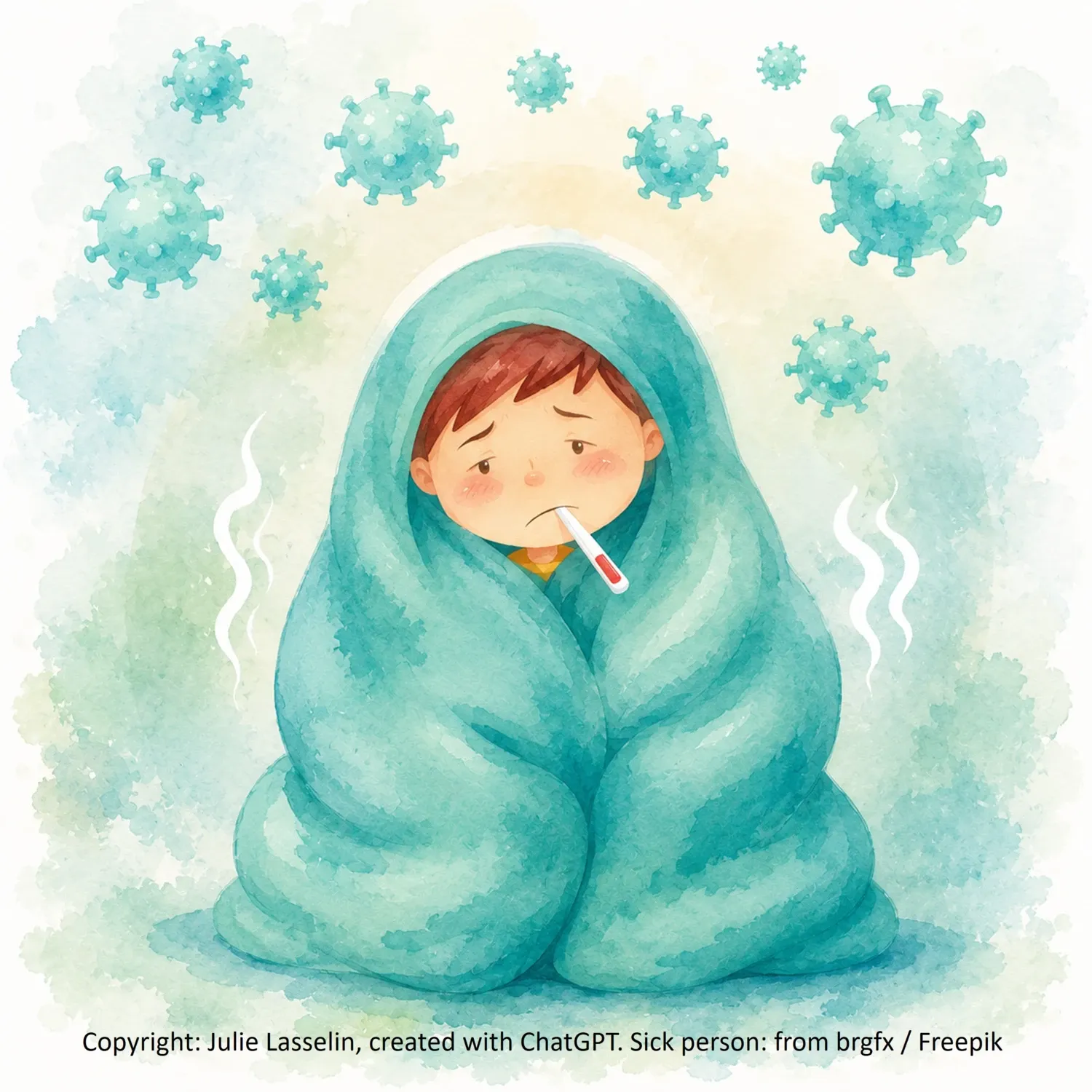
Julie Lasselin’s research group explores how the immune system communicates with the brain, and how brain processes in turn influence immune activity. The aim is to understand how these bidirectional interactions shape behavior, perceived health, and social functioning, with a particular focus on the sickness response.
Using experimental immune activation in humans (experimental endotoxemia) as well as naturally occurring inflammation (e.g., seasonal allergy), the group investigates what characterizes the behavioral changes and feelings occurring during sickness, referred to as “sickness behavior”, including fatigue, pain, mood, and social behavior. The research also examines how immune–brain interactions give rise to these effects through changes in brain functions, and why these responses occur, by testing their potential adaptive role during infection. A central focus is on psychobiological mechanisms, including how cognitive and contextual factors such as expectations and mindset modulate both sickness symptoms and immune functions, and how behavioral responses during illness contribute to recovery.
The group builds on the work of Mats Lekander, who created and led the group until May 2026, and remains actively involved as senior researcher and co-PI, and Director of the Osher Center for Integrative Health at Karolinska Institutet. The research is conducted in close collaboration between Stockholm University and Karolinska Institutet, and also forms a foundation for clinical intervention research, including cognitive behavioral therapy for stress disorders or fatigue.
Research Projects – Examples
Experimental immune activation in humans
Using the model of experimental endotoxemia, a short-term inflammatory response including sickness behavior is safely induced in humans. This allows us to characterize changes in brain functions, subjective health, pain sensitivity, and social behavior, and to examine the psychobiological and contextual factors, including expectations, that shape individual responses to immune activation.
Inflammation and infection in naturalistic and controlled conditions
We conduct studies in individuals with seasonal allergy or other inflammatory conditions, to examine how long-term naturally occurring inflammation influences well-being, as well as cognitive, emotional, and social processes. We also are using a controlled viral infection (rhinovirus inoculation in laboratory settings) to test the role of sickness behavior on the recovery from acute infections.
Intervention studies
Intervention studies evaluate how psychological and behavioral approaches, including cognitive behavioral therapy and mindset-based interventions, can modulate sickness symptoms and immune function. This work is conducted in collaboration with primary care and emergency care units, and aims to translate mechanistic insights into improved health and recovery.