
Chemicals and female fertility – Pauliina Damdimopoulou Research Group

Our research group studies human ovarian biology and how chemical exposures and medical treatments can affect women's fertility. We are particularly interested in understanding the ovary at molecular, cellular and functional levels, and how its function is disrupted by environmental contaminants and gonadotoxic treatments. Our ultimate aim is to develop human-relevant in vitro models that can predict reproductive toxicity.

Pauliina Damdimopoulou research project

Our research

Our research combines fundamental studies of human reproductive biology with research on environmental and medical exposures that may impair female fertility. We work with donated female reproductive tissues and cells, clinical and population-based studies, and advanced in vitro models to understand reproductive toxicity and develop better ways to predict it.

Human ovarian biology

Detailed knowledge of the human ovary is essential for determining how fertility is affected by environmental exposures, disease and medical treatments. We study the cellular and molecular organisation of the ovary and how it changes from childhood through puberty and adult reproductive life.

A particular focus is the ovarian reserve – the population of immature eggs and their surrounding cells that provides the foundation for female fertility. Using single-cell and spatial technologies, we investigate how follicles and their surrounding cellular environment develop, communicate and respond to external challenges like gonadotoxic medial treatments and environmental chemical contaminants.

Our research on human ovarian biology builds on a long-standing collaboration between reproductive medicine and basic research at Karolinska Institutet and Karolinska University Hospital.
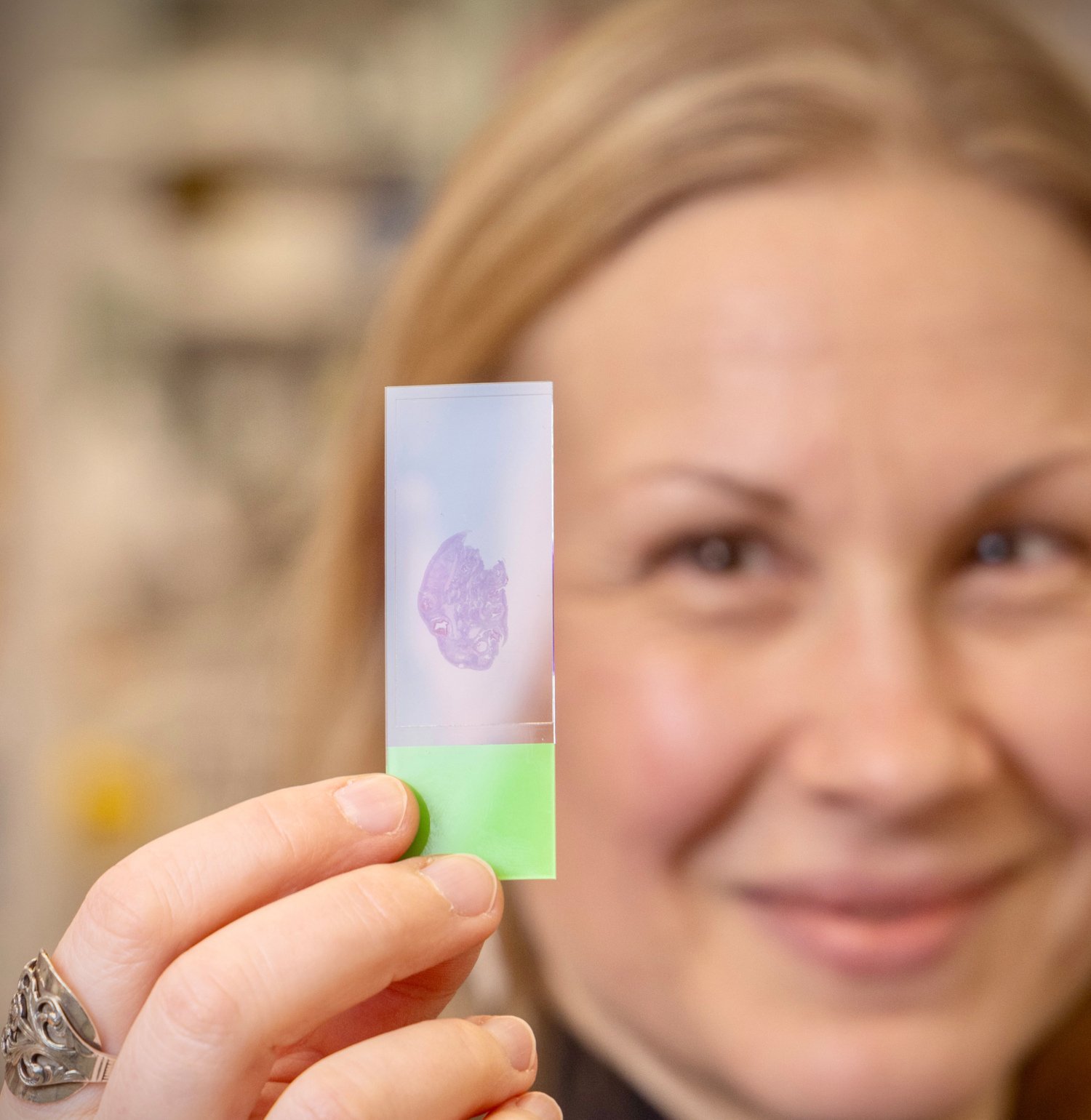
Pauliina Damdimopoulou
Pauliina Damdimopoulou Photo: Magnus Laupa

Threats to female fertility

Women are exposed throughout life to environmental chemical contaminants and medical treatments that may affect reproductive health. We study how these exposures relate to female fertility and how they affect reproductive tissues and cells.

In population and clinical studies, we investigate relationships between chemical exposures and fertility, ovarian function and reproductive outcomes. In the laboratory, we expose human ovarian tissue and reproductive cells to selected chemicals under controlled conditions to identify effects at molecular, cellular and functional levels and determine the mechanisms that may lead to impaired fertility.

We also study the effects of gonadotoxic medical treatments, particularly chemotherapy, on the ovaries of girls and young women. By connecting clinical observations with detailed molecular studies of human tissues, we aim to identify vulnerable cells and biological processes and ultimately improve prediction of individual risk.

Developing human-relevant models for reproductive toxicology

Current methods for testing reproductive toxicity rely heavily on experimental animals and provide limited information about effects on the human female reproductive system. A major goal of our research is therefore to develop human-relevant in vitro models that can complement or replace animal studies.

We use human ovarian tissue and cells as well as stem cell-based models of early embryonic development and implantation. By combining these models with molecular profiling, imaging and high-throughput technologies, we aim to identify biological responses that can be developed into practical assays for chemical testing.

Ultimately, we want to provide better tools for identifying chemicals and pharmaceuticals that may harm female reproductive health – and thereby contribute to safer chemical environments and better protection of fertility.

Pauliina Damdimopoulou forskningsprojekt
Pauliina Damdimopoulou research project Photo: Magnus Laupa

Selected projects

SAFER is funded by a European Research Council (ERC) Consolidator Grant and develops human-relevant in vitro tools for female reproductive toxicity. The project investigates how environmental chemicals affect human ovaries and early embryonic development, using ovarian tissue, stem cell-based embryo models and multi-omics approaches. The aim is to translate mechanistic knowledge of reproductive toxicity into new methods for chemical safety testing.

Sveafertil is a Swedish national clinical research study for girls and young women at high risk of infertility due to medical treatments. The study combines fertility preservation with research on human ovarian development and the effects of gonadotoxic treatments.

Through collaboration with paediatric oncology and haematology units across Sweden, we study ovarian tissue from childhood through puberty and investigate how medical treatments affect its cells, follicles and molecular organisation. The long-term goal is to improve assessment of fertility risk and fertility preservation for young patients.

Sveafertil is funded by the Swedish Childhood Cancer Fund, Karolinska Institutet and the Rydbeck Foundation.

http://ki.se/en/sveafertil

MERLON is a five-year Horizon Europe project bringing together researchers across Europe to improve the identification and regulation of endocrine-disrupting chemicals. The project combines human data, experimental models, molecular approaches and Adverse Outcome Pathways to investigate how endocrine disruptors affect sexual development and reproductive function.

Our group contributes human-relevant experimental approaches and develops New Approach Methodologies (NAMs) for ovarian toxicity that can ultimately support chemical risk assessment.

https://merlon.dtu.dk/

HERTOX is a five-year FORMAS project that develops human-relevant high-throughput screening methods for identifying chemicals that may harm female fertility. We are adapting technologies originally developed for large-scale drug screening to human ovarian and endometrial cell models.

Using 2D and 3D cultures, automated imaging and molecular and cellular endpoints, the project will enable thousands of chemicals to be screened for effects on female reproductive cells. The goal is to turn biological knowledge about reproductive toxicity into scalable methods that can contribute to future chemical safety assessment.
Publications

All publications from group members

Funding

  • European Research Council
  • European Commission
  • European Food Safety Authority
  • Karolinska Institutet
  • Forskningsrådet Formas
  • Vetenskapsrådet 
  • Barncancerfonden

Staff and contact

Group leader

All members of the group

For research participants

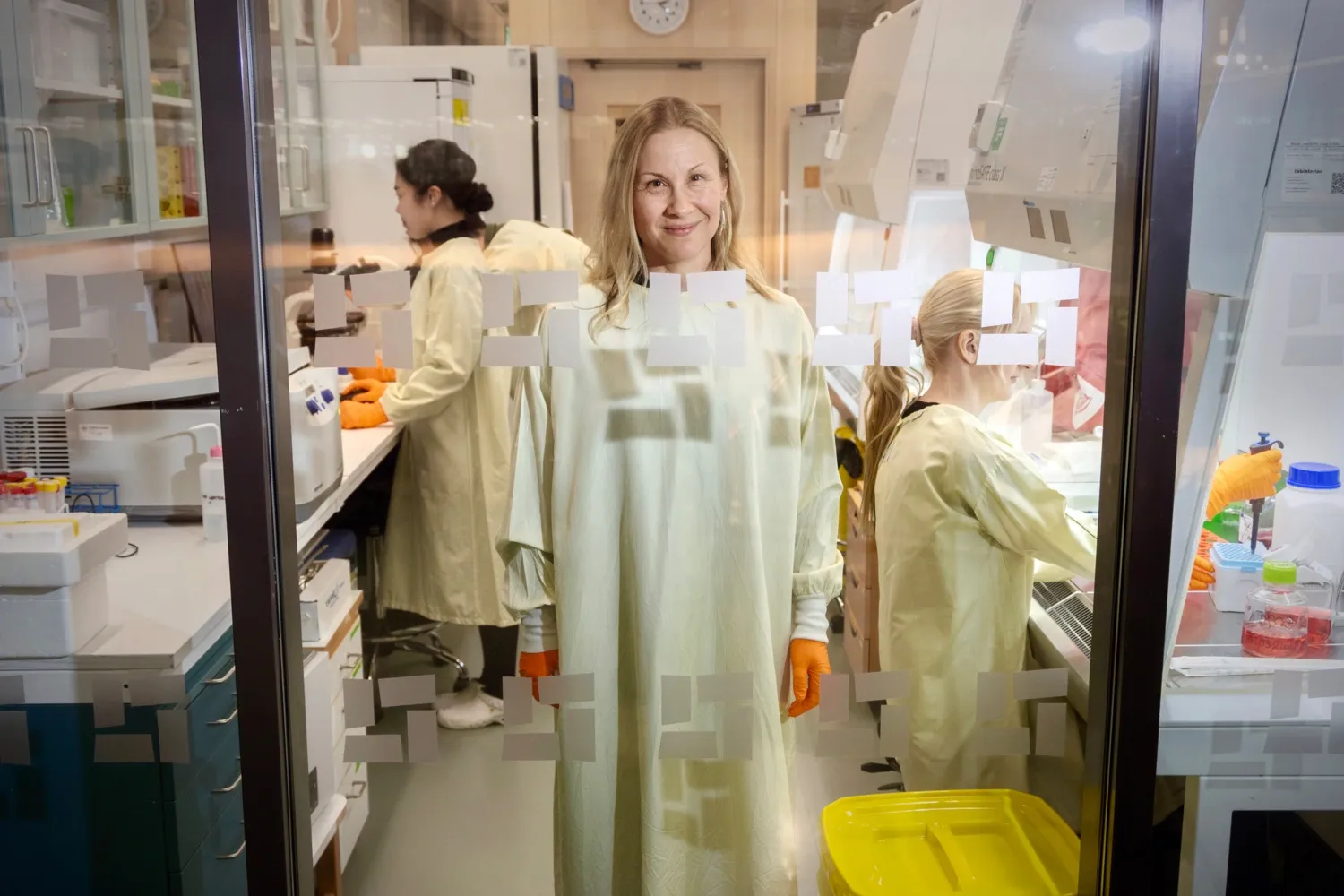
Pauliina Damdimopoulou in a lab
Pauliina Damdimopoulou research project Photo: Magnus Laupa

For Participants Who Have Contributed to Our Research

Thank you for choosing to contribute to our research.

Our research aims to increase knowledge about ovarian function, female fertility, and how different factors can affect reproductive health. We also seek to develop new methods for evaluating how chemicals and medical treatments may affect female fertility.

By studying donated ovarian tissue, follicular fluid, and other biological samples, we aim to better understand both normal ovarian function and the mechanisms that may contribute to infertility or reduced fertility.

The research is conducted at Karolinska Institutet, and all projects have been approved by the Swedish Ethical Review Authority.

About the research

The samples donated to our research are used in several different types of studies.

We investigate:

  • which cell types are present in the ovary
  • how ovarian cells interact and communicate with each other
  • how eggs develop and mature
  • how environmental factors, chemicals, and medical treatments can affect ovarian function and female fertility

The knowledge gained from these studies helps us develop better methods for assessing how chemicals and medicines may affect reproductive health.

All samples are coded before being used in research. The researchers who analyze the samples do not have access to participants' identities.

Thanks to donations from patients, we have been able to:

  • study which environmental chemicals are present in women's blood and follicular fluid
  • investigate whether exposure to different chemicals is associated with fertility
  • map the different cell types found in the ovaries of children and adults
  • describe how the ovary develops from childhood to adulthood
  • investigate how environmental chemicals and cancer treatments affect ovarian tissue and ovarian cells

Our ongoing research builds on this knowledge to develop improved methods for evaluating how chemicals and medical treatments affect female fertility. Many of today's safety tests rely on animal experiments and cannot always accurately predict effects in the human reproductive system. We therefore work to develop new methods based on human cells and tissues. In the long term, these approaches may contribute to more accurate risk assessment and a reduced need for animal testing.

Research findings are continuously published in scientific journals and presented at national and international conferences.

A selection of publications is listed below.

Single-cell analysis of human ovarian cortex identifies distinct cell populations but no oogonial stem cells

Wagner M, Yoshihara M, Douagi I, Damdimopoulos A, Panula S, Petropoulos S, Lu H, Pettersson K, Palm K, Katayama S, Hovatta O, Kere J, Lanner F, Damdimopoulou P.
Nature Communications (2020)

In this study, we performed the first detailed single-cell map of the human ovary. The findings improved our understanding of the different cell types present in the ovary and demonstrated that adult ovaries do not contain stem cells capable of generating new eggs.


In-depth analysis of transcriptomes in ovarian cortical follicles from children and adults reveals interfollicular heterogeneity

Rooda I, Hassan J, Hao J, Wagner M, Moussaud-Lamodière E, Jääger K, Otala M, Knuus K, Lindskog C, Papaikonomou K, Gidlöf S, Langenskiöld C, Vogt H, Frisk P, Malmros J, Tuuri T, Salumets A, Jahnukainen K, Velthut-Meikas A, Damdimopoulou P.
Nature Communications (2024)

In this study, we compared immature eggs from children and adults. We found that immature eggs in children differ from comparable eggs in adult women. The results show that puberty influences even the earliest stages of egg development, despite these eggs having long been considered biologically dormant.


Persistent organic pollutants and the size of ovarian reserve in reproductive-aged women

Björvang RD, Hassan J, Stefopoulou M, Gemzell-Danielsson K, Pedrelli M, Kiviranta H, Rantakokko P, Ruokojärvi P, Lindh CH, Acharya G, Damdimopoulou P.
Environment International (2021)

In this study, we found that women with higher levels of persistent environmental pollutants in their blood had a smaller ovarian reserve, meaning fewer remaining immature eggs in their ovaries. The findings suggest that environmental chemicals may influence reproductive ageing.


Follicular fluid and blood levels of persistent organic pollutants and reproductive outcomes among women undergoing assisted reproductive technologies

Björvang RD, Hallberg I, Pikki A, Berglund L, Pedrelli M, Kiviranta H, Rantakokko P, Ruokojärvi P, Lindh CH, Olovsson M, Persson S, Holte J, Sjunnesson Y, Damdimopoulou P.
Environmental Research (2022)

We showed that levels of persistent environmental pollutants in follicular fluid largely reflect those found in blood samples from women undergoing fertility treatment. We also observed that higher PFAS levels were associated with a lower likelihood of obtaining high-quality embryos.


Association between chemical mixtures and female fertility in women undergoing assisted reproduction in Sweden and Estonia

Bellavia A, Zou R, Björvang RD, Roos K, Sjunnesson Y, Hallberg I, Holte J, Pikki A, Lenters V, Portengen L, Koekkoek J, Lamoree M, Van Duursen M, Vermeulen R, Salumets A, Velthut-Meikas A, Damdimopoulou P.
Environmental Research (2023)

This study was conducted as part of a larger European Union research project. We found that mixtures of environmental chemicals in follicular fluid may influence how the ovaries respond to hormone stimulation during IVF treatment. The results highlight the importance of studying combined chemical exposures rather than individual chemicals in isolation.


Reduced ovarian cholesterol and steroid biosynthesis along with increased inflammation are associated with high DEHP metabolite levels in human ovarian follicular fluids

Varik I, Zou R, Bellavia A, Rosenberg K, Sjunnesson Y, Hallberg I, Holte J, Lenters V, Van Duursen M, Pedersen M, Svingen T, Vermeulen R, Salumets A, Damdimopoulou P, Velthut-Meikas A.
Environment International (2024)

Also performed within a larger European research project, this study showed that higher levels of certain phthalates in follicular fluid were associated with reduced follicle maturation during IVF treatment, as well as increased inflammation and altered hormone production within the follicle. These findings suggest that such chemicals may affect the environment in which eggs develop.


Identification of phthalate mixture exposure targets in the human and mouse ovary in vitro

Tarvainen I, Soto DA, Laws MJ, Björvang RD, Damdimopoulos A, Roos K, Li T, Kramer S, Li Z, Lavogina D, Visser N, Kallak TK, Lager S, Gidlöf S, Edlund E, Papaikonomou K, Öberg M, Olovsson M, Salumets A, Velthut-Meikas A, Flaws JA, Damdimopoulou P.
Reproductive Toxicology (2023)

We mapped the biological processes affected when ovaries are exposed to mixtures of phthalates. Many of the observed changes involved cellular energy production and metabolism, suggesting that these processes are particularly sensitive to chemical exposure.


Associations between lifestyle factors and levels of per- and polyfluoroalkyl substances (PFASs), phthalates and parabens in follicular fluid in women undergoing fertility treatment

Hallberg I, Björvang RD, Hadziosmanovic N, Koekkoekk J, Pikki A, van Duursen M, Lenters V, Sjunnesson Y, Holte J, Berglund L, Persson S, Olovsson M, Damdimopoulou P.
Journal of Exposure Science & Environmental Epidemiology (2023)

In this study, we investigated whether lifestyle factors influence the levels of environmental chemicals in follicular fluid. We found associations between certain dietary habits, including fish and egg consumption, and PFAS levels, as well as between perfume use and phthalate levels.


Exposure to the phthalate metabolite MEHP impacts survival and growth of human ovarian follicles in vitro

Panagiotou EM, Damdimopoulos A, Li T, Moussaud-Lamodière E, Pedersen M, Lebre F, Pettersson K, Arnelo C, Papaikonomou K, Alfaro-Moreno E, Lindskog C, Svingen T, Damdimopoulou P.
Toxicology (2024)

We demonstrated that the phthalate metabolite MEHP can affect the survival and growth of immature eggs and follicles in human ovarian tissue. These effects were observed at exposure levels that occur in everyday life.


Persistent organic pollutants dysregulate energy homeostasis in human ovaries in vitro

Li T, Björvang RD, Hao J, Di Nisio V, Damdimopoulos A, Lindskog C, Papaikonomou K, Damdimopoulou P.
Environment International (2024)

In this study, we investigated how persistent environmental pollutants, including PCBs, affect human ovarian tissue in the laboratory. We found that exposure disrupted cellular energy balance and metabolism at levels comparable to those encountered by humans.