

Danielle Berglund, doctoral student at NASP
“My research focuses on understanding how artificial blue light affects people psychologically, emotionally, and behaviorally, with a particular interest in its potential role in preventing suicides in railway environments.
What makes this research particularly exciting is that it explores a relatively new and understudied area of suicide prevention.”
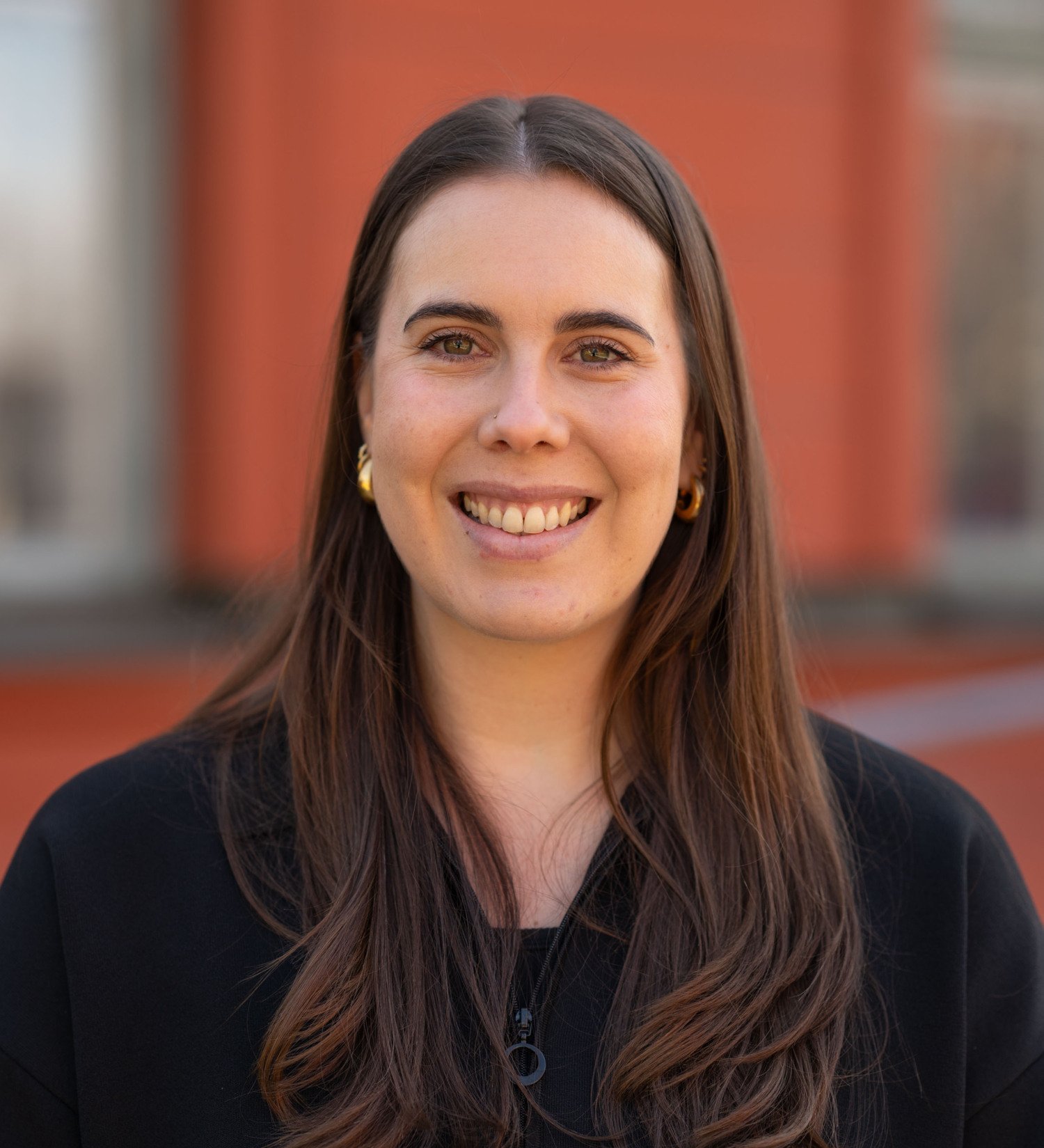
Tell us a bit about yourself and your background. What did you do before you started your doctoral studies?
I was born and raised in a rural town of Auckland City called Pukekohe, most known for growing potatoes and onions. However, a career in farming was never in my future. I studied a bachelor’s degree in psychology and sociology before landing my first post-graduate job at a non-for-profit organization, helping youth transition from state care into independence. I moved to Stockholm with my now husband almost nine years ago and gratefully consider it my forever home. During my time in Sweden, I have completed my Master in Medical Science at Karolinska Institutet, majoring in Public Health and Promotion. Outside of all my studies, I have been fortunate enough to spend a lot of time travelling, which has been greatly facilitated by no longer living on an island at the bottom of world!
How did you become interested in doing research and what made you want to be a doctoral student at our department LIME?
I’ve always been driven by a desire to help people. Certain opportunities presented themselves to me throughout my life, eventually leading me to research – something I find both impactful and enjoyable.
I have been working at the National Centre for Suicide Research and Prevention (NASP) since May 2018, so I’m very much part of the furniture these days. During this time, I have thoroughly enjoyed being a part of this group, and the wider LIME community. Therefore, it felt like a no brainer to continue with my doctoral studies in a place that would best support me.
If you were to describe your current doctoral research project in one or two sentences for a class of eight-year-olds, how would you describe it?
I’m doing several investigations (like a detective hunting for clues) to try and figure out how bright blue lights might influence the way people feel and behave in the railway setting.
Can you tell us about your PhD research project? What makes your research stand out?
My research focuses on understanding how artificial blue light affects people psychologically, emotionally, and behaviorally, with a particular interest in its potential role in preventing suicides in railway environments. Research from Japan has suggested that blue LED lights may reduce railway suicides. Since then, technology has been adopted in several countries, despite limited evidence regarding its effectiveness and little understanding of the mechanisms that may explain any observed effects. This project seeks to bridge that knowledge gap through a series of studies using different research approaches. The findings will ideally provide a stronger evidence base for decision-makers considering large scale implementation, while also identifying ways to enhance its effectiveness for railway suicide prevention. What makes this research particularly exciting is that it explores a relatively new and understudied area of suicide prevention. While a number of railway suicide prevention measures have shown to be effective, they’re often difficult to implement or costly. Blue lighting may offer a more feasible alternative or complement, but there is still much to learn!
What are you working on right now and in the nearest months?
The coming months are quite busy for me; I will be continuing to collect data for one study, analyzing data from another, and planning/beginning my final study (which has two separate data collections). I am also in the process of writing a manuscript and have a few presentations at international conferences.
What is the best and most interesting part of being a doctoral student?
I think the best part of being a doctoral student is the opportunity to be constantly learning. Nothing is ever stagnant, and each day it feels like I become a better researcher than I was the day before.
Can you describe the challenges (if any) in being a student at doctoral level?
Things have been relatively smooth sailing so far, but adapting to changes in workload can sometimes be challenging. Academic life often seems to oscillate between periods of intense activity and periods that feel much quieter! The other challenge is navigating a lot of firsts. Much of what I do now builds on skills and knowledge I’ve learned previously but putting them into practice in a real-world research setting has felt daunting at times. However, there is a real sense of satisfaction in rising to the occasion, gaining confidence and succeeding.
What do you like to do when you are not doing research?
I’m a big foodie – so when I’m not working, I’m often trying the newest eateries, waiting in line for baked goods, or hosting dinner parties. Otherwise, I also spend a lot of time walking around the beautiful city!
Do you have any advice for someone thinking about applying for doctoral studies?
Don’t be afraid to dive into the deep end – growth comes from discomfort. Apply for the PhD position, embrace the challenge, and see where the adventure takes you!
Anything else you want to say?
I’ve found that mindset matters enormously. When faced with the challenges and uncertainties of doctoral studies (and life in general), it can be one of your greatest assets. One book that has profoundly shaped my perspective is the following, and I would recommend that everyone read it (at least once): A guide to the Good Life: The Ancient Art of Stoic Joy by William B. Irvine.
Name: Danielle Berglund
Age: 33
Born: Tāmaki Makaurau, Aotearoa (Auckland, New Zealand)
Educational background: Master in Medical Science at Karolinska Institutet
Date for start of doctoral studies: March 16th, 2025
Title of PhD project: The Effects of Artificial Blue Light and Its Role in Suicide Prevention
Employment: Employed doctoral student at Karolinska Institutet