
The Nordic Health Crises University Network
The Centre for Health Crises coordinates the Nordic Health Crises University Network, which consists of members from universities in all the Nordic countries. The network brings together expertise and activities relating to health crises in order to develop cooperation that, in turn, helps to strengthen Nordic preparedness, resilience and the capacity to manage health crises.
About the network
The network is based on the premise that the expertise, knowledge and activities available at universities are often underutilised during health crises and as part of civil preparedness. By collaborating at a Nordic level, expertise and resources can be pooled and can then made available to support the wider society, provide scientific support for decision-making and drive policy and behavioural change. The aim is also that, by pooling expertise and resources within a network such as this, we can facilitate collaboration with other societal actors and policymakers. Overall, we want the network to contribute to strengthening Nordic health crisis preparedness, resilience and the capacity to manage health crises.
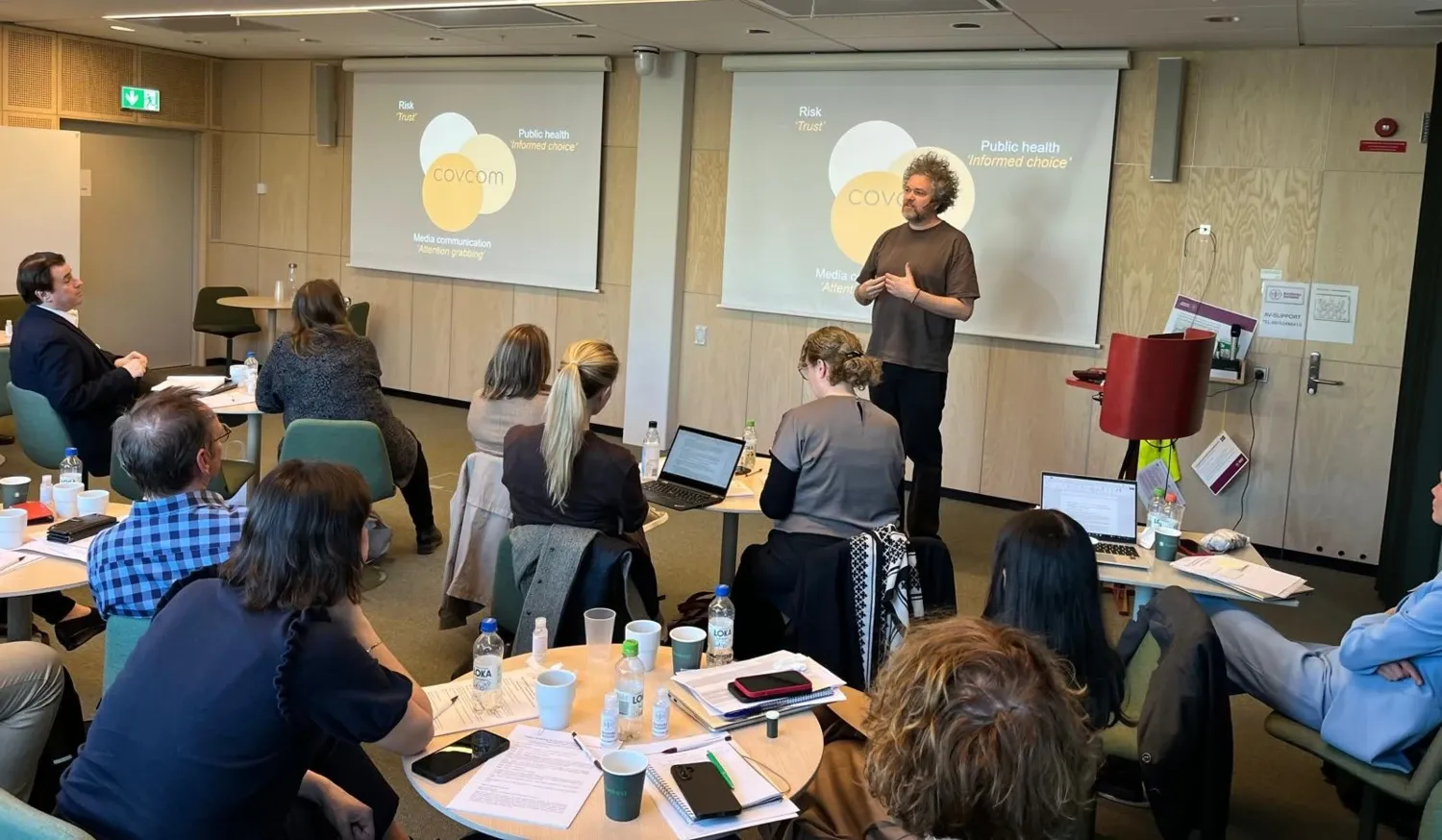
The network’s activities are primarily run by a working group comprising representatives from the participating universities. The group maintain regular contact and meet for writing retreats where they produce both academic and policy-oriented documents. In addition, they also organise other meetings and workshops. The network also offers doctoral student exchanges. In addition to the working group, there is a wider network of contacts across the Nordic countries, who met for a conference and workshop on communication in health crises in Stockholm in April 2026.
The Nordic Health Crises University Network was established in early 2025 thanks to funding from Nordforsk.
Objectives of the network
- Develop long-term co-operation on health crises between universities in the Nordic countries
- Support universities in formulating action-oriented, evidence-based policies and practices in health crises and encourage increased dialogue with policy makers.
- Establish the role of universities in future health crises with a focus on Nordic preparedness and response
- Catalyse interdisciplinary research collaboration on health preparedness and resilience in health systems
Project partners
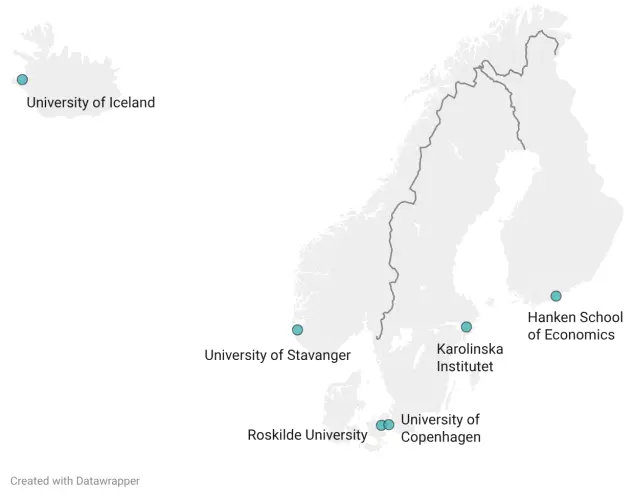
- The Centre for Health Crises, Karolinska Institutet (KI), Sweden - mobilises and coordinates interdisciplinary expertise and know-how in health crises. The Centre coordinates the Nordic Health Crises University Network. The Centre's contacts in the network are: Caroline de Groot and Johan von Schreeb.
- University of Copenhagen (UCPH), Denmark - the Copenhagen Centre for Disaster Research (COPE) is a platform for inter-disciplinary research, teaching and networking on disasters and climate change issues. COPE's point of contact in the network is, Emmanuel Raju.
- Roskilde University, Denmark - the Department of Social Sciences and Business has several associated trans-disciplinary research groups on crisis management and societal pressures. Their point of contact in the network by Olivier Rubin.
- University of Stavanger, Norway - the research group Risk Management and Societal Safety and the Centre for Quality and Safety in Healthcare (SHARE) both contribute complementary expertise in national and transboundary resilience, preparedness, crisis response, and prehospital critical care, supported by extensive international experience. Points of contact in the network are are Claudia Morsut and Daniel Adrian Lungu.
- Hanken School of Economics, Finland - The Humanitarian Logistics and Supply Chain Research Institute (HUMLOG Institute) was established in 2008 and hosts researchers worldwide in the area of humanitarian logistics. Gyöngyi Kovács and Wojciech Piotrowicz are the HUMLOG Institute contacts in the network.
- University of Iceland, Iceland - The Centre of Public Health Sciences (CPHS) has conducted large population-based studies assessing the impact of adverse life experiences, including the COVID-19 pandemic on mental and physical health. Edda Bjork Þórðardóttir and Thor Aspelund are the Centre's points of contact in the network.
Caroline de Groot is the contact person for the network.