
Therapeutic Catalyst Grant
Cancer Research UK Therapeutic Catalyst Awards are focused on new ways to treat adult cancers using antibody-based therapeutics or small molecule approaches spanning the whole range of formats within these modalities.
Projects are run collaboratively by an academic laboratory and Cancer Research Horizons' team of over 180 experienced drug discovery scientists.
Cancer Research Horizons is Cancer Research UK’s drug discovery engine, collaborating with researchers to translate lab discoveries into effective treatments for cancer patients. The Therapeutic Catalyst supports projects with strong therapeutic potential and a clear opportunity for patient benefit. Cancer Research Horizons invites applications for early drug discovery proposals across all adult cancer indications and all types of antibody or small molecule formats. This can also include new approaches to existing targets if there is a compelling differentiation hypothesis.
Key information
Timelines: Applications are reviewed three times per year. Upcoming application deadline: 25 September 2026
Funding period: Between 12 and 24 months, depending on award type
Funding amount: Up to £250K or £350k per project, depending on award type
Eligibility
You should:
- be an academic researcher based at any university or research institute world-wide
- have your own lab and/or perform independent research.
Therapeutic Catalyst categories
Target Award: his award can provide funding of up to £250k for 12 - 18 months. It is focused on one of two areas: cancer target identification and validation of novel cancer targets.
Early Therapy Award: This award can provide funding of up to £350K for 18 - 24 months. It is focused on: hit identification enabling work, experimental assessment of druggability (e.g. by fragment screening), and further development of an early therapeutic project
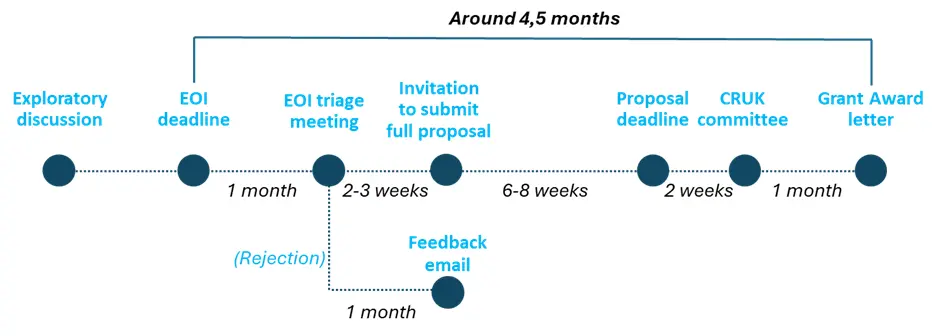
Application Process and Timelines
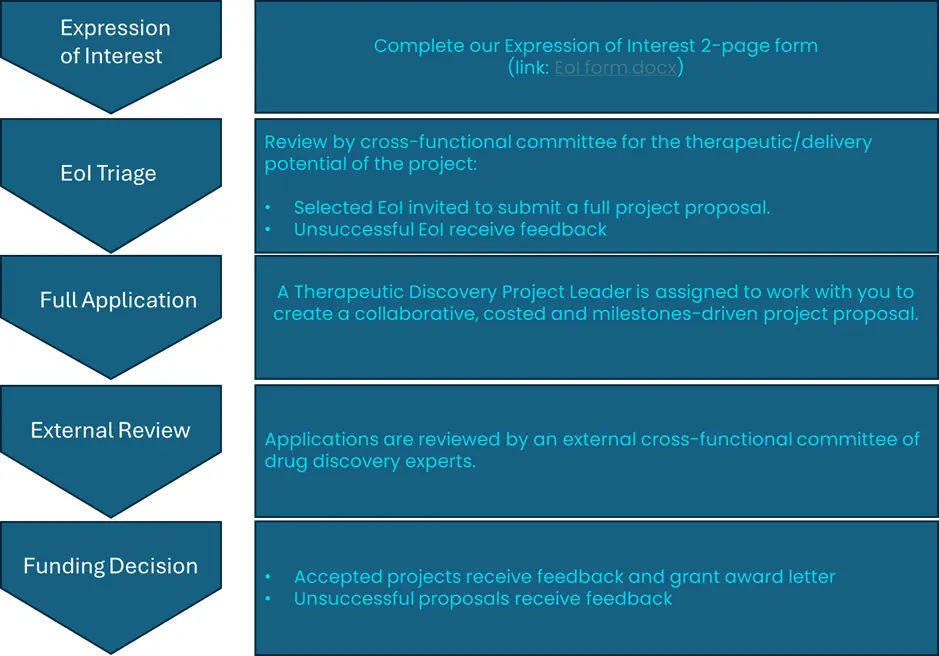
There are two stages to the application process:
- Expression of interest
You must first submit an expression of interest making it clear which award you are applying for.
There are 3 rounds of applications per year held in February, June and October, with a deadline for submission in the preceding month. - Full proposal
If you are invited to submit a full proposal, one of our scientists will be assigned to work with you to create a collaborative and costed project proposal and timeline, led by the principal investigator. There is no guarantee of funding at this stage.
Information on how to apply
FAQ
What makes a successful application
Successful applications are based on high impact scientific discoveries with a clear route of translation to benefit cancer patients (e.g. robust proof of concept, strong disease positioning hypothesis, innovative models for target validation or identification, etc).
The proposed project must reach an inflection point within the 18-month window, with validation of the hypothesis and positioning of the project for potential onward investment.
Successful applications are fully collaborative in nature, making the most of expertise based in your own research laboratory and Cancer Research Horizons drug discovery laboratories.
How does the full application process work:
At the proposal stage, you will be assigned a scientist from Therapeutic Innovation to support you throughout your project, working with you to build and pitch the proposal. These scientists bring significant expertise and serve as a single point of contact to manage all the internal (Cancer Research Horizons drug discovery) and external resources required to deliver your project.
What if my project is not in the remit of the Therapeutic Catalyst scheme
We can also offer additional expertise, resources, and capabilities from across Cancer Research Horizons, Cancer Research UK, and our wider investigator network to help your project progress more effectively. Additionally, if appropriate, Cancer Research Horizons can support you in identifying and engaging with potential commercial partners or other options to accelerate the project toward patient benefit.