

Integrative physiology
The overall aim of the research in integrative physiology is to discover and validate targets important in metabolic disease, for example glucose homeostasis and Type 2 diabetes mellitus.
The Integrative Physiology research group focuses on mechanisms underlying metabolic disorders with particular, but not exclusive, focus on insulin resistance in skeletal muscle.
Using novel methodology developed in the group to incubate and analyse human skeletal muscle samples ex-vivo, we were the first to demonstrate defects in insulin stimulation of intracellular signalling molecules in patients with insulin resistant type 2 diabetes mellitus.
The effects of exercise and muscle contraction in regulation of insulin sensitivity both whole body and in muscle is also a key area of investigation, as are effects of skeletal muscle immobility and/or denervation.
Clinical investigations in, parallel with primary human skeletal muscle cultures, where skeletal muscle cells are grown in vitro from patient biopsies, and model organisms are used to approach metabolic disease from a multidisciplinary angle in order to address gene and protein regulation, cell physiology and whole body metabolism.
The Strategic Research Programme in Diabetes
The group is part of the Strategic Research Programme in Diabetes (SRP Diabetes) at Karolinska Institutet, of which Anna Krook is the Director.
Exercise changes the DNA
The research group has previously published an internationally acclaimed study in the journal Cell Metabolism.
Group members
Department of Physiology and Pharmacology (FYFA)
Department of Molecular Medicine and Surgery (MMK)
Projects
Identification of molecular targets to improve glucose homeostasis
The incidence of Type 2 (non-insulin-dependent) diabetes mellitus is growing at an astronomical rate, as millions of people are diagnosed with this profound metabolic disorder every year. Skeletal muscle is quantitatively the most important tissue involved in maintaining glucose homeostasis under insulin-stimulated conditions, and is a major site of insulin resistance in Type 2 diabetic patients.
Glucose transport is the rate-limiting step for whole body glucose uptake and can be activated in skeletal muscle by two separate and distinct signaling pathways, one stimulated by insulin and the second by muscle contractions. The molecular signaling mechanisms by which insulin and exercise (muscle contraction) increase glucose transport and gene expression in skeletal muscle are largely undefined.
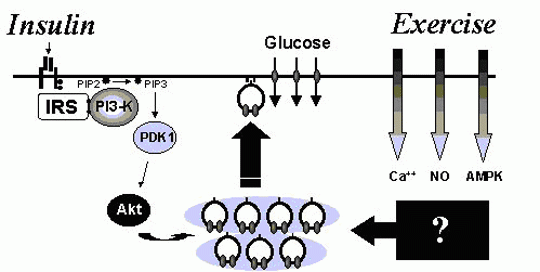
Insulin signaling and Type 2 Diabetes Mellitus:
Skeletal muscle is quantitatively the most important tissue involved in maintaining glucose homeostasis. Glucose transport and metabolism, protein synthesis and gene expression are all regulated by activation of the insulin signaling pathway (see figure).
This signal transduction pathway is engaged upon insulin binding to the insulin receptor b-subunit, followed by autophosphorylation of the b-subunit, leading to activation of down-stream signaling events. Insulin-receptor substrates (IRS) are regulatory docking proteins that associate with the insulin receptor and play a central role in the selection and differentiation of the insulin signal toward further metabolic or mitogenic events.
The downstream substrate of IRS-1, phosphatidylinositol 3-kinase (PI 3-kinase) is essential for insulin-stimulated glucose transport. We have shown in human skeletal muscle, insulin-stimulated glucose transport, mediated primarily by the glucose transporter GLUT4, is inhibited following exposure to PI 3-kinase inhibitors (Diabetologia 40:1172-1177, 1997). Furthermore, we have provided the first evidence that early defects in the insulin signaling-transduction cascade i.e., defective phosphorylation of the IRS-1 and reduced activity of PI 3-kinase (Diabetes 49:284-292, 2000) are coupled to impaired insulin-stimulated GLUT4 translocation and glucose transport (Diabetes 49:647-654, 2000) in skeletal muscle from diabetic patients.
Importantly, we now have evidence that these same steps in the insulin signaling cascade are impaired in skeletal muscle from glucose intolerant (IGT) relatives of Type 2 diabetic patients (Diabetes 50:2770-2778, 2001), providing the first molecular evidence that there are genetic lesions directly in the insulin signaling cascade that precede overt Type 2 diabetes.
AMPK: A novel molecular target to bypass defective insulin signal transduction in skeletal muscle
Type 2 diabetes mellitus is one of the major causes of death and disability, due to the complications accompanying this disease (Diabetologia 43:821-835, 2000). Thus, development of effective intervention strategies is essential in order to prevent and manage Type 2 diabetes. Physical exercise profoundly enhances substrate utilization and insulin sensitivity, which in turn lowers blood glucose and lipid levels. We have shown that muscle contraction increases protein expression and function of important components in the insulin signaling pathway (Proc Natl Acad Sci USA 97:38-43, 2000), pharmacological intervention with compounds designed to mimic the "exercise-response" may be efficacious in the management of metabolic abnormalities associated with Type 2 diabetes.
AMPK is considered a "master switch" in the regulation of key proteins in metabolic pathways known to control hepatic fatty acid oxidation and ketogenesis, lipogenesis and triglyceride synthesis, adipocyte lipolysis, modulation of insulin secretion from the pancreatic b-cells, and skeletal muscle fatty acid oxidation (Am J Physiol 277:E1-E10, 1999). We have identified AMP-activated protein kinase (AMPK) as an important mediator of muscle contraction-induced glucose transport and a target for pharmacological intervention to treat altered glucose homeostasis associated with Type 2 diabetes and obesity (Diabetologia 44:2180-2186, 2001; Diabetologia 45:56-65, 2002).
AMPK is a heterotrimeric protein, composed of one catalytic (a) and two non-catalytic (b and g) subunits and is activated by cellular stress associated with ATP depletion (Am J Physiol 277:E1-E10, 1999). One such compound is 5-aminoimidazole-4-carboxamide ribonucleoside (AICAR).
AICAR is an adenosine analog that can be taken up into intact hepatocytes, adipocytes and skeletal muscle and is phosphorylated to form 5-aminoimidazole-4-carboxamide ribonucleotide (ZMP), the monophosphorylated derivative that mimics the effects of AMP on AMPK without affecting ATP or ADP levels (FASEB J 9:541-546, 1995). We have shown AICAR-treatment leads to a striking normalization of blood glucose levels and glucose tolerance in KKAy-CETP and ob/ob mice after in vivo treatment.
These changes in glucose homeostasis are accompanied by increased protein expression of GLUT4 and hexokinase II due to increased MEF2 DNA binding activity (Diabetologia 45:56-65, 2002). Since AMPK appears to be a molecular component of the exercise signaling pathway to glucose transport, we hypothesize that activation of AMPK may be a molecular target involved in the regulation of glucose homeostasis via insulin-independent mechanisms.
Our central hypothesis is that alterations in signal transduction to glucose transport should have a profound effect on whole body glucose homeostasis. The overall aim of our work is to validate novel pathways in the regulation of glucose transport and metabolism:
- To identify differentially expressed genes in skeletal muscle from Type 2 diabetic patients.
- To identify the intracellular signaling mechanisms linking the biochemical and mechanical events of muscle contraction with increased glucose metabolism and gene expression.
- To examine the kinetics of trafficking mechanisms that lead to these changes in cell surface GLUT4 in diabetic versus control muscle.
Implications
Diabetes is a life-long condition. If left untreated, diabetes can lead to severe medical complications, which include heart disease, stroke, kidney disease, blindness, nerve damage, and severe infections leading to gangrene and foot and leg amputations. Maintaining glucose homeostasis may help prevent these complications.
By identifying the molecular mechanisms controlling insulin sensitivity it will be possible to develop pharmacological and physiological (exercise and diet) intervention strategies aimed to improve glucose homeostasis. However, diabetes is a heterogeneous metabolic disorder, consequently, a multitude of intervention strategies need to be applied to achieve good glucose control.
The long-term goal is to identify and characterize new molecular targets that control glucose uptake and metabolism in skeletal muscle. Intervention at the level of these targets may control and prevent insulin resistance in Type 2 diabetes.
Selected publications
Circulating Exosomal miR-20b-5p Is Elevated in Type 2 Diabetes and Could Impair Insulin Action in Human Skeletal Muscle.
Katayama M, Wiklander OPB, Fritz T, Caidahl K, El-Andaloussi S, Zierath JR, et al
Diabetes 2019 Mar;68(3):515-526
Afternoon exercise is more efficacious than morning exercise at improving blood glucose levels in individuals with type 2 diabetes: a randomised crossover trial.
Savikj M, Gabriel BM, Alm PS, Smith J, Caidahl K, Björnholm M, et al
Diabetologia 2019 02;62(2):233-237
Weight loss after gastric bypass surgery in human obesity remodels promoter methylation.
Barres R, Kirchner H, Rasmussen M, Yan J, Kantor FR, Krook A, et al
Cell Rep 2013 Apr;3(4):1020-7
Acute exercise remodels promoter methylation in human skeletal muscle.
Barrès R, Yan J, Egan B, Treebak JT, Rasmussen M, Fritz T, et al
Cell Metab. 2012 Mar;15(3):405-11
Exercise metabolism and the molecular regulation of skeletal muscle adaptation.
Egan B, Zierath JR
Cell Metab. 2013 Feb;17(2):162-84
Non-CpG methylation of the PGC-1alpha promoter through DNMT3B controls mitochondrial density.
Barrès R, Osler ME, Yan J, Rune A, Fritz T, Caidahl K, et al
Cell Metab. 2009 Sep;10(3):189-98
Regulation of skeletal muscle physiology and metabolism by peroxisome proliferator-activated receptor delta.
Ehrenborg E, Krook A
Pharmacol. Rev. 2009 Sep;61(3):373-93
Tbc1d1 mutation in lean mouse strain confers leanness and protects from diet-induced obesity.
Chadt A, Leicht K, Deshmukh A, Jiang LQ, Scherneck S, Bernhardt U, et al
Nat. Genet. 2008 Nov;40(11):1354-9
Downregulation of diacylglycerol kinase delta contributes to hyperglycemia-induced insulin resistance.
Chibalin AV, Leng Y, Vieira E, Krook A, Björnholm M, Long YC, et al
Cell 2008 Feb;132(3):375-86
siRNA-based gene silencing reveals specialized roles of IRS-1/Akt2 and IRS-2/Akt1 in glucose and lipid metabolism in human skeletal muscle.
Bouzakri K, Zachrisson A, Al-Khalili L, Zhang BB, Koistinen HA, Krook A, et al
Cell Metab. 2006 Jul;4(1):89-96
Changes in exercise-induced gene expression in 5'-AMP-activated protein kinase gamma3-null and gamma3 R225Q transgenic mice.
Barnes BR, Long YC, Steiler TL, Leng Y, Galuska D, Wojtaszewski JF, et al
Diabetes 2005 Dec;54(12):3484-9
Exercise-induced changes in expression and activity of proteins involved in insulin signal transduction in skeletal muscle: differential effects on insulin-receptor substrates 1 and 2.
Chibalin AV, Yu M, Ryder JW, Song XM, Galuska D, Krook A, et al
Proc. Natl. Acad. Sci. U.S.A. 2000 Jan;97(1):38-43
Characterization of signal transduction and glucose transport in skeletal muscle from type 2 diabetic patients.
Krook A, Björnholm M, Galuska D, Jiang XJ, Fahlman R, Myers MG, et al
Diabetes 2000 Feb;49(2):284-92
Discovery of a small molecule insulin mimetic with antidiabetic activity in mice.
Zhang B, Salituro G, Szalkowski D, Li Z, Zhang Y, Royo I, et al
Science 1999 May;284(5416):974-7
Divergent effects of exercise on metabolic and mitogenic signaling pathways in human skeletal muscle.
Widegren U, Jiang XJ, Krook A, Chibalin AV, Björnholm M, Tally M, et al
FASEB J. 1998 Oct;12(13):1379-89
In vitro studies of human skeletal muscle: hormonal and metabolic regulation of glucose transport.
Zierath JR
Acta Physiol Scand Suppl 1995 ;626():1-96